

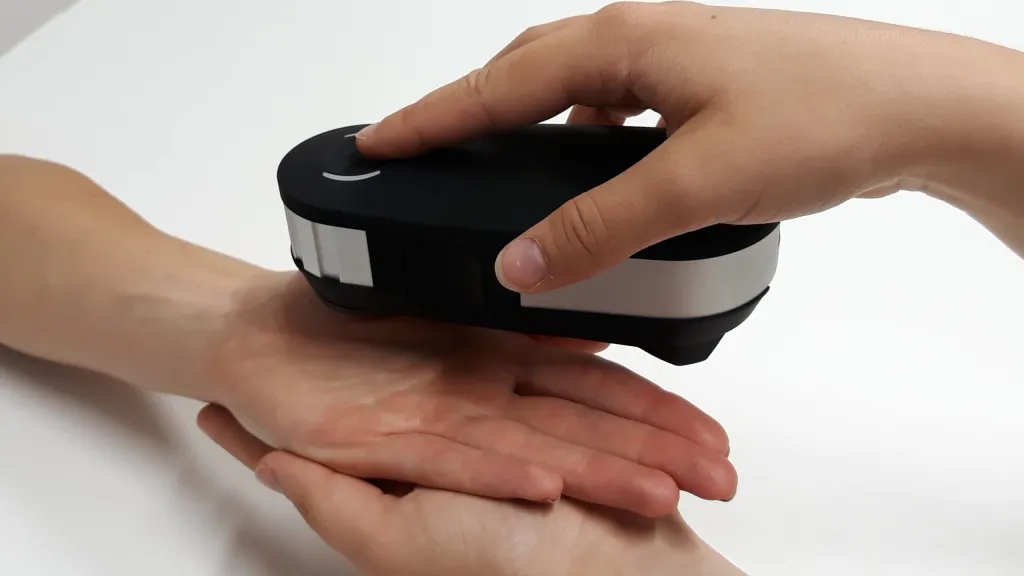
Understanding your health involves more than paying attention to how you feel. Nutrition, lifestyle, medical history, and appropriate testing can all contribute to a clearer picture of your well-being. For people exploring different wellness assessment options, OligoScan is a technology that uses light-based measurements to generate a report about selected elements in the body.
This oligoscan overview explains how the assessment is performed, what users should understand about its potential applications, and why interpreting any wellness test requires care and appropriate professional guidance.
What Is OligoScan?
OligoScan is a handheld assessment system that uses spectrophotometry, a technique involving the measurement of how light interacts with a material. The system is marketed as a way to assess selected minerals, trace elements, and heavy metals through measurements taken at the palm of the hand.
Unlike conventional blood collection, the procedure is designed to be non-invasive and does not require a blood draw. A practitioner takes readings with the device, and software generates a report for review.
The report is intended to provide information about selected elements based on the system’s measurement method. However, it is important to distinguish between what a device reports and what has been clinically established. OligoScan results should not automatically be treated as proof of a nutrient deficiency, heavy-metal poisoning, or a specific health condition.
How Does OligoScan Work?
OligoScan uses a light-based measurement technique known as spectrophotometry. In general, spectrophotometry examines how much light a material absorbs or reflects at particular wavelengths.
During an OligoScan session, the practitioner places the device against designated areas of the palm and takes measurements. The system processes the readings using its software and produces a report.
The process generally involves three stages:
- Taking the measurements: The practitioner uses the handheld device to collect readings from the palm.
- Processing the readings: The software analyzes the measurements according to the system’s methodology.
- Reviewing the report: The results are discussed in context, including the person’s health goals, medical history, and any relevant conventional test results.
Although the measurement process is designed to be quick, interpreting the report requires more care than simply reading individual values. The clinical meaning and reliability of the reported results need to be considered separately from the speed or convenience of the procedure.
What Does OligoScan Claim to Assess?
OligoScan is marketed for assessing several categories of elements, including minerals, trace elements, and selected heavy metals. Some versions of the system also report selected vitamins.
These categories are relevant to different aspects of health, but a report generated by a device does not independently establish whether a person has a deficiency, excess, or clinically significant toxic exposure.
Minerals and Trace Elements
Minerals such as magnesium, zinc, calcium, and selenium play important roles in normal body functions. Their requirements and clinical significance vary according to the individual and the specific nutrient.
When a deficiency or excess is suspected, healthcare professionals may use a person’s symptoms, dietary history, medical history, and appropriate laboratory tests to investigate the concern.
OligoScan results should not be used alone to diagnose a mineral imbalance or determine that supplementation is necessary.
Heavy Metals
Exposure to certain heavy metals, including lead, mercury, and arsenic, can have health consequences depending on the substance, exposure level, and circumstances.
If a person has a credible concern about heavy-metal exposure, the appropriate assessment depends on the metal involved and the suspected exposure. Established laboratory methods, often involving blood or urine testing, may be recommended by a qualified healthcare professional.
An OligoScan report should not be considered a definitive diagnosis of heavy-metal toxicity or a substitute for validated exposure testing.
Vitamins and Nutritional Status
Vitamins support many essential functions, and suspected deficiencies may require targeted evaluation. However, a light-based report should not be assumed to provide the same information as an established laboratory test for a specific vitamin.
If a vitamin deficiency is suspected, a healthcare professional can determine whether testing is appropriate and which method is suitable for the clinical question.
Potential Benefits and Practical Considerations
One feature that attracts interest in OligoScan is the convenience of a non-invasive measurement process. People exploring wellness assessments may appreciate being able to discuss a report without undergoing a blood draw during that particular session.
Other practical considerations include the time required for the appointment, the opportunity to discuss nutrition and lifestyle goals, and the ability to review the report with a practitioner.
However, convenience does not establish diagnostic accuracy. Before choosing any wellness assessment, it is worth asking what the test can reliably measure, whether its results have been independently validated, and how those results should influence decisions.
A responsible practitioner should explain both the potential uses and the limitations of the assessment rather than presenting every reported value as a confirmed health problem.
OligoScan Compared With Conventional Testing
Different tests are designed to answer different questions. Choosing the right one depends on the concern being investigated.
| Assessment method | General purpose | Important consideration |
| Blood testing | Measures specific substances or biomarkers in blood | The appropriate test depends on the clinical question and the substance being measured. |
| Urine testing | Measures substances or their metabolites excreted in urine | Collection timing and the type of test can affect interpretation. |
| Hair analysis | Measures selected elements present in a hair sample | Results require careful interpretation and may be affected by external contamination and other factors. |
| OligoScan | Uses palm-based optical measurements to generate a report about selected elements | Its results should not be assumed to be equivalent to established laboratory measurements. |
These methods are not interchangeable. For example, a test designed to investigate suspected lead exposure serves a different purpose from a general wellness assessment.
The choice of testing should be guided by the specific health concern, the available evidence, and advice from an appropriately qualified healthcare professional.
Understanding the Limitations of OligoScan
Before relying on OligoScan results, it is important to understand the distinction between a measurement report and a clinically validated diagnostic test.
The scientific evidence supporting the accuracy and clinical interpretation of OligoScan measurements is limited. The results should not be assumed to agree with established laboratory methods unless that agreement has been demonstrated for the specific measurement and intended use.
In particular, users should avoid assuming that the report can independently:
- Diagnose a medical condition or nutritional deficiency.
- Confirm or rule out heavy-metal poisoning.
- Identify the source of a suspected toxic exposure.
- Establish that a particular supplement or detoxification protocol is necessary.
- Replace appropriate medical examinations or laboratory testing.
The US Food and Drug Administration also advises consumers to understand the evidence and limitations of health-related tests and to discuss consequential health decisions with a qualified healthcare professional.
If you have persistent symptoms or suspect a nutrient deficiency or toxic exposure, seek appropriate medical evaluation instead of relying on an OligoScan report alone.
How to Approach an OligoScan Session
If you are considering an OligoScan assessment, start by identifying what you hope to learn. Are you looking for general wellness information, investigating a particular concern, or trying to understand whether additional testing may be appropriate?
Before the session, ask the provider to explain the procedure, what the report covers, and what the results can and cannot establish.
After receiving the report, consider these steps:
- Review the findings carefully. Ask the practitioner to explain the meaning and limitations of the reported values.
- Consider your broader health context. Relevant factors may include your diet, symptoms, medications, medical history, and existing laboratory results.
- Seek confirmation when necessary. If a result suggests a possible deficiency or toxic exposure, discuss suitable confirmatory testing with a healthcare professional.
- Avoid unnecessary interventions. Do not begin high-dose supplements, chelation, or other treatment protocols solely because of an unconfirmed result.
- Make decisions with appropriate guidance. Any significant changes to your health management should be based on reliable evidence and professional advice.
This approach helps ensure that a wellness assessment remains part of an informed conversation rather than becoming the sole basis for medical decisions.
Choosing a Wellness Provider
If you are exploring OligoScan through a wellness provider, look for clear communication, realistic claims, and a willingness to discuss the limitations of the technology.
Ask about the practitioner’s qualifications, the purpose of the assessment, how results are interpreted, and when conventional testing or medical referral may be recommended.
A responsible provider should not use a single report to make unsupported diagnoses or pressure you into purchasing supplements or treatments. They should also respect your medical history and encourage appropriate healthcare support when symptoms or concerning findings warrant further investigation.
Conclusion
OligoScan is a non-invasive, light-based assessment system marketed for reporting selected minerals, trace elements, and heavy metals. Its convenience may appeal to people exploring wellness services, but the clinical meaning and accuracy of its results require careful consideration.
The most important step is understanding the difference between information generated by a wellness device and findings established through validated clinical testing. By asking informed questions, reviewing results in context, and seeking appropriate professional guidance, you can make more responsible decisions about your health and wellness.
