

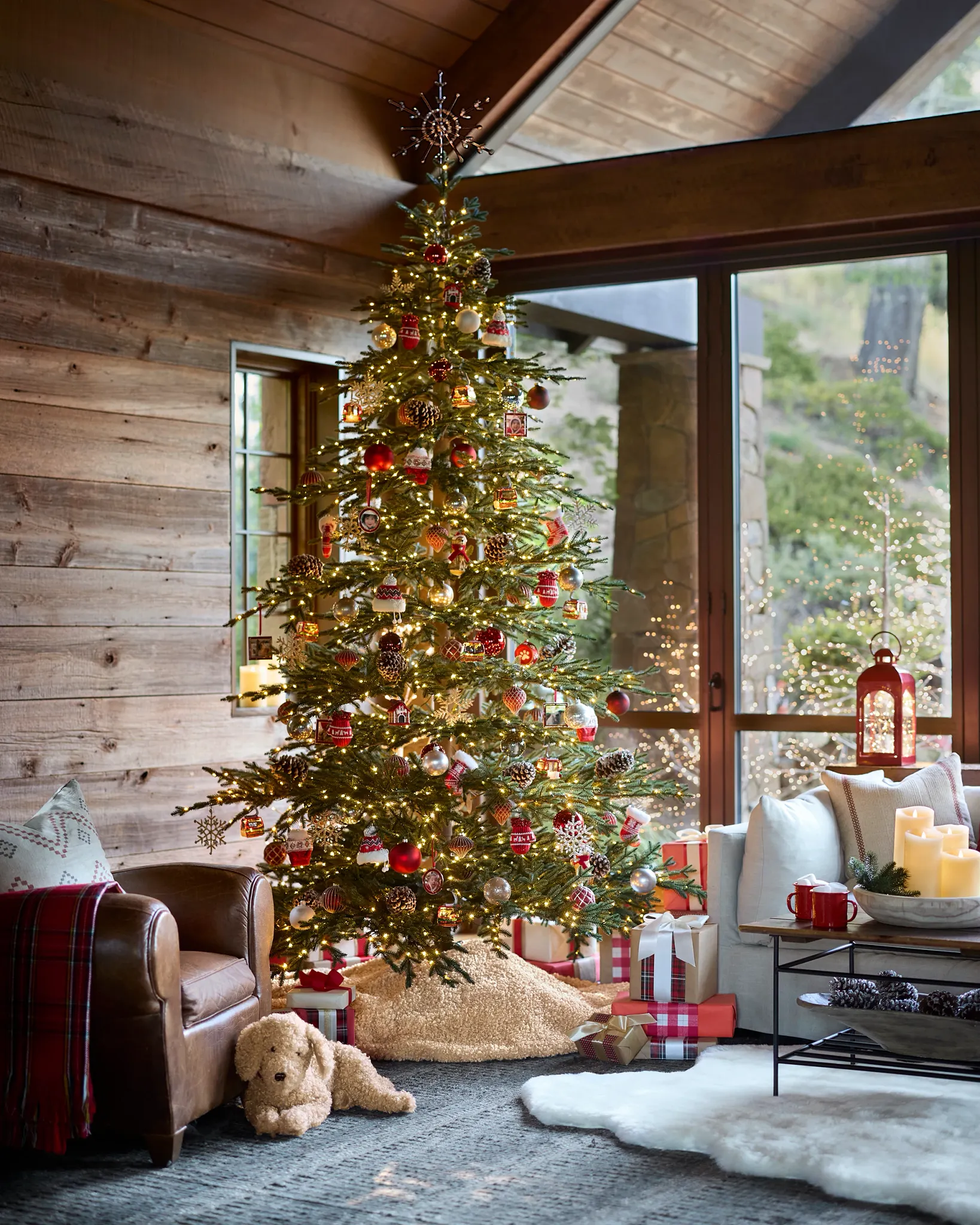
Every year, across homes, retail spaces, hotel lobbies, and event venues throughout the United States, the process of installing a full-size Christmas tree repeats itself under significant time pressure and with little room for error. For trees that reach ten feet in height, the margin for mistakes in stand selection is narrow. A stand that fails mid-season — through instability, water loss, or structural collapse — creates safety hazards, property damage, and the kind of disruption that no one wants to manage during an already busy time of year.
Choosing the right stand for a large tree is not a matter of preference. It is a practical decision that affects the safety of the people around the tree, the lifespan of the tree itself, and the overall reliability of a display that may need to hold for four to six weeks without adjustment. Understanding what makes a stand appropriate for a ten-foot tree requires looking closely at how these trees behave structurally, what forces act on them over time, and what features genuinely matter when a stand is under load.
Why Ten-Foot Trees Require a Different Standard
A ten-foot Christmas tree is not simply a larger version of a standard six or seven-foot tree. It occupies a category of its own when it comes to weight distribution, trunk diameter, and the mechanical demands placed on the stand that holds it. Trees at this height carry substantially more mass in their upper branches, which shifts the center of gravity higher and amplifies the effect of any lateral movement — whether from foot traffic, air conditioning systems, or the natural settling that occurs as a fresh-cut tree begins to dry.
For anyone researching stand options at this scale, the 10 Foot Christmas Tree Stand guide provides a useful reference point for understanding how stands in this category are constructed and what specifications differentiate a functional product from one that introduces risk. The difference is not always visible on a product page, which is why understanding the underlying principles matters before making a purchase.
The trunk of a ten-foot tree is typically much wider at its base than most standard-weight stands are designed to accommodate. When a stand’s center bore is too narrow for the actual trunk, installers often resort to shaving the bark and outer wood layers down to fit — a practice that removes the tree’s primary water-absorbing tissue and shortens its effective lifespan considerably. A stand built for this height range must be sized appropriately from the outset.
Load Distribution and Structural Integrity
When a tree of this height is fully decorated with lights, ornaments, and a topper, the combined load can stress a stand in ways that are not immediately apparent at the time of installation. The vertical weight compresses downward through the trunk into the stand’s center, while the horizontal spread of branches creates a continuous lateral pull that tests the stand’s base footprint and leg geometry.
Stands that are adequately rated for smaller trees frequently lack the base width and bolt clamping strength to hold a ten-foot tree securely through weeks of incremental settling. The tree will often shift slightly over time as the cut end of the trunk dries and contracts, loosening contact points that felt firm on day one. A stand designed for this scale accounts for this movement through adjustable clamping mechanisms that can be retightened without fully disassembling the setup.
Water Retention and Tree Longevity
Fresh-cut trees absorb water at a rate that most people underestimate in the first several days after installation. A ten-foot tree has significantly more needle surface area than a shorter tree, which means it loses moisture to the air at a higher rate. The water reservoir in the stand must be proportionally larger to support this demand, particularly in the first week when the tree is most actively drawing water through the cut end of the trunk.
Stands designed for smaller trees often have reservoirs that hold only enough water for a day or two at standard temperatures. In a warm indoor environment, a ten-foot tree in an undersized reservoir can exhaust the available water in a matter of hours. Once a fresh-cut tree dries out and forms a seal over the cut end, it rarely recovers its ability to absorb water effectively, and needle drop accelerates sharply. The reservoir capacity of the stand is not a secondary concern — it is directly tied to how the tree performs over the full installation period.
Structural Features That Determine Performance
The physical construction of a ten-foot tree stand determines how consistently it performs under real conditions. Not all stands in this category are built to the same standard, and the differences become apparent only once the tree is fully loaded and the installation has been in place for several weeks.
Base Geometry and Footprint
The base of a stand must extend far enough from the trunk to resist tipping without creating a trip hazard in high-traffic areas. A wide, low-profile base performs better than a narrow, tall one for trees of this height because it places the counterweight lower and further from the trunk centerline. Tripod-style bases with outward-angled legs distribute load more evenly than flat plate designs and tend to remain stable on uneven flooring surfaces, which is common in older homes and commercial settings.
Rubber or padded feet on the base legs prevent scratching on hardwood and tile and also provide slight grip that resists the slow creep that can occur when a tree and stand are subject to repeated minor contact. This detail is often overlooked but contributes meaningfully to long-term stability.
Clamping Mechanisms and Trunk Engagement
The method by which a stand grips the trunk is one of the most consequential design choices in a stand’s construction. Traditional screw-bolt systems use threaded bolts tightened manually around the trunk, which can work adequately but often require the trunk to be perfectly centered before tightening. If the tree is even slightly off-center, the pressure from the bolts forces it further in the direction of its lean rather than correcting it.
Newer clamping designs use a pedal-operated or ratchet-style mechanism that applies even pressure around the trunk from multiple contact points simultaneously. These systems allow for meaningful adjustments to the vertical alignment of the tree during installation and can be retightened as the trunk dries without disturbing the tree’s position. For large trees that may weigh significantly more once decorated, the reliability of the clamping system is the single most important performance factor in the stand.
Installation Conditions That Affect Stand Selection
Where and how a ten-foot tree will be displayed shapes which stand features matter most. A tree in a private residential living room presents different conditions than one installed in a hotel lobby, retail showroom, or event venue. Understanding those conditions before selecting a stand prevents the kind of mismatch that leads to mid-season problems.
Floor Surface and Indoor Environment
Hard flooring surfaces — hardwood, tile, polished concrete — offer less friction resistance than carpet, which means stand bases must rely more on their own geometry and weight to prevent movement. In environments where the floor is also subject to cleaning with wet mops or steam equipment, stands with metal bases may corrode at contact points over the season unless the material is properly finished. Powder-coated steel and high-grade plastics hold up better in these conditions than bare metal or cheaply finished components.
Indoor humidity levels also affect how quickly a tree dries. According to the U.S. Department of Energy, heated indoor air during winter months tends to be significantly drier than outdoor air, which accelerates moisture loss from fresh-cut trees. In low-humidity environments, water reservoir access and refilling frequency become even more critical to managing tree health.
Traffic and Interaction Frequency
In spaces where people regularly pass close to the tree, the cumulative effect of minor contact — a brushed shoulder, a curious child, a pet — adds up to meaningful mechanical stress over a multi-week display. Stands in high-traffic environments benefit from additional ballast or anchoring options, some of which allow the base to be secured to the floor or weighted with sandbags concealed beneath the tree skirt.
Residential settings with young children or pets present similar concerns. In these cases, a stand with a low, wide base profile and a high-torque clamping system provides more reliable protection against accidental tipping than a narrower stand with a higher center of gravity, regardless of how stable both may appear at initial installation.
Common Mistakes When Selecting a Stand for a Large Tree
Several purchasing patterns consistently lead to problems with ten-foot tree stands. Identifying them ahead of time reduces the likelihood of an installation that requires correction mid-season.
- Selecting a stand rated for a tree height range rather than one designed specifically for the upper end of that range, which often results in an undersized reservoir and inadequate clamping capacity for a full ten-foot specimen.
- Purchasing based on price rather than construction quality, which leads to bolt threads stripping under load or base legs bending as the tree settles over time.
- Assuming that a stand used successfully for a seven or eight-foot tree will perform equally well for a ten-foot tree without accounting for the significant difference in trunk diameter and total weight.
- Failing to test the stand’s clamping system before the tree is placed, which can reveal manufacturing defects or design limitations that are far more manageable before installation than after.
- Ignoring the water reservoir capacity in favor of aesthetic features, which results in a tree that dries out prematurely despite regular attention.
Matching the Stand to the Tree Across Different Settings
The practical reality of selecting a 10 foot christmas tree stand is that no single product is optimal for every setting. A stand that works well in a residential great room with low foot traffic may not be the right choice for a commercial lobby where the tree needs to be accessible for watering but also protected from frequent contact. Matching the stand’s features to the actual conditions of the installation — rather than to an idealized set of conditions — is the defining factor in a successful outcome.
For live trees, the water access design of the stand should be evaluated practically. Some stands position the fill opening at the back of the reservoir, which makes daily watering easy when the tree is placed against a wall but nearly impossible when the tree is centered in a room. Others use a side-fill tube that allows watering from a discreet position without disturbing surrounding décor. These are functional considerations, not cosmetic ones, and they affect the daily management of the installation for its entire duration.
For artificial trees at the ten-foot scale, stand selection shifts toward load-bearing capacity and assembly stability. Many high-quality artificial trees of this height come with proprietary bases, but aftermarket stands can offer better stability for trees that were originally supplied with undersized bases. In these cases, the connection point between the tree’s central pole and the stand’s center sleeve must be evaluated for fit and wobble tolerance.
Concluding Thoughts on Stand Selection for Large Trees
A 10 foot christmas tree stand is not a commodity purchase. At this scale, the stand is a structural component that determines whether a significant and visible installation remains safe, hydrated, and visually stable for the duration of the holiday season. The decision deserves the same careful consideration given to the tree itself.
The qualities that matter most — base width, clamping reliability, reservoir capacity, and material durability — are not always reflected in retail pricing or product descriptions. Evaluating a stand against the actual conditions of the intended installation, rather than against general product ratings, produces consistently better outcomes. Understanding how a ten-foot tree behaves differently from shorter trees, and selecting a stand built to meet those specific demands, is the foundation of an installation that holds up from the first week of December through the new year without requiring intervention.
Whether the tree will be installed in a family home, a professional environment, or a high-visibility public space, the stand that supports it deserves to be chosen with the same attention given to any functional, safety-relevant product decision. The tree is the display. The stand is what makes it possible.
