

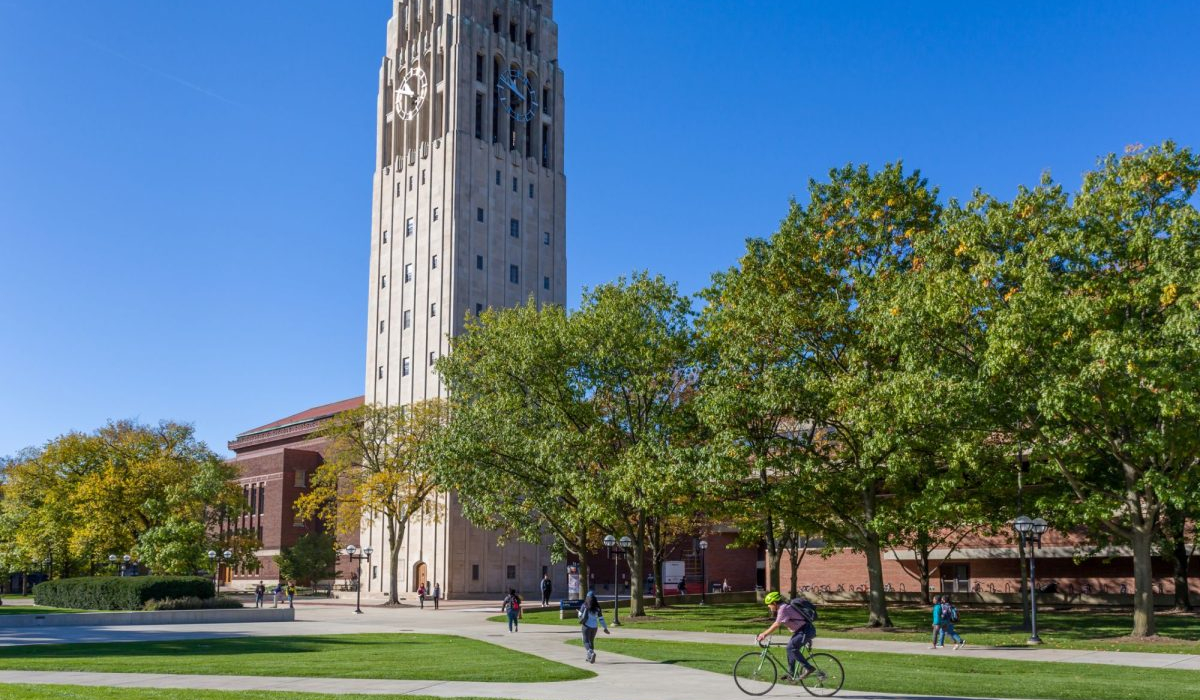
Ann Arbor has two groups with very different reasons to stay close to downtown. The University of Michigan enrolled 53,488 students on its Ann Arbor campus in fall 2025. Only 26% of its 35,358 undergraduates lived in university-owned or affiliated housing. Most undergraduates had to find private apartments or other off-campus housing instead.
Retirees make up the second group. Kiplinger has listed Ann Arbor among the Midwest’s good places to retire. City data puts 10.7% of residents at age 65 or older. Students and retirees don’t want the same kind of home, yet both groups want homes on the same blocks near downtown.
Developers Are Adding More Than 1,500 Student Beds Near Campus
New student housing projects show how much demand developers expect near campus. Chapter Ann Arbor, a 19-story tower planned one block from the University of Michigan, secured full construction financing in mid-2025, per Multifamily Dive. It will add 625 beds across 183 units. Its developers said enrollment growth has outpaced the supply of student housing.
A second project, The Metropolitan on South U, is also under way. Landmark Properties began construction in December 2025 on the 259-unit project, which will provide more than 950 beds next to campus. Together, the two projects will add more than 1,500 beds.
University data show enrollment is growing. It rose from 52,855 students in fall 2024 to 53,488 in fall 2025, a gain of 633 students in one year.
Student demand is mostly for rentals, so it does not strain the citywide housing market. Houzeo’s September 2026 data shows a balanced citywide market, with 5.7 months of housing supply and homes selling at 98.69% of the asking price. Demand is concentrated within a few blocks of campus, where developers are building the new towers.
Student renters also work on an early timeline. Many students sign leases about five months before move-in. Under the city’s Early Leasing Ordinance, landlords can start showing and leasing a unit once 150 days remain on the current tenant’s lease. That calendar applies only to renters. Homebuyers do not face a comparable deadline.
Health Care, Transit, and Walkability Draw Retirees to Ann Arbor
Students choose central Ann Arbor because the campus is close, while retirees choose the same blocks for health care, transit, and walkable daily errands.
Kiplinger has pointed to the University of Michigan’s educational programs, its Geriatrics Center, health care access, and public transportation as features that attract older residents. Forbes included Ann Arbor among its 25 Best Places to Enjoy Your Retirement in 2025, citing arts, lifelong learning, health care, walkability, and dining.
Those features make daily life easier, but they don’t prove retirees and students compete for the same homes. Most students rent with roommates. Retirees are more likely to buy a condo or a house. The overlap is in location: both groups want homes close to downtown, campus, transit, restaurants, and health care.
Central Ann Arbor Homes Cost More Than the Citywide Median
Houzeo reports a citywide median sale price of $475,000 in September 2026, up 6.74% from a year earlier, with homes taking 46 days to sell. That figure covers every neighborhood in the city, so it says little about any single block.
Central Ann Arbor offers what both groups look for: a short walk to campus, restaurants, transit, and health care.
In ZIP code 48104, which includes downtown and nearby neighborhoods, the median closed sale price was $630,000 over the six months ending in mid-September, according to Resideline. The ZIP code had only 41 active listings on September 14.
Buyers who want to live in central Ann Arbor should expect prices well above the citywide median and few homes to choose from.
Compare Recent Sales in the Same Neighborhood, Not the Citywide Median
Buyers who browse homes for sale in Ann Arbor should not treat the whole city as one housing market. A retired buyer who wants a downtown condo will look for elevator access, nearby health care, public transit, and walkability. Citywide figures show none of those features. Instead, compare recent sales of similar homes in the same neighborhood and price range, not the citywide median.
Both Groups Want Central Ann Arbor, and Homes There Cost More
Ann Arbor has a large student population, limited university housing, new student projects near campus, and retirement rankings from Kiplinger and Forbes. Those facts show that both groups can want the same central areas. They don’t prove that retirees and students compete for the same homes.
Students create demand for rentals, with more than 1,500 new beds coming near campus. Retirees look for health care, transit, and walkable errands, and they are more likely to buy. Both groups want homes close to downtown and campus, so the pressure lands on those blocks, not on the whole city. Citywide, the market is balanced, with a median sale price of $475,000. Homes near downtown and campus cost more than that median.
For a buyer, the citywide number is not the price to plan around. Compare recent sales in the neighborhood you want, because the premium for being close to campus, transit, and health care is what separates central Ann Arbor from the rest of the city.
