

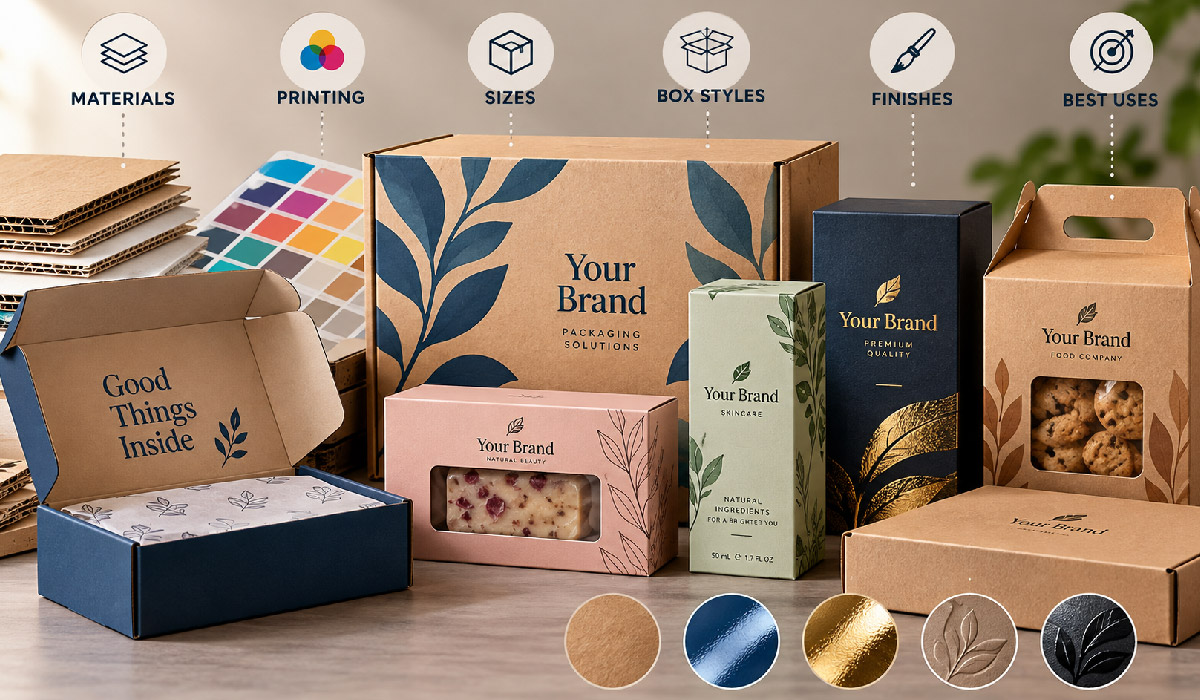
Cardboard packaging is everywhere, but that does not make it a one-size-fits-all solution.
The right board, thickness, dimensions, printing method, and box structure can turn a basic carton into packaging that protects a product and presents it professionally. Whether the package is heading onto a retail shelf or straight to a customer’s doorstep, each design decision affects how well it performs.
Here is what to consider when developing cardboard boxes for a product.
What Makes Cardboard Useful for Packaging?
Cardboard is widely used because it offers a practical balance between weight, strength, printability, and flexibility.
It can be cut, folded, scored, printed, and finished in many different ways. That allows businesses to create packaging for products ranging from lightweight retail items to larger packaged goods.
The material can also be produced in different thicknesses, so brands can select a board suited to the product rather than relying on one standard grade.
Choose the Board Based on the Product
The product should always come first.
Lightweight products may work well with thinner paperboard, while heavier products or packages that need more rigidity may require a thicker construction.
Consider:
- Product weight
- Fragility
- Shipping conditions
- Expected handling
- Required shelf life
- Interior inserts
- Storage and stacking
A box that only needs to sit on a shelf has different requirements from one that will pass through an e-commerce fulfillment network.
Choosing the board based solely on price can create problems later if the package bends, crushes, or fails to protect the product.
Size Is More Important Than It Looks
A well-designed carton should fit the product without excessive empty space.
Too much room allows the contents to move during transportation and can make the package look unnecessarily large. Too little space can make packing difficult or place pressure on the product.
The ideal dimensions account for both the product and any internal protection.
For fragile goods, that may include inserts, dividers, cushioning, or additional clearance.
Custom sizing can also help businesses create a more consistent product presentation across an entire packaging range.
Pick the Right Box Style
Cardboard can be used for many different structures.
Depending on the product, a brand may choose a tuck-end carton, sleeve, window box, dispenser structure, mailer, or another folding design.
The opening style should match how customers use the product.
A frequently accessed item may benefit from an easy-open and resealable structure. A gift product might need a more presentation-focused opening. Retail packaging may need to prioritize shelf visibility.
The shape and closure should solve a real need rather than simply look different.
Printing Gives the Box Its Identity
A cardboard carton provides plenty of surface area for branding.
The front panel can introduce the brand and product, while the sides and back can provide supporting information. Depending on the product, this could include instructions, ingredients, specifications, care details, or company information.
Color selection matters too.
A consistent palette can help a product range look connected, while different colors can distinguish individual variants.
Typography should remain readable at the size the package will actually be viewed.
Build Recognition With the Logo
A logo does not need to dominate the entire carton to be effective.
Strategic placement can make it visible while allowing the product name and other important information to remain clear.
For brands with multiple products, consistent logo placement can create stronger shelf recognition.
This is one reason custom logo boxes can be useful for businesses that want their packaging to feel consistent across different products and sizes.
The goal is to make the package identifiable without turning every surface into an advertisement.
Add a Window When Visibility Matters
A die-cut window can let customers see the actual product without opening the carton.
This can work well for:
- Food and confectionery
- Cosmetics
- Handmade products
- Gifts
- Small accessories
- Beauty products
The window should frame something worth seeing.
Its placement also needs to work with the product position inside the box. A poorly positioned window may reveal very little or interfere with structural strength.
Finishes Can Change the Experience
Printing establishes the main visual identity, but finishing can influence how the package feels.
Depending on the brand, options may include:
- Matte coating
- Gloss coating
- Soft-touch coating
- Foil accents
- Embossing
- Debossing
- Spot UV
A natural product might benefit from a restrained matte appearance, while a premium beauty product could use selective gloss or foil.
More finishing does not automatically mean better packaging. The effect should have a purpose.
Make Cardboard Work for Your Brand
The strength of Cardboard Boxes is their adaptability. They can be simple or premium, compact or spacious, minimalist or highly visual.
What matters is how the material, dimensions, structure, printing, and product requirements work together.
When those elements are planned properly, custom logo boxes can do more than carry a product. They can protect what is inside, communicate the brand, and create a consistent experience from shelf to customer.
You May Also Read: How Grocery Store Bakeries Actually Work and How You Can Shop Smarter
