

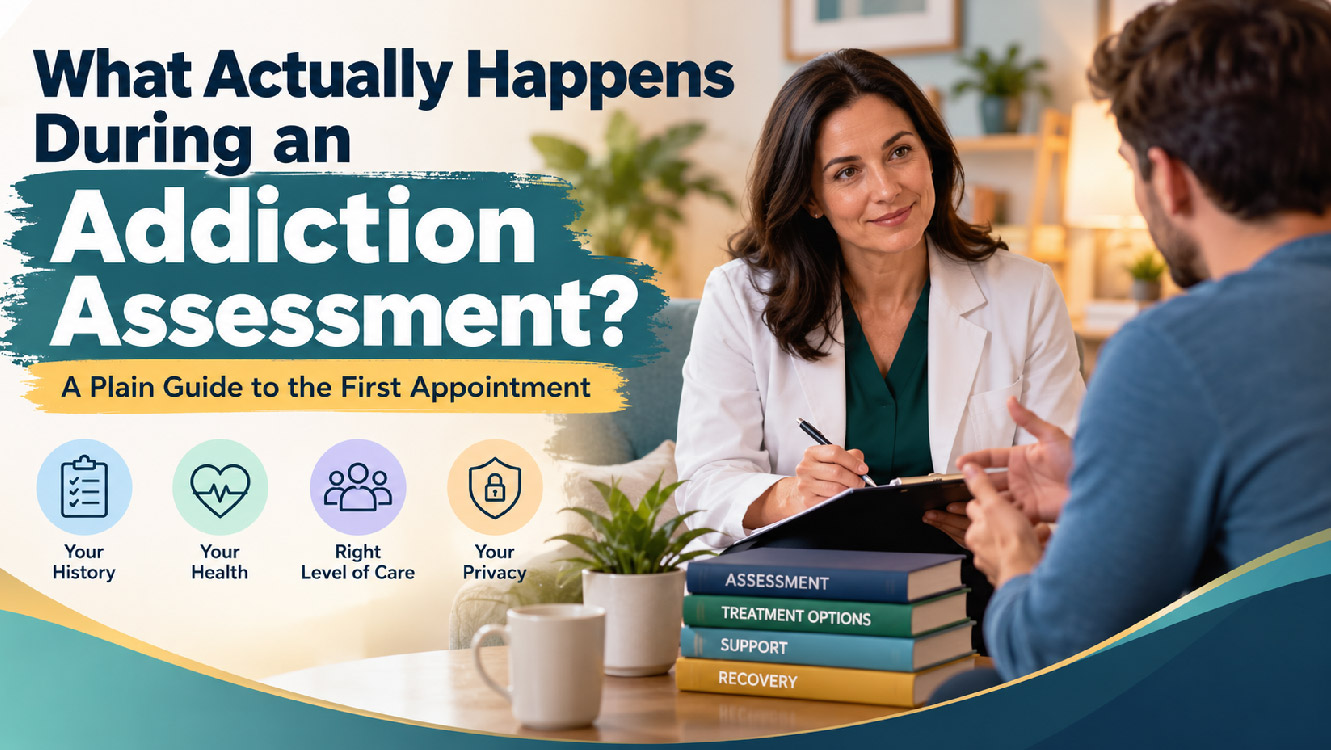
For many people, the hardest part of getting help for alcohol or drug use is not the treatment itself. It is the first appointment. Not knowing what will be asked, who will be in the room, or what happens to the information can make that first step feel bigger than it needs to be.
The need for that first step is widespread. SAMHSA’s 2025 National Survey on Drug Use and Health, released in July 2026, estimated that 44.6 million people aged 12 or older had a substance use disorder in the past year, but only about 16% of those who needed treatment received it. Whether the first appointment takes place in a doctor’s office, an outpatient clinic, or during the intake process at a luxury rehab or other residential program, most assessments follow a similar purpose: understanding the person well enough to recommend the right kind of care. Here is what to expect.
Why an Assessment Comes First
Addiction looks different from one person to the next. Some people need help managing withdrawal safely. Others need therapy for anxiety or depression alongside treatment for substance use. Some can continue living at home and attend outpatient sessions, while others benefit from a more structured residential setting. An assessment helps clinicians match care to the person’s actual needs rather than offering the same plan to everyone.
Who Conducts the Assessment
Assessments are usually carried out by licensed professionals, such as physicians, psychiatrists, psychologists, licensed counselors, or addiction specialists. In some settings, a nurse or intake coordinator gathers initial information, and a clinician reviews it before making recommendations.
What Clinicians Usually Ask About
Most assessments cover several areas of a person’s life. The questions can feel personal, but each one helps build a clearer picture.
Substance Use History
Clinicians typically ask which substances you use, how often, how much, and for how long. They may ask when you last used and whether you have tried to cut back before. Validated screening tools are often used here. One common example is the AUDIT, a 10-question alcohol screening tool developed by the World Health Organization.
Diagnostic Criteria
Many clinicians use the criteria in the American Psychiatric Association’s DSM-5, which lists 11 signs of a substance use disorder, such as using more than intended, cravings, and continuing despite problems. The number of criteria a person meets helps determine whether a disorder is mild, moderate, or severe.
Physical and Mental Health
Expect questions about medical conditions, medications, sleep, mood, anxiety, and past mental health treatment. Some assessments include a physical exam or lab tests, particularly when withdrawal risk is a concern.
How the Level of Care Is Decided
Many programs in the United States use the ASAM Criteria, published by the American Society of Addiction Medicine, to guide decisions about level of care. The criteria look at a person across several dimensions, including withdrawal risk, physical health, emotional and mental health, readiness to change, risk of continued use or relapse, and the stability of their living environment. Looking at all of these together helps clinicians decide whether outpatient care, intensive outpatient programs, or residential treatment makes the most sense.
How to Prepare for Your First Appointment
A little preparation can make the assessment smoother and less stressful. These steps can help you get the most out of the conversation.
- Write down what you use and how often. Approximate amounts, frequency, and when you last used are all helpful. Notes make it easier to answer accurately when you feel nervous.
- Bring a list of medications. Include prescriptions, over-the-counter medicines, and supplements. Some can interact with treatment medications or affect withdrawal.
- Be as honest as you can. Clinicians are not there to judge. Accurate information helps them recommend care that actually fits, and it can be critical for safety during withdrawal.
- Prepare your own questions. Ask about recommended treatment options, how long care might last, what costs or insurance coverage to expect, and how family can be involved.
- Bring a support person if allowed. A trusted friend or family member can help you remember details and offer encouragement, though some parts of the assessment may be private.
Preparation does not need to be perfect. Even showing up with a few notes and an open mind is a meaningful step.
What Happens to Your Information
Many people worry about privacy. In the United States, records from federally assisted substance use disorder treatment programs are protected by a federal regulation known as 42 CFR Part 2. A 2024 rule from HHS and SAMHSA updated those protections, with a compliance date of February 16, 2026. You can ask any provider how your information will be stored and who can access it.
After the Assessment
At the end of an assessment, clinicians usually share their recommendations. That might include a specific level of care, therapy options, FDA-approved medications for alcohol or opioid use disorder when appropriate, or referrals to other specialists. You are free to ask questions, take time to consider your options, or request a second opinion.
Final Thoughts
An addiction assessment is not a test you can fail. It is a conversation designed to understand your situation and point you toward care that fits. Knowing what to expect can make that first appointment feel far more manageable, and it is often the moment when real change begins.
Frequently Asked Questions (FAQs)
1. How long does an addiction assessment take?
It varies by provider and setting. Some initial screenings are brief, while comprehensive assessments that include medical and mental health questions can take longer. Asking the provider in advance can help you plan.
2. What is the ASAM Criteria?
The ASAM Criteria, published by the American Society of Addiction Medicine, is a framework many U.S. programs use to decide the right level of care. It considers factors such as withdrawal risk, physical and mental health, readiness to change, relapse risk, and living environment.
3. Will my assessment information be kept private?
Records from many U.S. substance use disorder treatment programs are protected under 42 CFR Part 2, which was updated by a 2024 federal rule. You can ask your provider how your information will be handled.
Read More: The Future of Healing: Exploring the Science Behind Regenerative Medicine
