

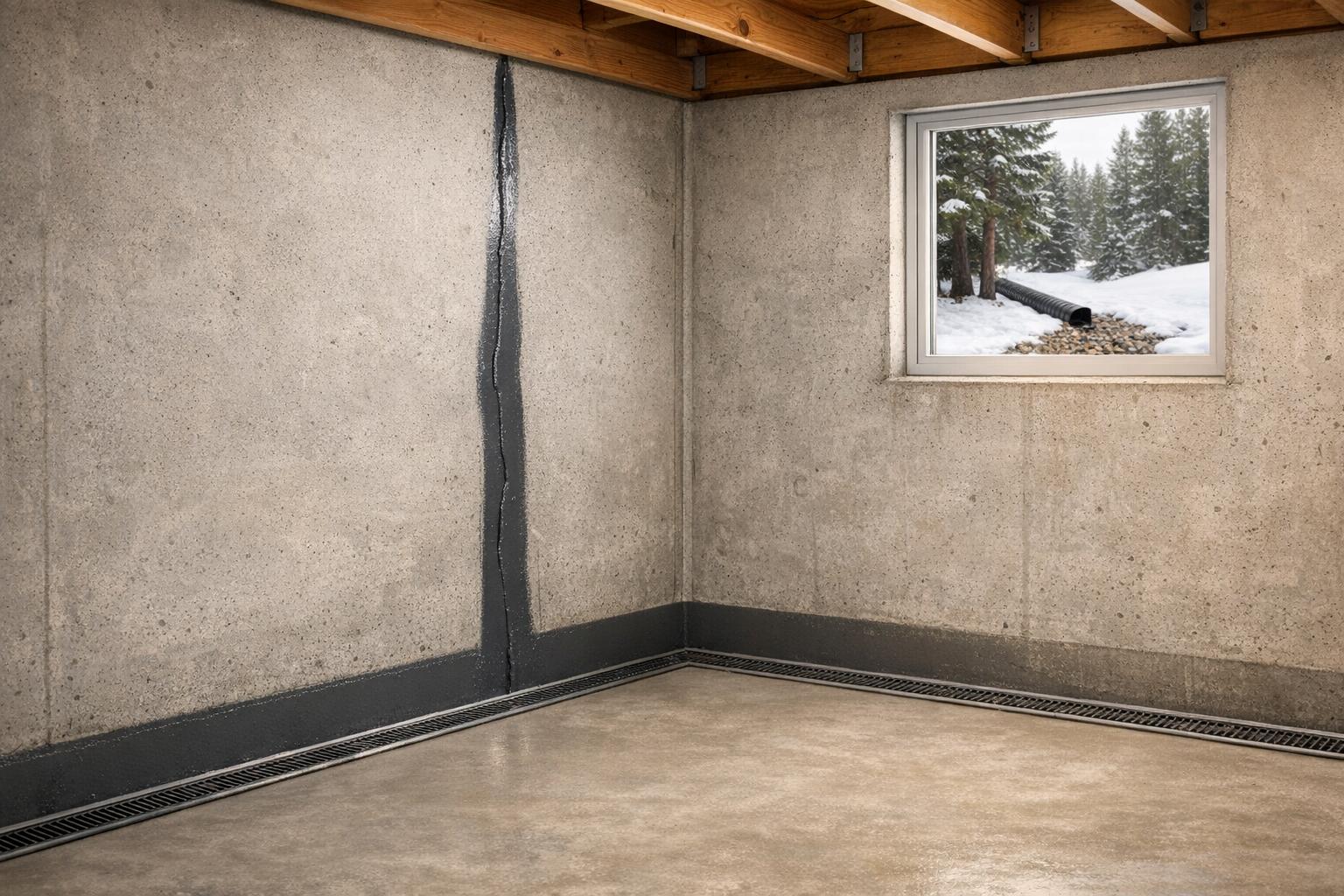
Water in a basement rarely starts where it appears. Moisture can wick through block cores, push up at the floor-to-wall seam, or condense on cool concrete long before you notice a musty odor or bubbled paint. Because different problems call for different solutions, guessing often leads to the wrong fix: painting a wall that is actively leaking, using a dehumidifier for a bulk water issue, or installing a new sump pump that cannot help a clogged footing drain. The fastest path to a dry, usable space is to read the signs accurately, connect them to likely sources, and choose a repair that addresses the cause, not the symptom.
-
What the Moisture Looks Like Matters
Patterns tell a story. A white, chalky film called efflorescence creeping across concrete or block suggests ongoing vapor movement as water dissolves salts and deposits them as it evaporates. Beads or a thin line of water at the cove joint, where the slab meets the foundation wall, often point to hydrostatic pressure building under the slab. If you are comparing Indianapolis basement waterproofing services, noting details like a damp strip along the base after prolonged rain, a wet carpet pad only near a wall, or paint blistering halfway up a block cell will help you describe the problem clearly.
Crack type matters too. A tight, vertical crack in poured concrete that leaks only in downpours can often be sealed by injecting epoxy or polyurethane. In block foundations, stair-step cracking paired with a slight inward bow indicates lateral soil pressure rather than a simple seep. Water in a window well that spills over the sill or drips from a rusting well liner points to clogged well drains or missing covers. Puddles around a floor drain or the base of a utility sink, especially when household fixtures run, may indicate a plumbing leak rather than groundwater.
-
Matching Signs to Likely Sources
Timing is a powerful clue. If seepage appears shortly after gutters overflow or downspouts discharge next to the foundation, surface runoff is the first suspect. A damp band at the bottom row of blocks that worsens after multi-day soaking rain points to saturated soils and hydrostatic pressure feeding water through the cove joint or block cores. Persistent humidity, fogged windows, and wet pipes during warm, sticky weather usually indicate interior condensation, not an exterior breach.
Structural cues add context. Step cracks and wall bowing suggest expanding clay soils and lateral pressure, especially on the wall facing the prevailing weather. Water pooling in a window well during storms indicates the well lacks drainage to the footing drain or that the drain is clogged. A steady wet spot under a first-floor bathroom, even in dry weather, often traces back to a supply or drain line rather than to a footing drain or sump pump issue. Map where moisture shows, how quickly it arrives and dries, and what weather or plumbing use precedes it.
-
Simple Checks Before You Call
A few safe observations can sharpen the diagnosis. Tape a square of plastic to a bare wall or slab overnight; moisture collecting on the room side of the plastic points to condensation, while moisture behind the plastic suggests vapor moving through the concrete. During a storm, listen at the sump pit: frequent cycling may indicate an active footing drain feeding the pit, while silence during seepage could signal a blocked drain tile or a failed pump. Trace the sump discharge line outside to confirm it runs well away from the foundation and daylights above grade rather than into a saturated flower bed.
Targeted exterior checks help too. Watch where downspouts dump during rain; splash blocks or extensions that stop short of a good runoff path can send water straight to the footing. Lightly hose the soil several feet from a suspect wall for a few minutes while someone inside observes the cove joint and wall face; if water appears quickly, surface grading and drainage deserve attention. Clear debris from window wells and confirm that the well drains, not just the cover, can move water to a safe outlet.
-
Choosing a Fix That Fits the Cause
Match the remedy to the source to avoid repeat work. For runoff problems, extend downspouts well away from the house, regrade soil to slope away from the wall, and add or repair window well drains and covers. For a single leaking crack in poured concrete, professional epoxy or urethane injection can seal the path through the wall. When hydrostatic pressure is pushing water up at the cove joint or through block cores, an interior French drain along the perimeter, tied into a properly sized sump pump basin, relieves pressure and routes water out safely.
Some decisions involve trade-offs. Exterior excavation with a waterproofing membrane keeps water off the wall but can disrupt landscaping and hardscape; interior drain systems are less invasive but manage water after it reaches the inside face of the wall. Bowed block walls may need reinforcement with carbon fiber straps or steel supports in addition to drainage improvements. Condensation calls for air sealing rim joists, insulating cold pipes, and running a dehumidifier; these steps will not stop bulk water but will dry the air mass that fuels mildew and musty odors. Finally, consider redundancy: a battery-backup sump pump or water-powered backup can keep water moving during outages.
Timing, Maintenance, and Documentation
Moisture problems rarely improve on their own. Tackle simple exterior controls as soon as possible by cleaning gutters, extending downspouts, and clearing window wells. Test your sump pump seasonally: lift the float to confirm operation, listen for the check valve to close without hammering, and make sure the discharge remains clear. It terminates where it cannot recirculate toward the footing. Keep a notebook or photo log showing where water appears, how weather relates to it, and what steps you have taken; these details speed evaluations and help avoid solutions that miss the mark.
The most reliable waterproofing outcomes start with accurate observation. By noting specific patterns like cove joint seepage, efflorescence streaks, window well overflows, or stair step cracks, you can narrow the cause and choose repairs with purpose instead of guesswork. Exterior drainage often solves runoff, targeted injections can handle isolated wall leaks, and interior drains with a dependable sump system relieve pressure that forces water inside. With clear notes and a focused description of your basement’s behavior, you will be ready to discuss next steps with a qualified professional and invest in fixes that last.
