

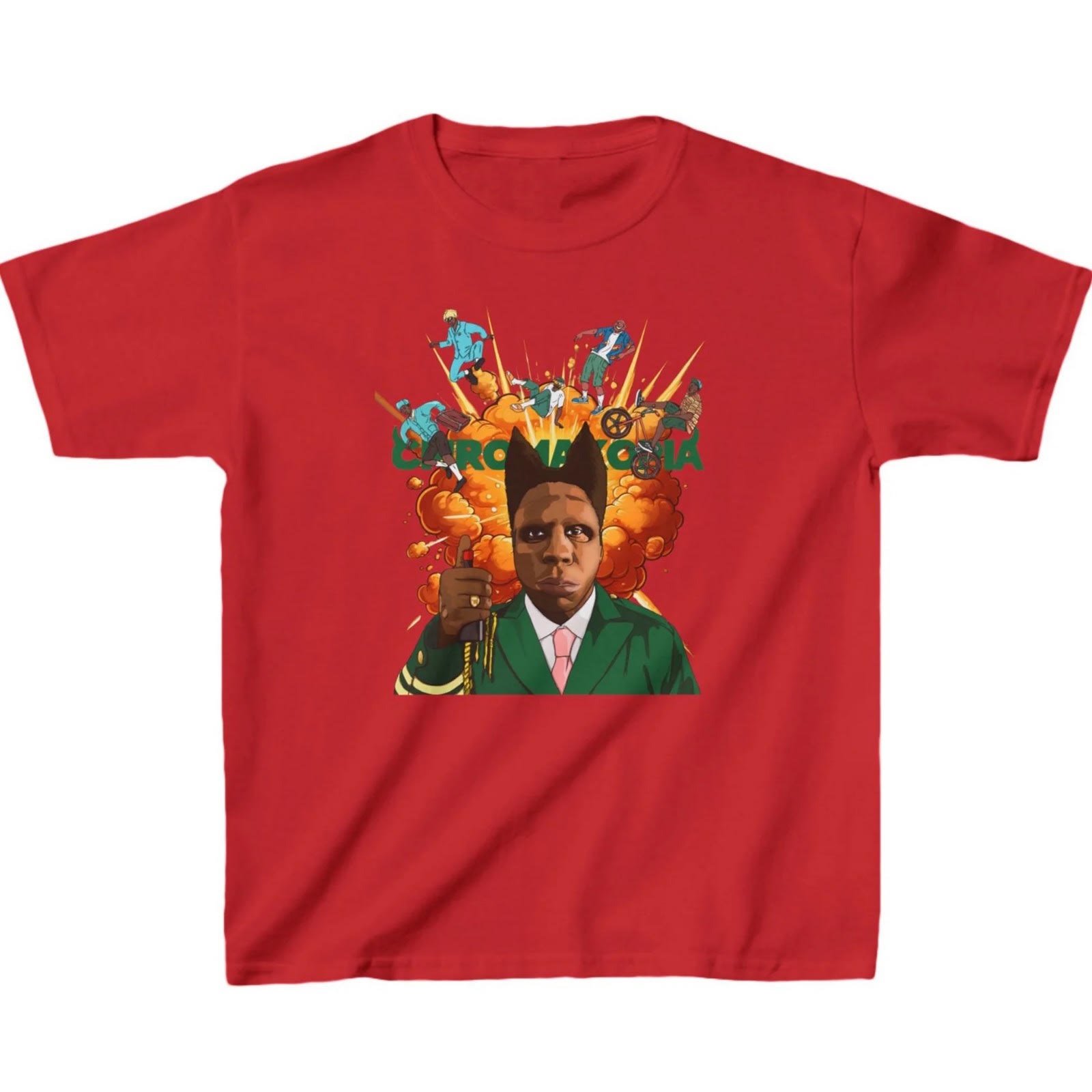
A kids’ hoodie gets maybe eleven months of honest wear before the cuffs start looking borrowed. Sometimes fourteen. Sometimes eight, if you’ve caught a growth year. So when a kids’ piece sits at $70 on Tyler the Creator Merchandise, the question worth asking isn’t whether $70 is a fair price for a hoodie. It’s whether the thing is still wearable by the time a younger sibling is big enough to want it.
So how long does one actually last?
Somewhere between five and ten, kids tend to add about two inches a year, and it’s slow enough that you barely notice. Then eleven or twelve turns up, the rate roughly doubles for a while, and a whole drawer of clothes stops fitting over a single summer.
Height isn’t what finishes a hoodie, though. Arms are. A kid’s arm span grows a little faster than their torso through those middle years, so the sleeve runs out before the body does, and you end up with a hoodie that still covers the stomach fine while the cuffs have crept halfway up the forearm.
Which is survivable, oddly. A short sleeve reads as pushed-up rather than outgrown. A tight chest is the real end point — once the shoulder seams pull when they raise their arms, nobody’s wearing it again.
Measure the kid, not the age on the label
The store’s own FAQ says to measure and compare against the chart on the product page, and that’s the difference between one order and two. Age labels mean little, depending on how a kid is built an eight-year-old lands anywhere from a small youth size up to an adult small. Run the tape twice, because you will misread it once.
| Measurement | Where the tape goes | What it decides |
| Chest | Fullest part, under the arms | Whether it fits at all |
| Sleeve | Neck, over the shoulder, to the wrist bone | How long you get out of it |
| Body length | Shoulder top down to the hem | Oversized, or just too big |
| Shoulder | Seam point to seam point | How far the shoulder drops |
Then write those four numbers in your phone with the date beside them. In six months you’ll want to know how fast they moved, and you won’t remember.
Sizing up on purpose, and how far is too far
One size up buys you roughly a year. That’s the deal most parents are quietly making, and on something already cut loose it’s fair enough, since going up once still reads as oversized rather than plain wrong.
Go two sizes up, and you’ve bought something that lives in a drawer, with sleeves past the fingertips and a hood that swallows most of the face. Kids are unsentimental about this. They just won’t put it on.
There’s a second thing sizing up does that catches people out. A chest graphic is scaled to the garment it’s printed on, so a print on a Chromakopia Hoodie in a bigger size is physically bigger too, and on a smaller frame it sits lower than the photos suggest. Not ruined. Just nearer the stomach than the chest.
What’s actually left for the second kid
Fleece bodies are tough. Two years of a kid wearing something twice a week and the main panels are usually fine. What dies is the edges and the print.
- Ribbed cuffs stretch out for good once they’ve been pulled over hands for a year
- Drawcords get chewed, knotted or pulled clean out of one side of the hood
- Prints crack along fold lines, where a hoodie has sat folded the same way for months
- Underarms pill first, because that’s where fabric rubs fabric all day
- Hems curl for good once the hoodie has been through a hot dryer enough times
Honestly, the body and the hood come through fine. It’s the cuffs and the waistband that give the thing away, and the print lives or dies on how cool you kept the wash — one that’s gone in at 85°F inside out and dried on a rail still looks good three years on, while the same hoodie run hot weekly flakes before the first kid is even done with it.
The two years it sits in a bin
Storage ruins more hand-me-downs than wear does. Wash it before it goes away — body oils you can’t see oxidize over a couple of years in the dark and come back as yellow patches at the collar that nothing shifts.
Fold it with the print facing out rather than pressed against itself, because printed surfaces stick together in heat and an attic through a humid East Coast summer gets more than hot enough to prove it. And use a plastic bin in a closet, not a cardboard box out in the garage.
Buying with the second kid already in mind
Color does most of the work here. Black, gray and brown come back out of storage looking roughly like they went in. Cream and white can yellow, and a kid who hasn’t learned about ketchup will test that within a week. Washed finishes hide marks better than flat solids anyway.
Returns only cover an item that turns up damaged or just wrong, reported inside seven days with photos and the order number — there’s no change-of-mind window and no swapping sizes later. Measure first. Honestly, that one habit saves more money on kids’ clothes than anything else here.
Frequently Asked Questions
My kid is between two sizes. Which one?
The larger one, nearly always, as long as the chest measurement isn’t more than about two inches off. A loose hoodie gets worn. A snug one gets outgrown by March.
Will it shrink?
A bit, in a hot wash — cotton-rich fleece gives up a little length in the body more than the width. Keep it cold, dry it on a rail, and it stays roughly where it started, which is also what keeps the print in one piece, so you’re not really trading anything.
Can I send it back if it doesn’t fit?
No. Returns are limited to items that arrive damaged or incorrect, flagged inside a week of delivery, with photos and the order number. Sizing is on you, which is why the tape measure comes first.
Does the print really last long enough for a second child?
If it’s washed cold and inside out, yes. The graphic will have softened and may show fine cracks, which plenty of people prefer anyway. Hot washes and a tumble dryer are what turn soft into flaking.
Key Takeaways
|
None of this is complicated, it just doesn’t get written down much. Take the four numbers, pick something that forgives a bit of mess, keep the wash cool, and one $70 hoodie dresses two kids. Open the kids’ pieces next to the sizing chart with those measurements in your phone, and you’re done in a couple of minutes.
