

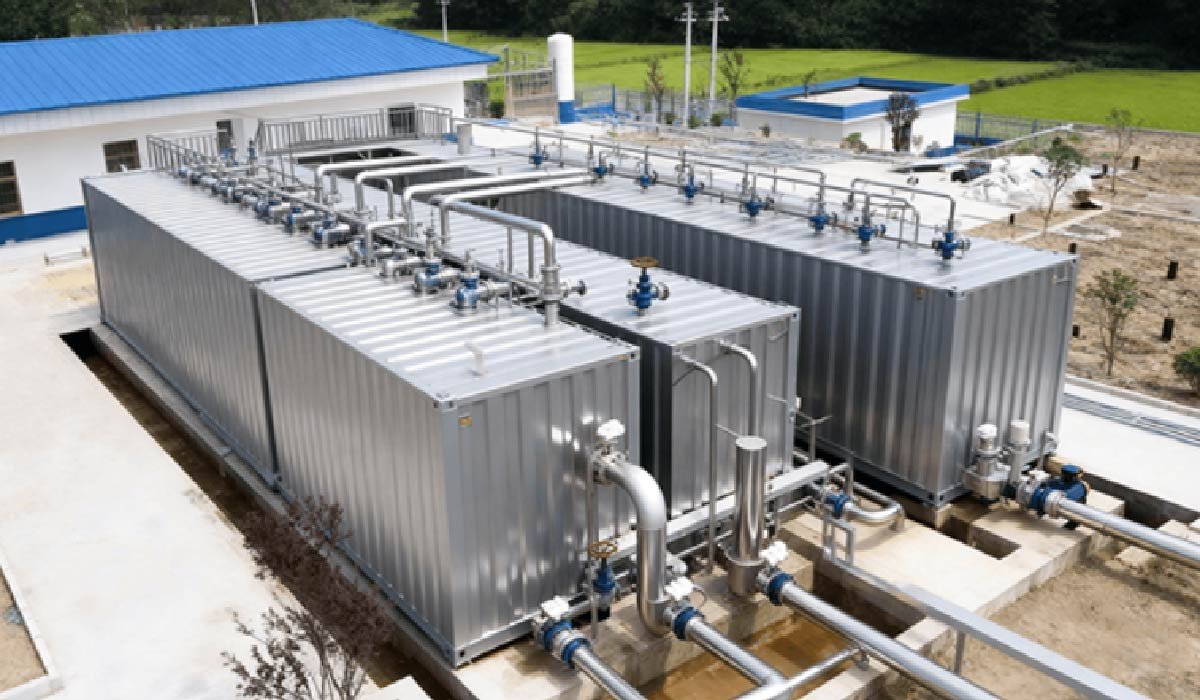
Industrial wastewater conditions are seldom constant. New lines are added to the factories, production changes, and cleaning cycles lead to peak loads. If a plant’s capacity or process train is not flexible, the treatment plant can be difficult to operate.
There, integrated modular systems can be of help. Rather than being designed as a single treatment facility, treatment is broken down into a series of process modules that are coordinated around the wastewater profile and the quality of effluent required.
To industrial operators, scalability is more than just being able to generate more cubic meters per day. The system should also allow for flow peaks, changes in loading of contaminants, and changes in water quality requirements. QILEE does this by using a combination of treatment processes in line with project conditions.
Why Industrial Wastewater Requires More Than Simple Capacity Expansion
The quality of industrial wastewater may vary from one point in the plant to another. A food-processing plant can experience high suspended solids, oils and organic loads, and chemical, pharmaceutical, textile and metallurgical industries can have dissolved contaminants, high levels of heavy metals, challenging organics and variable pH.
Just adding capacity is not a solution to an expansion problem. If production increases COD, oil loading, salinity or another critical parameter, equipment in the downstream sites can be overloaded even if daily flows are just within design range.
The hydraulic and pollutant loads should therefore be taken into account within the same scalable design, as hydraulic, biological, membrane, chemical dosing, and polishing capacity may respond differently to the same factory expansion.
How Integrated Modular Systems Are Configured for Industrial Wastewater
A valuable modular treatment train starts with the characterization of the wastewater and does not simply begin with a standard equipment package. The engineers need to be provided with dependable flow, peak data, important contaminants, pH, and the necessary discharge/reuse criteria.
Those findings determine which treatment functions are needed. The containerized industrial wastewater systems from QILEE can be combined with dissolved air flotation (DAF), chemical dosing, chemical treatment, MBR, TMBR, nanofiltration, and reverse osmosis. The final mix is not one of all the technologies being used but is a mix dependent on the wastewater.
Matching Modules to Specific Treatment Duties
| Treatment duty | Possible process | Main purpose |
| Separate oil and solids. | Dissolved air flotation (DAF) with chemical dosing. | Minimizes suspended solids, oils, grease, and colloids |
| Targeted chemical treatment | Dosing and reaction processes. | Changes water chemistry or degrades contaminants that need chemical reactions |
| Biological treatment | MBR or TMBR | Treats biodegradable pollutants with the use of membrane separation in addition to biological treatment |
| Advanced polishing | NF or RO | Provides additional separation in cases where a higher reuse quality is needed |
| Process supervision | Integrated controls | Coordinates treatment stage monitoring, alarms, and operation |
The engineering benefit involves the choice of only the stages the wastewater requires. Unnecessary processes increase costs, chemical requirements, maintenance, and operator workload but do not necessarily improve reliability.
Scaling Hydraulic Capacity Without Rebuilding the Treatment Train
Parallel expansion is the logical option if the basic composition of the wastewater remains the same but the quantity is increasing. The original module is not required to manage the full incoming load, but can share the load with another treatment module.
This is suitable for phased developments. A facility can deploy initial capacity and allow for space, piping connections, electrical connections, and control integration to be reserved for other modules to be added at a later time. These interfaces are planned for early in the design process, to prevent significant changes when expanding the design.
QILEE offers industrial wastewater configurations ranging from 10 m³/day to 5,000 m³/day with the modular arrangements chosen depending on the water quality and the project needs.
Various flow rates and pollutant concentrations will need a different mix and equipment size.
Scaling Treatment Depth When Water-Quality Targets Change
Some expansions are based on effluent needs instead of increased flow. A factory that used to dispose of treated wastewater may return part of it. Pretreatment and/or biological stages may be appropriate and continue to function upstream, with further polishing added downstream.
Sequential expansion: adding a new treatment function – not duplicating the entire plant. NF or RO can be included at a later stage, depending on the reuse objective and feed quality.
The distinction matters. More flow is distributed with hydraulic expansion; the treatment-depth expansion changes what is being removed. Seeing both as just a capacity buildup can lead to mismatched equipment.
Designing for Variable Loads, Not Just Average Flow
Average daily flow is not representative of all operating conditions. Short peaks of flow or pollutant concentration may be caused by batch dumping, washdown cycles, shift changes or seasonal production.
The peak hydraulic load, peak contaminant load and peak duration should be evaluated for a modular project. The sizes of the dosing, biological, and membrane processes must be based on realistic conditions, while equalization may provide protection to downstream stages.
That is why, prior to equipment selection, wastewater sampling and production data are important. Flexibility is achieved by using a modular layout.
Factory Integration Still Requires Site Engineering
Containerized construction allows much of the assembly, piping, instrumentation and control work to be completed away from the operating site, which cuts fieldwork in situations where space and/or production schedules are limited.
The site still requires adequate equipment positioning, utility access, drainage, maintenance access, chemical handling and interfaces with the existing tanks prior to commissioning.
Integration of the factory elements does not eliminate the need for coordinated civil, mechanical, electrical and process engineering; it just cuts down on field assembly.
Automation Becomes More Important as Modules Are Added
With the addition of pumps, dosing units, valves, membrane stages, instruments and alarms, coordinated control becomes more important.
QILEE’s containerized industrial wastewater system features integrated instrumentation and SCADA-based monitoring, automatic control and fault alarms. It is also important that a scalable control architecture can be expanded to include additional modules without forming “islands”.
Automation is not a substitute for capable operation. There are still issues such as influent changes, membrane condition, chemical use, sludge production and abnormal trends that need to be addressed.
Planning for Future Industrial Change
Project teams should first identify the potential future changes: production increase, changes in wastewater chemistry, reuse goals, space available for expansion, and utility capacity.
The overview of the QILEE water treatment system portfolio represents the company’s overall capabilities for treating wastewater in a variety of treatment processes and containerized treatment solutions.
Conclusion
The design basis for industrial wastewater treatment should represent current conditions and realistic future scenarios. The practical solution is to figure out where the plant will require greater hydraulic capacity, contaminant removal, and/or additional polishing in the future.
That is where integrated modular systems can help, dividing treatment into coordinated functions that are sized, combined, and expanded around the real wastewater problem. If the design basis considers realistically variable flows, pollutant loading, interfaces, controls and future connections, then expansion is seen not as a total redesign of the plant but as a planned engineering step.
Modular wastewater treatment has value to industrial facilities that anticipate changes since it allows valuable infrastructure to be preserved and provides the wastewater system with a practical growth path.
