


A tailgate now runs a speaker, a screen and a row of phones, and the three behave nothing alike. Each device has its own idea of what a socket should provide, and the argument starts at the plug. The failure is rarely capacity; it is a port that cannot give a device what it expects. Distribution decides the evening, because three loads on one outlet behave worse than the same three spread across three. The fix is usually a port or a cable, and it is cheaper than the battery people buy instead. The aim here is to plan ports, cables and outlet load before the car park rather than during it.
Speakers and Audio
Wattage and Volume
A portable speaker’s rating is usually its maximum, not its average. At background level it may draw five watts, at a volume that competes with a stadium it may draw forty. The difference matters because tailgates are loud places, and the volume that wins the argument with the car next door is not the volume you tested in the kitchen. Plan for the higher figure and the battery will not surprise you. A speaker rated at forty watts on the box often averages eight to twelve in normal use, and that gap is where runtime estimates go wrong. The label on the back of the speaker is the honest number, and it is usually written in small print next to the model number. A speaker that lives in a bag with its charger is a speaker that arrives with a full battery.
Runtime at Each Volume Level
Runtime scales roughly with volume, though not linearly. Halving the volume buys more than double the hours, which is why a smaller speaker played sensibly outlasts a large one played flat out. If the party runs six hours, work out the hours at the level you will actually use, not at the level the box advertises. Anyone planning around what is tailgate party noise should start here, because volume is the load. A test at home for an hour tells you more than the specification. Six hours at a quarter volume is a realistic tailgate; six hours at full volume is a different event with a different battery. A power bank for the phones costs less than another battery for the speaker, and it solves the most common complaint.
Phones and Screens
Port Types and Simultaneous Charging
Phones are small loads and they multiply: six people, six cables, and suddenly the port count matters more than the watt-hours. The question that decides whether the screens stay on is how many ports the battery has and whether they share their output. Look for a mix of USB-C, USB-A and at least one AC outlet. Count the cables you actually own rather than the ports you wish you had, and bring a two-port charger for the phones. A six-outlet strip with a two-metre lead covers a folding table and the boot at the same time.
Cables and Adapters
Bring one cable per device and one spare, because the spare is the one that gets borrowed. Short cables are better in a crowd, and a labelled bag stops the usual negotiation at hour three. A multi-port adapter is convenient and it also hides a limit: three devices on one adapter may share a single small output, which is slower than it looks. A short cable is worth more than a long one in a crowd, because it does not become a trip hazard after dark. Adapters multiply ports but rarely multiply power, which is the detail the packaging leaves out. A labelled pouch for the cables saves the five minutes everyone spends looking for the right one.
On-Site Distribution
Power Strips and Extensions
The layout problem is physical: getting power from the battery to the table without a cable across the walking path. One strip with a long lead turns a battery in the boot into a power point at the table. Keep the strip off the ground and the connection under cover, and do not daisy-chain two strips, because the second one hides how much load is really on the first. Ten feet of lead solves most layout problems. Put the strip on a table rather than the floor, route the lead along the table edge rather than across the middle, and nobody kicks it after the first hour. Test the whole arrangement at home once, and the car park becomes a repeat rather than a rehearsal.
Load Balancing Across Outlets
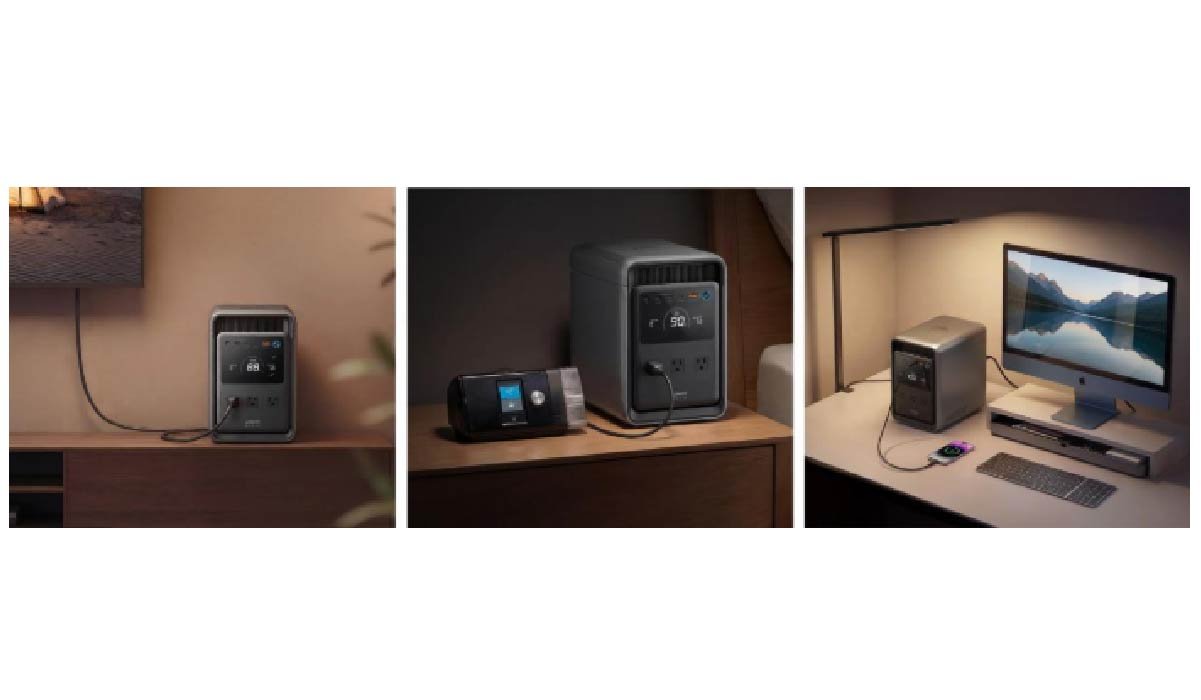
The electrical problem is different: once the power is at the table, where does each device plug in? Spread the load rather than stacking it. A speaker, a screen and a phone charger on three outlets behave better than the same three on one, because the unit’s inverter has less work to do at any single point. If a station offers a high-output outlet, reserve it for the load that needs it. Compact units such as the Anker SOLIX S2000 make this easy, because 1,500W of rated output is shared across its outlets, so a screen and a speaker can sit on separate ones with 2,010Wh behind them. If the unit offers a DC output, keep the small loads there and leave the AC outlet free for the screen. Leave one outlet empty for the thing nobody planned for, because there is always one.
Conclusion
Match ports to devices and volume to runtime, and the tailgate stays powered. The arithmetic is the same whether the battery is large or small; only the margin changes, and the margin is what a good afternoon is made of. Ports, volume and margin: three things to settle before the car is loaded, and none of them takes more than a minute. Decide the ports, the volume and the margin, and the rest of the afternoon looks after itself. Set the screen before the crowd arrives and test the channel before the game starts; a little patience at the start saves the afternoon.
