

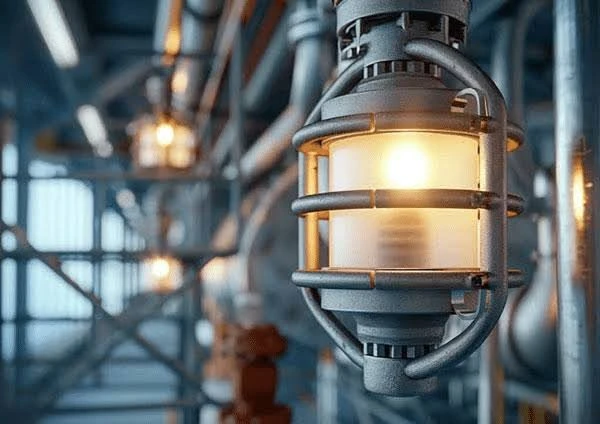
Explosion-proof fittings do not stop a spark from happening. They stop it from mattering. The fitting sits inside a thick, sealed enclosure that can survive an internal explosion, contain it, and cool any escaping gas below its ignition point, so the flame never reaches the explosive atmosphere outside.
That surprises plenty of people, because the name suggests the light can never blow up. In practice, explosion-proof lights are built on a smarter idea: assume gas will get inside, then make sure nothing dangerous gets out. Once that clicks, choosing and maintaining them gets a lot easier.
Below is a plain walkthrough of how the protection works, what the markings mean and what to check on site.
How Does an Explosion-Proof Light Work?
A flameproof (Ex d) fitting uses a heavy enclosure with precisely machined joints. If gas enters and ignites inside, the housing withstands the pressure, and the narrow gaps between metal surfaces cool the escaping flame and gases so they cannot ignite the atmosphere outside. Surface temperature stays below ignition levels too.
Why a Normal Light Is a Risk in Gas and Dust
An explosion needs three things at once: fuel, oxygen and an ignition source. A fuel depot, paint booth or grain store already has the first two in the air. The only one you can control is the third, and a standard light fitting is full of potential ignition sources.
Common Ignition Sources Inside an Ordinary Fitting
- Arcing at switch contacts or loose connections
- A hot lamp surface or driver that can ignite gas or dust
- A cracked lens or broken glass exposing live parts
- Dust layers smouldering on a warm housing
What Does Explosion-Proof Actually Mean?
Explosion-proof is a common trade term, and a slightly misleading one. Formally, the equipment is certified as flameproof under the IECEx scheme and the AS/NZS 60079 series. Suppliers such as MineGlow show the Ex marking and certificate details on each fitting, which is the first thing to check before anything goes up on a ceiling or pole.
Flameproof, in plain terms, means the enclosure is allowed to fill with gas and ignite. It is the escape of that explosion that gets blocked.
How a Flameproof Enclosure Contains a Blast
A Housing Built for Pressure
The body is usually cast aluminium or stainless steel, and it is tested well beyond the pressure an internal explosion would create. That strength keeps the housing intact, so there is no rupture and no flying debris.
Flame Paths That Cool the Flame
Where the cover meets the body, or where a thread joins parts together, the gap is machined to a tight, controlled width and length. Hot gases pushing through that narrow path lose heat to the metal. By the time they reach open air, they are too cool to light the surrounding atmosphere.
A Surface Temperature Limit
Every fitting also carries a temperature class from T1 (450 degrees Celsius) down to T6 (85 degrees Celsius). It tells you the hottest surface the light can reach, which must stay below the ignition temperature of the gas or dust on site.
What Happens Step by Step
- Gas or vapour seeps into the enclosure through normal breathing and pressure changes.
- A spark or hot component inside ignites that gas.
- Pressure rises, and the strong housing holds without cracking.
- Hot gases escape only through the machined flame paths.
- The flame cools to a safe temperature, and the outside atmosphere stays untouched.
Flameproof Is Not the Only Protection Method
Different hazards call for different approaches. Some designs contain an explosion, while others prevent a spark in the first place. A quick comparison:
| Protection method | How it works | Typical use |
| Flameproof (Ex d) | Contains an internal explosion and cools escaping flame | Gas areas, heavy duty fittings |
| Increased safety (Ex e) | Built to avoid sparks and excess heat in normal service | Terminal boxes, some luminaires |
| Intrinsic safety (Ex i) | Limits electrical energy so a spark cannot ignite gas | Instruments, handheld devices |
| Dust protection (Ex t) | Sealed, temperature limited enclosure keeps dust out | Dusty areas such as grain or coal |
Where These Fittings Earn Their Place
Refineries, fuel terminals, chemical plants and paint shops all rely on explosion-proof industrial lighting where flammable vapour can build up. Underground coal operations face methane and coal dust together, which is why explosion-proof mining lights must meet strict certification before they go below ground.
Modern explosion-proof LED lights also help in a practical way. LEDs run cooler than old discharge lamps and last far longer, so there are fewer lamp changes in dangerous spots and a lower surface temperature to manage.
How to Check a Fitting Is Genuine
- Look for the Ex marking on the label, such as Ex db IIC T4 Gb.
- Confirm the IECEx certificate number and that it matches the product.
- Match the gas or dust group and temperature class to your site classification.
- Use certified cable glands and blanking plugs only.
- Never drill, paint over flame paths or swap parts, because any damage can void the protection.
Frequently Asked Questions
1. Do these fittings stop explosions from happening?
No. An explosion can still start inside the housing. The design contains it and cools the escaping gases, so it cannot ignite the atmosphere outside.
2. Can an explosion-proof fitting explode inside?
Yes, and it is built for that. The enclosure is tested to withstand the internal pressure without rupturing.
3. Is explosion-proof the same as waterproof?
No. Waterproofing is an IP rating. A fitting can be well sealed against water and still be unsafe in a gas area without Ex certification.
4. What does Ex d mean?
Ex d means flameproof protection. The enclosure contains an internal explosion, and the machined joints cool, escaping flame and gases.
5. Can I modify or repair a flameproof light myself?
No. Scratched flame paths, wrong screws or an altered cover can destroy the protection. Repairs should follow the manufacturer’s instructions and AS/NZS 60079.19.
6. What is the difference between flameproof and intrinsically safe?
Flameproof equipment contains an explosion. Intrinsically safe equipment limits electrical energy so it cannot create an igniting spark at all.
Final Thoughts
A good fitting does not rely on luck. It assumes the worst, contains it and keeps hot surfaces in check. Pair that with correct certification, certified glands and regular inspection, and hazardous location lighting does its job quietly for years.
MineGlow is a trusted Australian name for certified lighting in gas, dust and mining environments, and the team is happy to help match a fitting to your classification report.
