

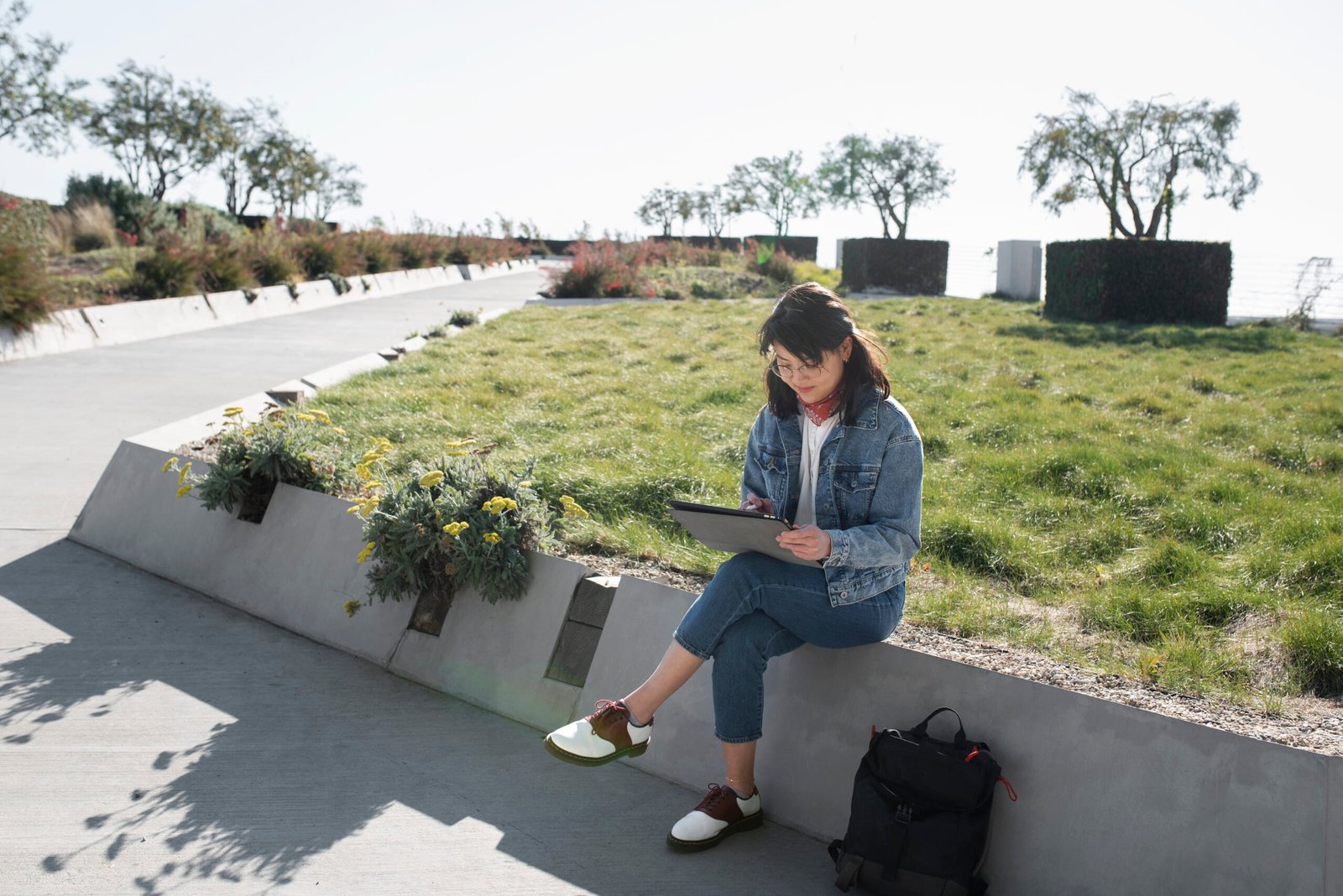
A well-maintained property does not necessarily need an expansive lawn. In urban neighborhoods, where outdoor space is often limited to narrow side yards, compact front gardens, patios, and small backyards, every square foot has to serve a purpose. Choosing the best lawnmower for small yard maintenance is part of that decision, but the more important question is whether the property needs as much grass as it currently has.
Smaller turf areas can reduce routine maintenance, improve how outdoor spaces function, and create opportunities for planting beds, seating areas, and more environmentally appropriate landscaping. Instead of treating a traditional lawn as the default, homeowners can design around how they actually use their outdoor space.
1. Why Urban Properties Benefit From Rethinking Traditional Lawn Design
Large lawns became a familiar feature of residential landscaping, but their practical value changes considerably when properties become smaller. A narrow strip of grass between a driveway and a fence may require regular mowing without providing meaningful recreational space.
In compact gardens, lawn maintenance can consume a disproportionate amount of time. Equipment must be maneuvered around walls, raised beds, trees, garden furniture, and other obstacles. The smaller the usable turf area, the more important efficient design becomes.
Reducing unnecessary grass can provide several advantages:
- Less time spent mowing and trimming.
- More room for outdoor seating and practical pathways.
- Greater flexibility for ornamental and edible planting.
- Reduced demand for irrigation in areas where grass is difficult to maintain.
- Easier access to corners and narrow planting spaces.
The objective is not to eliminate lawns altogether. It is to retain grass where it contributes to the property’s function.
2. Evaluate How Much Lawn the Household Actually Uses
Before changing a landscape, homeowners should observe how their outdoor space is used throughout the year. A family with young children may need an open patch of grass for recreation, while someone who primarily uses the backyard for gardening may benefit from considerably less turf.
Start by identifying the activities that take place outdoors.
Consider these questions:
- Is the lawn used for children’s play or entertaining?
- Are there sections that remain unused throughout most of the year?
- Does grass grow successfully in shaded or heavily compacted areas?
- Are pathways and planting beds more useful than additional turf?
- Does maintaining the current lawn require disproportionate effort?
A practical approach is to divide the property into functional zones. Keep accessible grass for activities that genuinely require it, then reconsider sections that serve little purpose.
This prevents homeowners from removing useful lawn space simply to follow a landscaping trend.
3. Design Smaller Turf Areas Around Movement and Accessibility
One of the most overlooked aspects of small-garden planning is movement. A lawn might appear attractive from the house but become difficult to maintain because pathways, planting borders, and garden structures interrupt its shape.
For example, a backyard measuring 20 by 30 feet may contain a central lawn surrounded by raised vegetable beds and a narrow walkway. Although the grass occupies a relatively small area, frequent turning and edging can make mowing surprisingly time-consuming.
Simplifying the lawn’s shape can improve maintenance efficiency.
Useful design considerations include:
- Keep lawn boundaries relatively simple rather than creating multiple narrow sections.
- Provide clear access between planting beds and seating areas.
- Avoid tiny grass strips that are difficult to mow.
- Position garden furniture where it does not obstruct routine maintenance.
- Use suitable ground covers or mulch in spaces where turf struggles.
A compact rectangular lawn may be easier to maintain than several disconnected patches of grass occupying the same total area.
4. Choosing the Best Lawnmower for Small Yard Maintenance
Selecting the right equipment becomes easier once the actual mowing requirements are understood. The best lawnmower for small yard maintenance should match the available space, grass conditions, storage arrangements, and frequency of use.
A mower designed for a large suburban property may be unnecessarily bulky for a narrow urban garden.
Here is how common mower types compare:
Push Reel Mowers for Very Small, Manageable Lawns
Manual reel mowers work well on relatively level lawns with regularly maintained grass. They do not require fuel or battery charging and are generally easy to store.
However, they are less suitable for tall, dense, or uneven grass. Homeowners must also be comfortable providing the physical effort required.
Compact Electric Mowers for Routine Residential Use
Corded and cordless electric lawnmowers are practical options for many smaller properties. They offer straightforward operation and avoid the need for gasoline storage.
Cordless models provide additional flexibility when navigating around garden obstacles. Battery capacity, cutting width, and runtime should be considered before purchasing.
Compact Battery-Powered Mowers for Flexible Landscaping
Battery-powered mowers can be particularly useful when a property has several small turf sections separated by pathways or planting beds.
Their maneuverability and freedom from extension cords make them convenient for working around landscape features. Homeowners should compare cutting deck dimensions, battery compatibility, storage requirements, and available replacement batteries.
5. Replace Unnecessary Turf With More Functional Landscape Features
Once the essential lawn area has been established, the remaining space can be redesigned to provide greater practical value.
A small urban garden does not have to depend entirely on grass to look attractive. Different materials and planting arrangements can create visual variety while reducing the area requiring regular mowing.
Consider these alternatives:
- Mulched planting beds: Suitable for ornamental shrubs, perennials, and selected native plants.
- Ground-cover plants: Useful in spaces where traditional turf struggles to grow.
- Permeable pathways: Create accessible routes while allowing water to infiltrate the ground.
- Raised garden beds: Make productive use of narrow outdoor spaces.
- Patio areas: Provide functional space for dining, relaxation, or entertaining.
The choice should reflect sunlight exposure, soil conditions, drainage, and local climate. Native and regionally adapted plants can be particularly useful because they are better suited to local growing conditions.
The U.S. Environmental Protection Agency’s green landscaping guidance offers additional information about water-conscious landscape planning.
6. How to Calculate the Right Lawn Size Before Making Changes
Reducing turf without planning can create awkward transitions between grass, pathways, and planting areas. A simple assessment helps homeowners avoid unnecessary redesign work.
Follow these steps:
- Measure the existing lawn: Record approximate length and width, separating irregular sections into manageable shapes.
- Identify essential activities: Determine how much open grass is needed for recreation, pets, or other regular uses.
- Mark underused areas: Identify sections that are difficult to access, heavily shaded, or rarely used.
- Plan alternative surfaces: Decide whether planting beds, paths, or seating areas would provide greater value.
- Consider maintenance access: Ensure the remaining lawn can be reached comfortably with the selected mower.
- Test the layout: Temporarily mark proposed boundaries before removing existing turf.
For irregular properties, measuring individual sections is more reliable than estimating the total area visually.
7. Common Small-Lawn Landscaping Mistakes That Increase Maintenance
Smaller does not automatically mean easier to maintain. Poor planning can make a compact garden more demanding than a larger, simpler lawn.
Some common mistakes include:
- Creating too many narrow grass strips: These require additional trimming and repeated equipment repositioning.
- Choosing an oversized mower: Large equipment can be difficult to maneuver through gates and around garden structures.
- Ignoring drainage: Removing turf without considering water movement can create muddy areas or runoff problems.
- Planting without checking sunlight: Shade-sensitive grass and sun-loving plants may struggle when placed incorrectly.
- Removing too much usable turf: Families may later discover that the remaining lawn cannot support their outdoor activities.
A balanced design considers appearance, accessibility, and long-term maintenance rather than focusing exclusively on reducing grass coverage.
8. Frequently Asked Questions About Small Urban Lawns
How much lawn does a small urban property really need?
There is no universal minimum. The appropriate lawn size depends on household activities, available space, climate, and personal preferences. Retain enough grass for its intended purpose rather than maintaining unused sections.
What is the best lawnmower for a very small backyard?
A compact electric mower or manual reel mower can work well. The decision depends on lawn size, grass height, terrain, and whether convenient storage or cordless operation is a priority.
Is replacing part of a lawn with ground cover a good idea?
Yes. Suitable ground-cover plants can reduce mowing requirements and provide attractive alternatives in areas where traditional grass is difficult to maintain. Choose varieties suited to local conditions and expected foot traffic.
Does reducing lawn area help conserve water?
It can. Replacing unnecessary turf with appropriately selected native plants, mulched beds, and other water-conscious landscape features may reduce irrigation demand. Results depend on regional rainfall and plant selection.
A More Purposeful Approach to Residential Lawn Care
Small urban gardens benefit from intentional design rather than simply reproducing the landscaping patterns of larger suburban properties. A carefully planned lawn can provide recreational space, improve visual balance, and remain relatively easy to maintain without occupying the entire yard.
The most effective approach begins with understanding how the property is used. Once unnecessary turf has been identified, homeowners can select appropriately sized mowing equipment and introduce landscape features that better support everyday needs.
Ultimately, a successful small garden is not defined by how much grass it contains. It is defined by how effectively every available outdoor area serves the people who use it.
