

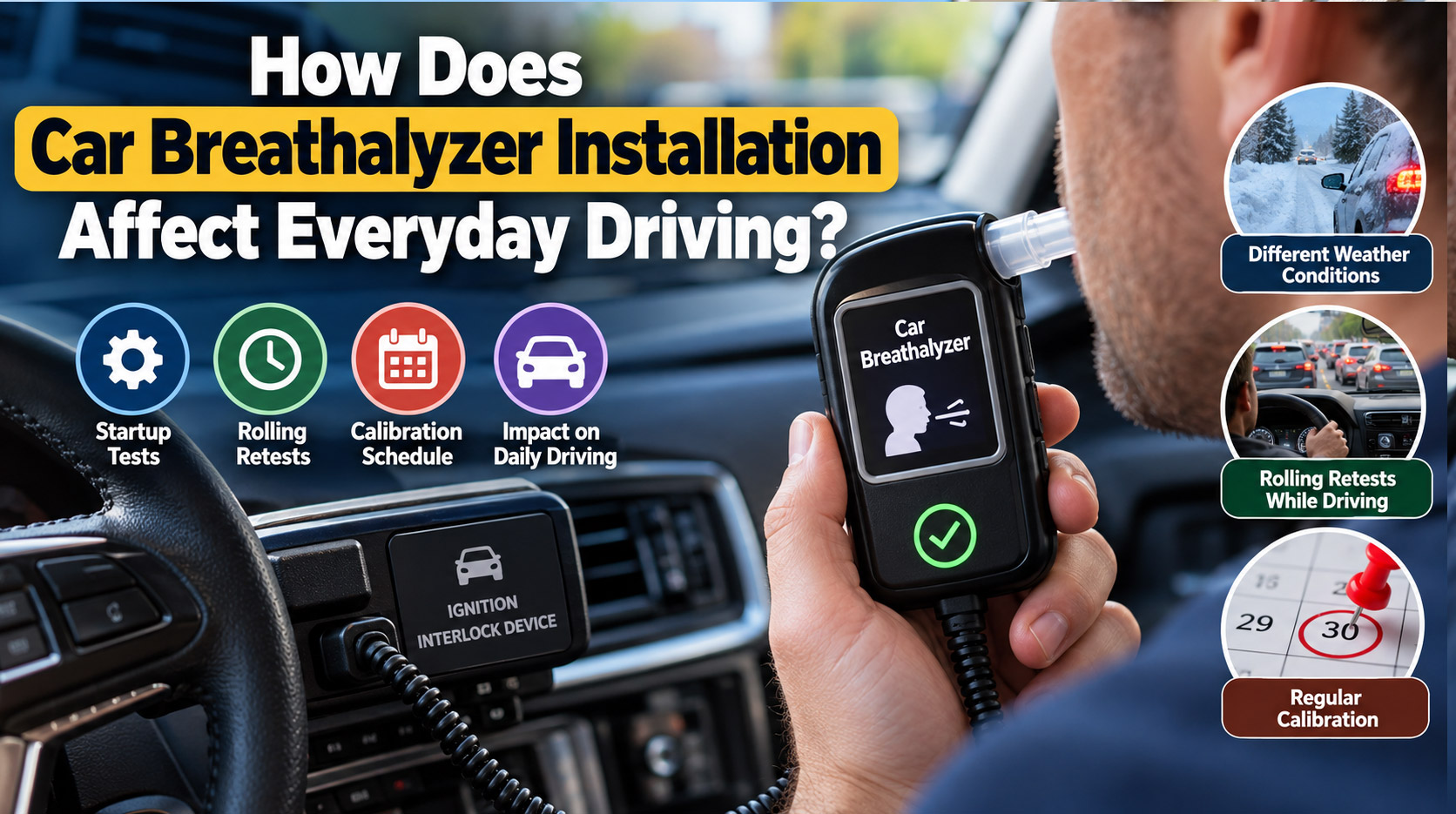
Interlock programs are typically described in terms of compliance, violation and reporting parameters. In practical terms however, the way in which an interlock affects the day to day life of the driver is where most problems occur. A driver who gets used to the required startup test(s) within the first week or so is likely to complete the program without problem. Not so the driver who learns by violation.
For those of you who advise clients, monitor compliance or even manage a fleet of vehicles fitted with car breathalyzers, understanding the practical day to day experience of the various different models of device is key to understanding how Ignition Interlock programs work in practice and where problems occur.
The startup sequence and what it actually demands
The program has a set point for blowing into the handheld unit prior to starting the engine. Typically this set point is set for a 0.02 BAC reading. To register a sample for testing, the handheld unit requires a sustained blow to be followed by a hum or a suck back action by the user. The handheld unit is looking for a live human sample and not air from a mechanical source such as a vent.
In cold weather, the time to obtain a breath sample can take longer for some Ignition Interlock Devices (IIDs). Most will require the IID to warm up before it can begin to take samples. This can take anywhere from a minute or so in cold weather. However, vehicles can be set up with a remote start interface, which would allow the vehicle to start and heat up the cabin prior to the IID being ready to take samples. However, the vehicle would not move prior to the interlock obtaining a passing sample.
Where the first failed starts come from
Mouth alcohol occasioning a ‘positive’ breath test reading that is to be distinguishable from drivers being under the influence of alcohol is to be expected from the majority of first time participants and most frequently includes two items being left in the mouth, e.g. Followed by use of toothpaste/dental gel and taking strenuous exercise/dressing warmly shortly before breath testing.
- Mouthwash, breath spray, and alcohol based hand sanitizer used in the cabin
- Fermented foods, yeast heavy bread, and some energy drinks
- Residual alcohol from the previous evening, particularly before 9am
- Inhalers and certain cough preparations with ethanol carriers
Typically it takes 15 minutes for mouth alcohol to dissipate. During that time it is best to rinse the mouth with water and then blow into the unit again. Problems occur when a person continues to blow into the unit over and over in hopes of passing it. Soon the data log for the unit will reflect a pattern of failed attempts over and over again.
Rolling retests and the attention cost of driving
Once a starting test has passed, the breathalyzer Ignition Lock Device requires further starting tests while driving. These tests are generally scheduled to occur within 5-15 minutes of first starting to drive and then randomly thereafter for the duration of the driver’s operating period. The time allotted for a test to be given can typically be completed within several minutes to pull over to a safe location and take the test.
Missing a roll retest does not cause the car to lock up. It will however record a violation. This will also cause the horn and lights to continue to come on until the car is turned off and then back on. Many people believe that they will be stuck in traffic if they miss a retest. However, fear of this causes more “dumb” errors (such as unplanned “alcohol contamination” from mouthwash, etc) than there are instances of a driver being stranded.
Practical habits that reduce exposure
- Mount the handset within easy reach rather than leaving it in a console or footwell
- Complete the first retest at a planned stop within a few minutes of departure
- Keep bottled water in the vehicle for rinsing before any sample
- Treat the prompt window as time to find a safe place to stop, not a countdown
Installation choices that shape the experience
How and where the car breathalyzer is installed is crucial for all parties involved in the Ignition Interlock Device program. Drivers in Ventura County are generally best served by booking Oxnard breathalyzer device installation with a certified shop, where the wiring to the ignition switch, the positioning of the handset and the calibration are all matched to the specific parameters of the respective interlock program.
| Stage | Typical duration | What determines the outcome |
| Initial installation | One to two hours | Handset placement, cable routing, vehicle electrical condition |
| Driver training at handover | 20 to 40 minutes | Practice samples, lockout explanation, violation definitions |
| Routine calibration and download | 20 to 30 minutes | Appointment adherence, service center proximity |
| Removal | Under an hour | Final data review, restoration of wiring |
The maintenance calendar and the lockout clock
Typically, a service visit for the calibration and download of the data from the car breathalyzer is required within 30 to 60 days. Your Ignition Interlock Device is programmed to lock up after a set period of time, typically counting down from that date, and will lock up permanently if not serviced within that time frame. This can occur while you are on vacation, during seasonal work or when a vehicle is infrequently used and left in long-term storage.
Advising on vehicle and battery considerations
To see if the vehicle’s battery is old or near to needing to be recharged, before the installation of the Interlock device, check the battery health to see if it would cause the vehicle to fail to start and have the ignition shut off for interlock violation of possible tampering or power failure.
The individuals who complete interlock programs for good reason are typically not the most disciplined individuals. Rather, they have learned to live with the device installed in their vehicles and have structured their daily routines around the interlock.
You May Also Read: Beyond the Blue Water: What to Consider Before Building a Backyard Pool
