

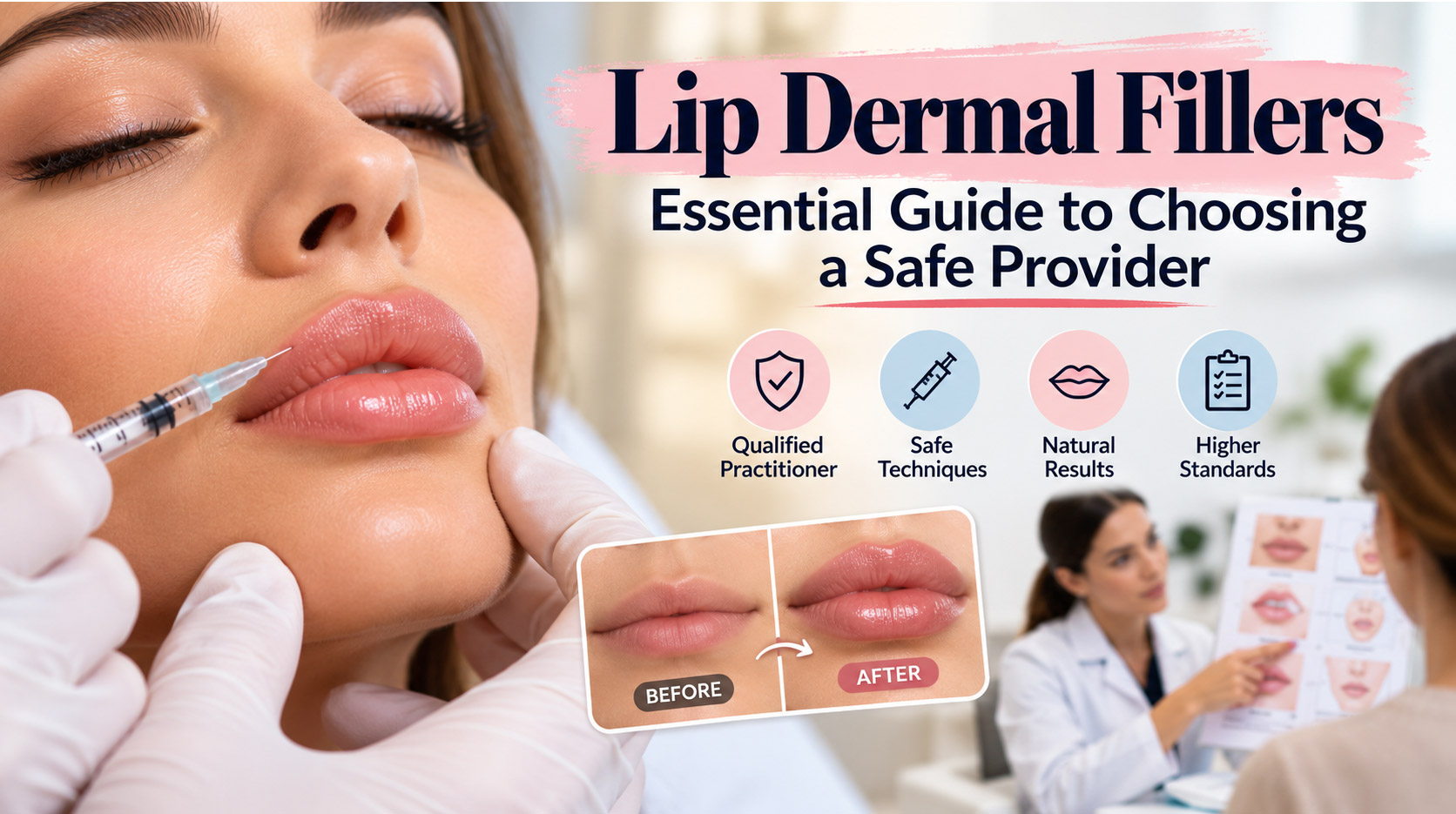
Lip dermal fillers sit at a somewhat sensitive crossroads, dermal fillers for lips are heavily governed by most countries while many patients are very dissatisfied with the cosmetic outcome of their fillers. Thus, many practitioners rely on training certificates issued to them and to potential referred practitioners by various schools, meanwhile not realizing that the quality of such certificates varies greatly. Therefore, practitioners who advise patients, build referral networks of doctors and clinics and audit doctors’ and clinics’ standards of fillers should check whether a doctor’s training certificate in fact proves sufficient for lip fillers. The below criteria for screening practitioners who perform dermal fillers are developed from practical clinical experience with fillable products as well as from running a company that runs filling courses for doctors.
Credentials that actually predict competence
While licensure establishes a minimum bar for who can practice (e.g. Physicians, NP’s, PA’s, RN’s practicing within their Scope of Practice under the appropriate direction of another Medical Doctor), documented training in the specific areas of perioral anatomy and the Vascular Supply to the lips is far more important.
It is also important to find out what kind of training the doctor received for the fillers. A 1-day seminar for 6 areas of the face in 8 hours of training does not equal a long preceptorship with many filler injections that the candidate can discuss in detail and review of cases. Look for continued education on complications and treatment of them with hyaluronidase and the ability to recognize vascular occlusion.
Questions that separate depth from paperwork
- Which anatomical landmarks guide your needle or cannula placement in the vermilion border versus the body of the lip?
- What is your protocol if a patient presents with blanching or disproportionate pain during injection?
- How much hyaluronidase do you keep on site, and when was it last checked for expiry?
- Who provides medical oversight, and how quickly can that person be reached during a treatment session?
Someone who thoroughly explains the ways in which injectable failure can be managed is better than someone who only talks about the brands of products that they use and their various marketing campaigns.
What a competent consultation looks like
A good provider first does a diagnostic conversation and after that he makes photographs of the patient’s lips in the same lighting as the photographs of other patients. These are then scored on specific characteristics (like the lip to chin distance, the position of the philtrum, the dental show at rest and in motion etc.) and the degree of volume loss in relation to structural asymmetry.
While the reasons for lip fillers can be varied, the history of prior fillers to the face (especially to the lips), current symptoms of autoimmune disease, a history of cold sores and need for prophylaxis with antiviral meds, current use of anticoagulants, and planned dental work all affect decisions for fillers to the lips and timing of treatments.
Aligning on treatment goals before product selection
The goals of the patient should be very specific, and truly relevant to their anatomy and to the structure of their lips. For example, someone wanting fuller lips may actually want more definition to the borders, they may want to fix some kind of asymmetry, or they may even need help to take the edge off of a frown at the oral commissures. Each of these very different needs can be achieved with different products and at different volumes. Patients comparing lip injections near me are better served by a clinic that maps product and volume to these distinctions, since simply treating the patient as if they were to be filled with the standard syringe of filler is to treat them as if they were buying from a price list.
A full explanation of what you can expect in terms of reversal, duration, swelling and how much improvement one treatment will give is important to explain.
Hygiene and facility standards
Work that is typically considered to be a sterile procedure (i.e. Administering injectables) can typically be found to be performed in the setting of an office (i.e. Med spa, doctor’s office, etc.) or salon. This would typically reflect the doctor’s clinical discipline.
| Standard | Acceptable practice | Warning sign |
| Product handling | Sealed, in-date syringes opened in front of the patient | Pre-drawn syringes or unlabeled product |
| Sourcing | Purchased through authorized distributors with traceable lot numbers | Imported or discounted stock of unclear origin |
| Skin preparation | Documented antiseptic protocol and makeup removal | Injection over residual cosmetics |
| Sharps and waste | Compliant containers, single-use needles | Reused cannulas or improvised disposal |
| Emergency readiness | Hyaluronidase, epinephrine, written protocols on site | No stocked reversal agent |
Reading a portfolio with a critical eye
Before-and-after photos can be very easily manipulated, so use your judgment when looking at these on a provider’s website. Look at many photos, not just a few that open well. Evaluate the photos against the technical criteria listed above rather than against your overall impression.
- Confirm the lighting, camera angle, and expression match between images. A change in any of these can manufacture a result.
- Look for cases that resemble the patient in question, including older patients, thin lips, and revision work on previously treated tissue.
- Check whether after photos are taken at a stated interval. Images shot immediately post-treatment show swelling, not outcome.
- Note whether any corrections or dissolutions are shown. Providers who publish revision cases are usually more candid about limits.
Using reviews without being misled by them
When reading patient reviews for lip filler online be sure to filter for the clinic’s customer service, the patient’s experience with communication with the clinic prior to treatment and following treatment for swelling or asymmetry. Also read to see if the patient had to return for additional touch-ups and whether they were easily reached by staff for any questions or concerns.
These criteria can form a reasonable means of choosing a provider and enable the patient to become better informed in their decision and to hold the provider to a higher standard of practice once treated. Ultimately, a more informed patient will demand better from all practitioners.
You May Also Read: Beyond the Blue Water: What to Consider Before Building a Backyard Pool
