

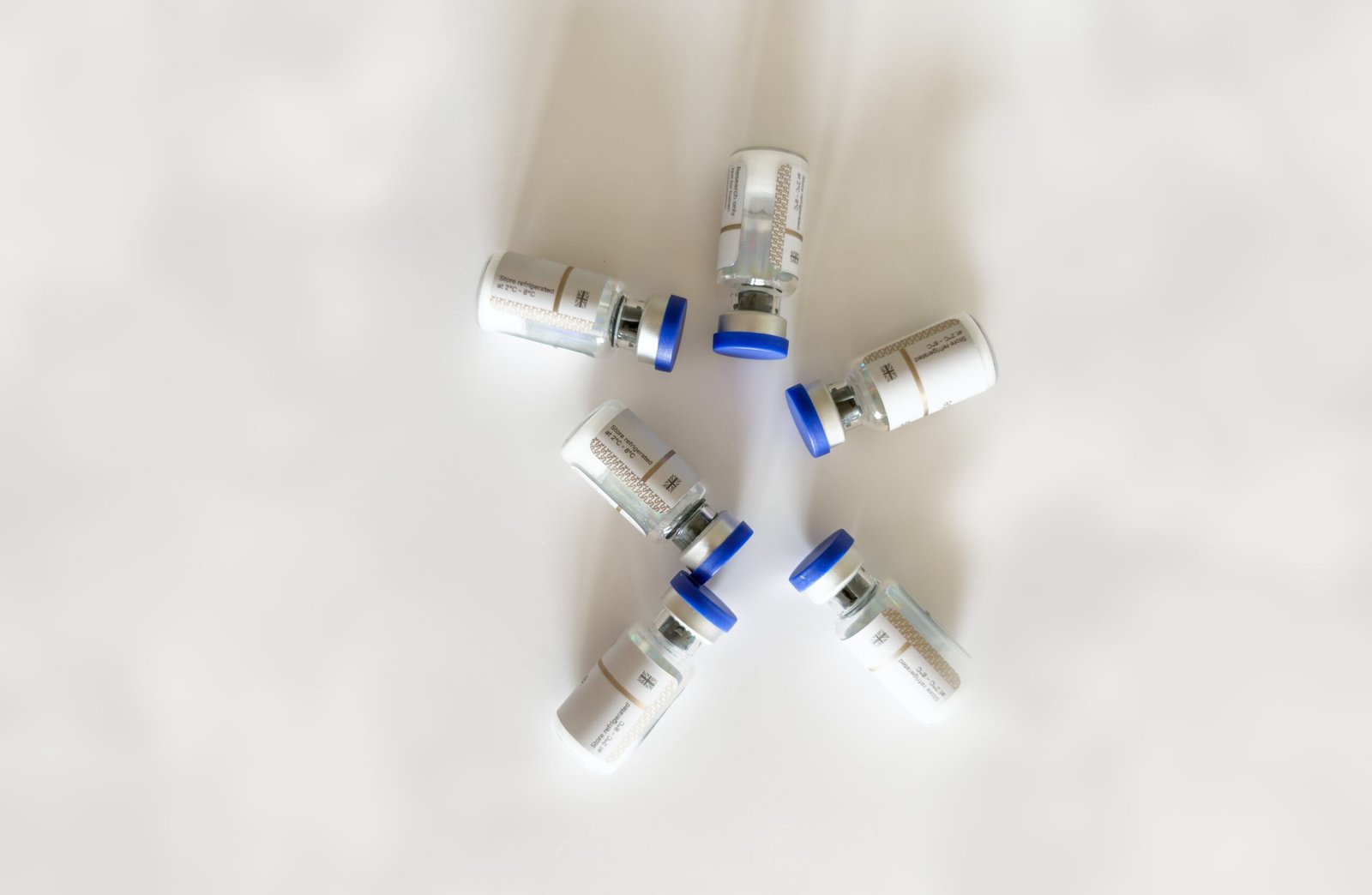
Peptide blends are now one of the most talked-about areas of the UK research market. Instead of four separate vials, researchers can work with a single pre-combined vial. The KLOW blend is one of the most popular examples. Here is what it contains, why those peptides are grouped together, and what to check before buying.
What is in KLOW?
A standard KLOW vial contains 80mg of peptide in total, made up of four components:
- GHK-Cu (50mg), a copper-binding peptide studied in skin and wound-healing research.
- BPC-157 (10mg), a synthetic peptide studied in tissue-repair models.
- TB-500 (10mg), a synthetic fragment based on thymosin beta-4, studied in cell-migration research.
- KPV (10mg), a short three-amino-acid peptide studied in inflammation research.
Why combine them?
Each of these peptides has been studied for a different part of the repair process. GHK-Cu is linked in research to collagen and skin remodelling, BPC-157 to blood-vessel formation and signalling, TB-500 to cell movement, and KPV to inflammatory pathways. Researchers interested in how these mechanisms interact sometimes prefer one blended vial over handling four separate ones.
It is worth stressing that almost all of the published work on these peptides is pre-clinical, meaning cell and animal studies. None of them is a licensed medicine in the UK.
KLOW vs GLOW
KLOW is closely related to the GLOW blend. GLOW contains the same GHK-Cu, BPC-157 and TB-500, but no KPV. KLOW simply adds KPV to the mix. A side-by-side comparison of the two is in this KLOW vs GLOW guide.
What to check before buying a blend
Blends are harder to test than single peptides, because the lab has to confirm several compounds in one vial. That makes independent testing even more important.
- Ask for a certificate of analysis that identifies each component, not just the total weight.
- Make sure the test comes from an independent third-party lab such as Janoshik.
- Check that the batch number on the certificate matches your vial.
- Buy from a UK company you can contact, with clear research-use labelling.
UK suppliers such as Revial Labs list a research-grade KLOW Blend 80mg from UK stock, with batch testing published.
Storage
Like most freeze-dried peptides, KLOW should be stored refrigerated and away from light. Once reconstituted with bacteriostatic water, keep it refrigerated and avoid repeated freezing and thawing.
The bottom line
KLOW is popular because it brings four well-studied research peptides into one vial. For researchers, the key is making sure every component is actually there, at the stated amount, which is why verifiable independent testing matters most.
Note: KLOW and its components are supplied for laboratory research use only. They are not for human or veterinary use, and this article does not make therapeutic claims.
