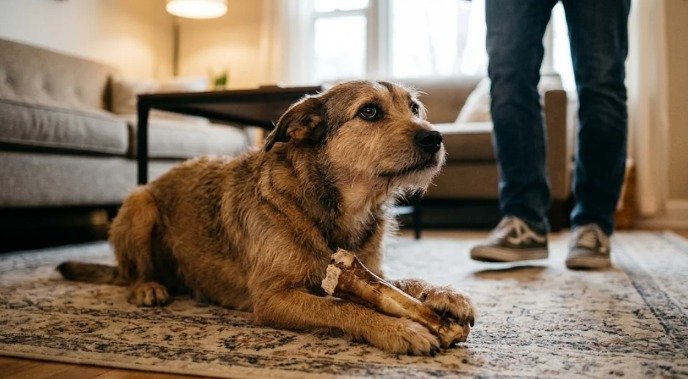
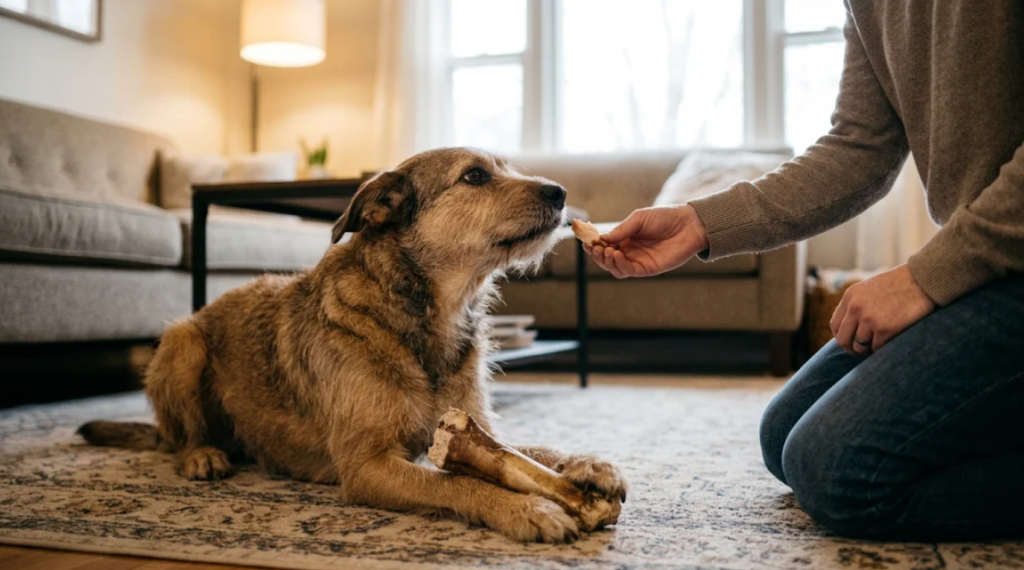
Is your dog growling at people approaching their food bowl, hiding a favorite toy from you, or becoming protective when other pets come close to where they sleep? If so, these behaviors could possibly indicate that your dog has what’s called “resource guarding” behavior.
Resource guarding is a very common type of canine behavior in which dogs will defend an item that they consider to have value.
That item could be food, toys, rest places, items that were taken from them, or even a person. While it may appear as though the dog is being stubborn or aggressive, this is typically the result of fear that they are going to lose something that is important to them.
By understanding how and why this occurs and by recognizing the earliest indicators of this behavior, owners should be able to prevent it from occurring or reduce the likelihood of injury.
What Is Resource Guarding in Dogs?
Resource guarding is defined as when an animal displays undesirable body postures or threatening behaviors to keep humans or animals away from objects that have value to the animal.
Behavior will vary depending on what an individual animal considers unacceptable, ranging from mildly uncomfortable to threatening such as growling, snapping, or biting, and how many items the animal feels are valuable enough to be protected.
Examples of resource guarding would include but are not limited to:
• Guarding food bowls and treats, or chews, during mealtimes
• Defensive behavior when a favorite toy is approached by someone else.
• Protecting beds, sofas or other areas that are used as resting areas.
• Taking stolen objects and resisting return of the items guarded.
• Guarding access to a specific person or family member.
Resource guarding doesn’t imply an animal’s general aggression. The majority of resource guarding occurs under situational conditions, where the animal values whatever it is defending, such as food or toys.
Why Does Resource Guarding Happen?
Resource guarding typically develops from a combination of learned behaviour, environment and learning factors.
Fear of Losing Valuable Resources
Defensiveness by some animals occurs due to the belief that others may remove the items they are protecting such as food, toys or objects. This may occur more commonly in animals which have previously been competing for resources or those which have had variable levels of access to food and other basic needs.
Previous Experiences
Dogs that have lived in crowded environments and had competition for food or had their possessions frequently removed may develop guarding behaviors. However, resource guarding can also occur in dogs with no history of neglect or competition for possessions.
Learned Behaviour
If growling or snapping causes people to move away, the dog will learn that these behaviors help protect its possessions. Over time the response can become more frequent or intense.
Individual Temperament
Some dogs will inherently show a greater sensitivity to the presence of potential threats surrounding valuable resources. All of the following elements may contribute to an individuals response: Genetics, Early Developmental Experiences, Social Experiences and Temperament.
Signs of Resource Guarding in Dogs
Resource guarding does not always present in an obvious manner. Many dogs show subtle warning signs of resource guarding prior to displaying growling or snapping.
Some early signs may include the dog stiffening their body when someone approaches them while they are eating, the dog eating faster than normal because someone is approaching them, the dog hovering over a possession, the dog turning away with a possession in their mouth, or giving a fixed stare at another person.
The more noticeable warning signs of resource guarding would be displayed by growling, showing teeth, snapping, lunging when another person approaches them near the resource that is being guarded.
All of these behaviors should be taken very seriously. A dog’s growl is generally considered a warning sign that indicates they are experiencing some level of discomfort. This behavior should never be punished nor dismissed.
Common Mistakes Owners Should Avoid
One of the most frequent errors is trying to remove a protected item from an aggressive dog through physical means. Taking a dog’s food bowl away, removing something from a dog’s mouth or physically confronting the dog will generally cause the dog to become even more fearful and potentially escalate the problem.
Another mistake owners often make is punishing a dog for growling at them. While this may prevent the dog from giving you advance warning of potential problems, it does not address the root cause of the dog’s distress. Punishment may in fact make subsequent events more unpredictable for both the owner and others.
Additionally, owners must avoid attempting to determine how far they can go with their dogs by intentionally challenging them when they eat, chew or rest. Owners who do so are likely creating unnecessary anxiety in their dogs. Owners who create anxiety in their dogs are less likely to be able to help those dogs develop confidence in being near humans.
Finally, children must be prevented from disturbing, taking or going anywhere near a dog that is eating, chewing or sleeping.
How Can Resource Guarding Be Managed?
Resource Guarding is managed through limiting exposure to events which elicit this behavior as well as teaching the dog to respond with less anxiety to people approaching them while they are engaged in eating, chewing or playing with a toy.
Provide the dog with an area to eat where there will be no distractions such as children or other dogs. Avoid taking guarded possessions directly from your dog. If an item must be removed for safety reasons, seek professional guidance on how to manage the situation without confrontation.
The use of positive reinforcement can aid in training the dog to believe that when someone approaches, something pleasant follows, as opposed to losing something valuable. For example, when possible, a person may stand at a safe distance from the dog and toss a very desirable treat towards the dog then immediately back away. The distance should be adjusted based on whether or not the dog remains calm.
Teaching a reliable “drop it” or “exchange” command can also be beneficial. The goal is to train the dog to willingly relinquish items of value in exchange for items of equal or greater value instead of having the items taken from them.
Behaviour modification for dogs exhibiting significant guarding, growling, snapping or biting should be done with a qualified Veterinary Behaviourist or Experienced Force-Free Canine Behaviour Professional. Never perform exercises that involve guarded resources in absence of professional direction when you have a chance of being injured.
When Should You Seek Professional Help?
You are strongly advised to seek professional assistance if you have a dog that is frequently engaging in, increasing the frequency of, or displays dangerous levels of resource guarding behavior within your home.
The sooner you arrange for a behavioral assessment of your dog, if he has bitten a person, snapped at multiple family members, or guards one or more items, the better your chances of preventing this behavior from worsening and making daily activities safer for all involved.
Your veterinarian should also perform a physical examination on your dog if you observe sudden development of such behaviors. The veterinarian may find evidence of a painful injury or disease which could be causing an increase in irritation or defensive behaviors in your dog.
Final Thoughts
Resource guarding in dogs is an issue of behavior that needs to be understood, not punished. Regardless if it’s food, toys, napping spots, or other valuable items that your dog feels the need to protect, being able to identify the warning signals that your dog will display before he becomes aggressive, and by responding in non-confrontational ways you can avoid making things worse for both you and your pet.
Through proper management, positive reinforcement, and professional assistance when necessary, there are many dogs who can begin to relax around people and other animals. With knowledge about common canine behavioral issues, and through using positive reinforcement training methods, owners can build safer, more trusting relationships with their pets.