

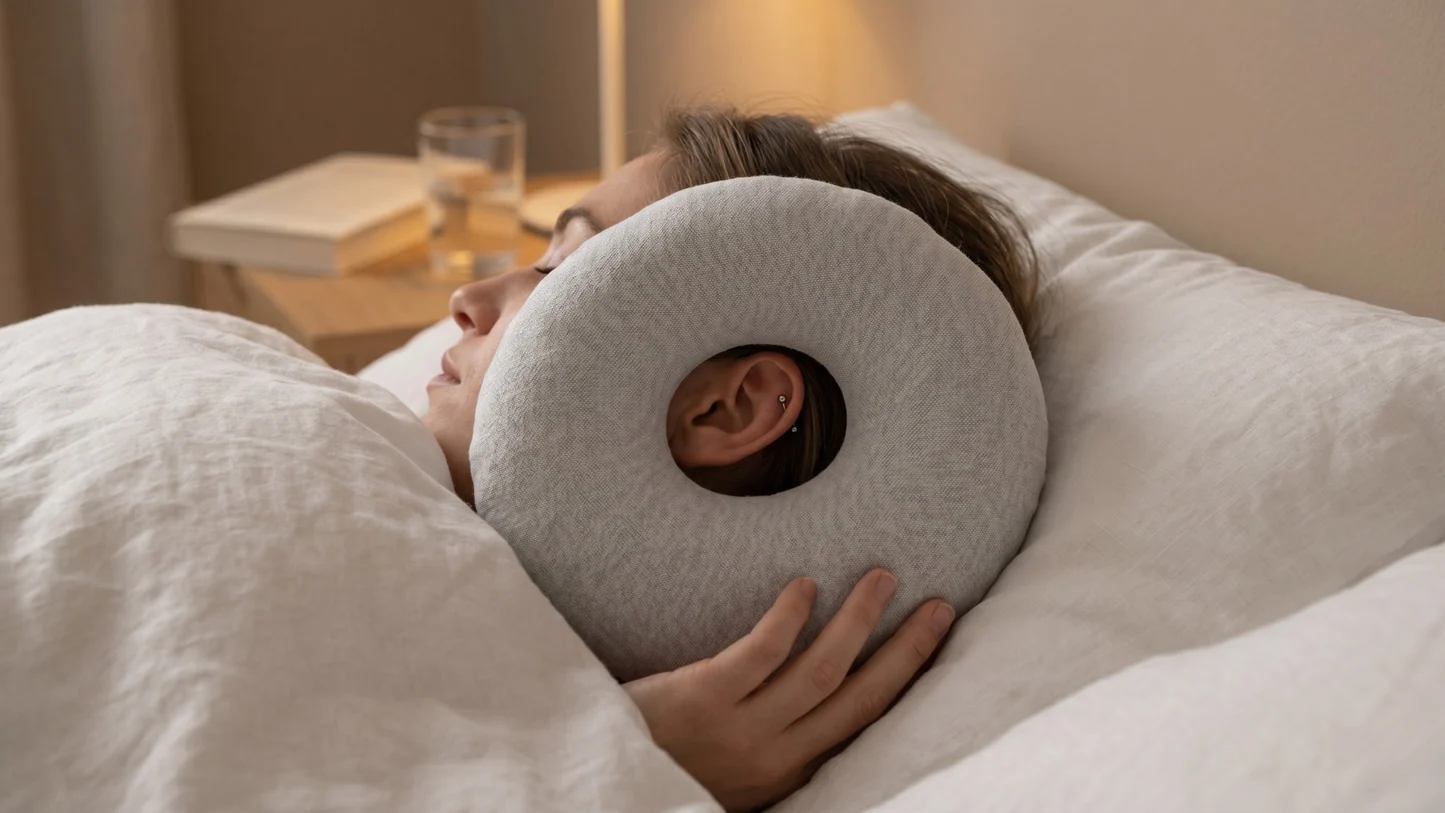
Fresh ear piercings can feel fine during the day and suddenly become sore the minute your head hits the pillow. Even a soft pillow can push a post sideways, torque a ring, or trap moisture against the skin. When both ears are healing, the stakes are higher because you have fewer pressure-free positions to fall back on. This article focuses on what you can control at night: how pressure irritates lobe and cartilage tissue, the jewelry choices that reduce friction, the bedding setup that keeps weight off your ears, and a simple routine that helps you rest without disrupting healing.
-
Why Night Pressure Irritates Fresh Lobe and Cartilage Piercings
New piercings are sensitive to two forces at night: constant compression and small side-to-side movements. Compression can slow drainage and worsen swelling, especially in cartilage where blood flow is limited compared to the lobe. Micro-movements from turning on your pillow can shear the piercing channel, prolonging tenderness and encouraging bumps. If you want a concise primer on positions and setup choices, this overview of how to sleep with new piercings on both ears lays out the basics, and the guidance below explains why those choices work at a tissue level.
Consider a side sleeper with a new helix ring. When the ring presses into a pillow, the curved metal concentrates force at the entry and exit points. As swelling grows, the metal contacts the skin more, increasing friction with each small head turn. Swap that scenario to a lobe stud with a butterfly back, and a different issue appears: the sharp edges on a traditional clutch can dig in, and the long post can act like a lever. The lesson is the same across placements from conch to tragus to rook: reduce pressure and movement at the skin-metal interface.
-
Set Up Your Jewelry for Sleep: Posts, Backs, and Diameter
Jewelry style changes how force transmits to tissue. Flat-backed labret posts spread pressure more evenly than butterfly backs, which can pinch and catch hair. A slightly longer post accommodates normal swelling during the early phase, but there is a trade-off: extra length can snag and amplify torque on a pillow. Many people schedule a downsize with their piercer once swelling settles so the post no longer protrudes. Hoops and captive bead rings have their own balance. A larger diameter can prevent the ring from hugging swollen tissue, yet rings naturally rotate with movement. For sleep, a stable, well-fitted flat-back stud often creates fewer nighttime micro-movements than a small, tight ring.
Threadless or internally threaded jewelry also reduces irritation compared with externally threaded pieces because the threads never pass through the channel during changes. Material matters, too. Implant-grade titanium, niobium, or high-quality surgical steel minimize surface roughness and reactions that could compound soreness. Nickel-heavy fashion jewelry and decorative backs with sharp edges tend to increase friction and snagging, which you will feel most the moment your head meets the pillow.
-
Configure Your Bed: Pillows, Cases, and Cleanliness
Pillows determine how your ear meets the bed. A travel U-shaped pillow or a donut-style ear pillow offloads the ear entirely by suspending it in the center opening. If you do not own one, you can improvise by looping a thick hair tie under a pillowcase to create a small “no-pressure” zone, or by placing a rolled hand towel to cradle the neck so the ear floats. Many side sleepers also stack a firm pillow under a softer one; the bottom pillow stabilizes the neck while the top layer molds around the ear without collapsing.
Friction and residue are sleep enemies. A smooth pillowcase, like satin or silk, reduces drag so a post is less likely to lever. Changing pillowcases frequently removes hair product, sweat, and skin oils that can irritate a fresh piercing. Tie back long hair loosely to prevent strands from wrapping around ends or balls. Picture a new conch piercing catching on a textured cotton case and waking you up with a sharp twinge. A satin case paired with a travel pillow lets the ear hover, turning that twinge into an uneventful night.
-
Train Your Position and Night Routine Without Losing Sleep
Build a short bedtime sequence that keeps the piercing calm until morning. Clean with a sterile saline wound wash, then pat dry with a clean piece of gauze. Going to bed with damp skin under a back disc or ring traps moisture, which softens tissue and increases friction. Avoid alcohol, peroxide, and ointments that can dry or occlude the channel. Once dry, leave the jewelry alone. Twisting “to prevent sticking” is a common mistake that adds micro-tears precisely when you want stability.
Positioning habits help you stay put. Back sleeping is ideal for bilateral healing, but many people roll in their sleep. A wedge pillow or a firm bolster tucked behind the spine makes it harder to slide onto a side. Some use a U-shaped travel pillow on top of the regular pillow to cradle the head while keeping the ears suspended. One realistic example: a side-sleeper who repeatedly wakes on the fresh helix can place the wedge behind their back and the travel pillow under their head; the combo discourages rolling and, if it happens, protects the ear with a hole for it to rest in.
-
When Both Ears Are Fresh: Sequencing, Short-Term Workarounds, and Red Flags
If you have not pierced yet and you are a dedicated side sleeper, consider staggering piercings so you always have one comfortable side. If both ears are already fresh, rotate pressure-free solutions instead of sides. Use a donut pillow for true offloading, avoid on-ear or over-ear headphones that press directly on cartilage, and choose clothing without tight hoods or stiff collars that will rub lobes or helix posts at night. A soft beanie can keep hair from snagging, but watch warmth and moisture build-up; what tames friction can also trap sweat, so keep the room cool and fabrics breathable.
Pay attention to signals that pressure is too high. Persistent throbbing after you wake, a hot ear that stays red well beyond normal irritation, or thick yellow-green drainage calls for professional advice. Jewelry embedding or a ring sinking into swollen tissue needs prompt attention from a qualified piercer or healthcare provider. Plan a follow-up to downsize posts once swelling reduces so the ends do not lever on pillows. Continue gentle saline care and dryness for the full healing window, which is often longer for cartilage than for lobes, and reassess your sleep setup as comfort improves.
Nighttime is half your healing environment, so treat it like part of aftercare rather than an obstacle. Use jewelry that distributes pressure, bedding that offloads the ear, and a routine that keeps the channel clean and dry until morning. Small changes add up: a flat-back post here, a satin case there, and a travel pillow when you cannot avoid side sleeping. If pain escalates or jewelry begins to sink, pause and consult a professional. With a methodical setup and a little patience, you can protect both ears at night and wake up with less tenderness and steadier progress.
