

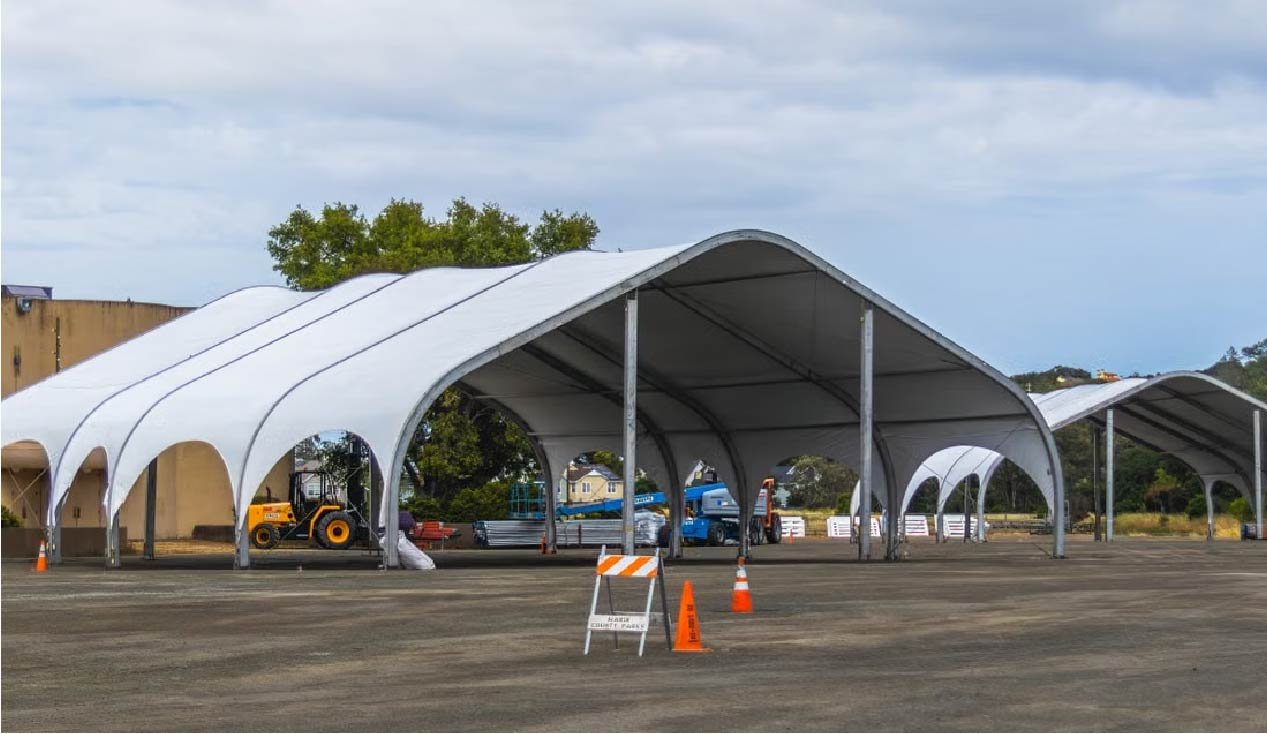
If you run, manage, or plan a business site, you’ve probably noticed how fast space problems show up. A warehouse fills up, a loading zone gets congested, or outdoor operations start getting risky in bad weather. Temporary structures have become a practical fix for those pressure points. They’re no longer just backup options for emergencies. In many industries, they now shape how you handle storage, workflows, safety, and site expansion without taking on the cost and delay of permanent construction.
Weather protection now plays a bigger role in daily operations
Outdoor business activity used to involve more accepted downtime. Heavy rain, intense sun, and strong wind were treated as unavoidable interruptions. That approach is getting harder to justify when deadlines are tighter and asset costs are higher.
Weather exposure damages more than products. It also affects employee comfort, machinery reliability, and the condition of packaging, tools, and raw materials. If you’ve ever seen pallets wrapped in plastic still end up soaked, you know how limited surface-level protection can be.
Purpose-built coverings such as shipping container canopies have become especially useful because they create protected working space between existing containers. That setup can turn underused yard areas into covered zones for storage, maintenance, loading, or assembly. Instead of treating the weather like a scheduling enemy, you build a site that absorbs it better.
Temporary structures have moved from backup plan to core business strategy
A few years ago, temporary structures often looked like stopgap measures. You used them when a building project ran late or when seasonal demand got out of hand. That view has changed. Many operators now plan around flexible structures from the start because demand patterns have become less predictable.
If you manage logistics, construction, agriculture, manufacturing, or equipment storage, fixed square footage can become a constraint fast. A surge in materials, extra vehicles, or a short-term contract can create bottlenecks that slow down your whole operation. Temporary structures let you increase covered space without waiting through a long design-and-build timeline.
That shift matters because business growth rarely happens on a neat schedule. You need room when the work arrives, not six months later.
Speed matters more than ever when your site needs to adapt
When space problems hit, delay gets expensive quickly. Inventory can sit exposed to rain. Crews lose time moving materials around. Equipment wear increases when assets stay outdoors too long. In some cases, compliance issues start creeping in if storage layouts no longer support safe access routes.
A temporary structure works best when you need operational continuity, not just extra cover. You might add sheltered staging space near a loading area, create a protected fabrication zone, or cover inventory that can’t risk moisture exposure. Those decisions affect throughput, labor efficiency, and even customer timelines.
For many businesses, the real advantage isn’t only lower upfront cost. It’s the ability to respond before small site problems become chronic workflow failures. Quick deployment can protect margins more effectively than a delayed permanent upgrade.
The best space solutions improve workflow, not just square footage
It’s easy to think of temporary structures as simple storage additions. In practice, their biggest value often comes from how they change movement on site. A structure that reduces double-handling or cuts travel time between zones can improve output more than one that only adds capacity.
Picture a yard where inbound materials arrive, sit uncovered, then get moved again to keep them dry. That creates wasted labor and equipment traffic. A properly placed covered area near receiving can eliminate that shuffle. The same logic applies to maintenance teams, contractors, and event-based operations that need clearly defined protected work areas.
When you assess your own site, don’t just ask, “Where can I put more stuff?” Ask where congestion happens, where crews lose minutes repeatedly, and where weather forces awkward workarounds. That’s where flexible covered space earns its keep.
Cost is only one part of the decision, and often not the biggest part
People often compare temporary and permanent structures by looking at construction cost first. That matters, but it rarely tells the full story. You also need to think about lead time, permitting complexity, disruption during installation, and whether your current need will still look the same in two years.
If your business is scaling in phases, locking into a permanent footprint too early can create expensive rigidity. A flexible structure gives you room to test operations, adjust layouts, and support short- to mid-term demand without committing to a fixed expansion model immediately.
There’s also the financial effect of preserving inventory, avoiding equipment deterioration, and reducing labor inefficiency. Those operational gains are easy to overlook because they’re spread across departments. Still, they often make the investment more logical than a basic price-per-square-foot comparison suggests.
Safety and compliance concerns often start with poor site layout
When a site runs out of protected space, teams start improvising. Materials get stacked in less suitable areas. Walkways narrow. Forklift routes become less predictable. Tools and supplies drift into places where they create trip hazards or access issues. None of that usually begins as a major mistake. It builds gradually under operational pressure.
Adding covered space can help restore order, especially when the structure supports a defined use such as equipment staging, material storage, or sheltered work activity. Better layout often means clearer separation between pedestrian areas, machinery movement, and stored goods.
That matters for safety culture, but also for inspections, insurance concerns, and day-to-day accountability. A cleaner layout gives your team fewer excuses to improvise. If you want a site to run safely, the physical setup has to support safe behavior without forcing constant workarounds.
Flexibility has become a competitive advantage in uncertain markets
Business conditions keep shifting. You may land a large contract, add a seasonal product line, or deal with interrupted supply schedules that force you to hold more stock than usual. Flexible infrastructure helps you adjust without rebuilding your whole operation each time conditions change.
That kind of adaptability is valuable even if you’re not in rapid growth mode. It lets you trial new workflows, support temporary projects, or bridge the gap while you evaluate a larger capital investment. If the market changes again, you’re not stuck with the same degree of sunk cost and physical permanence.
For younger businesses, that flexibility can protect cash flow. For established companies, it can preserve momentum during expansion. Either way, the larger point is clear: operational space is no longer only a facilities issue. It’s part of how you stay responsive, efficient, and competitive when business pressure arrives without much warning.
