

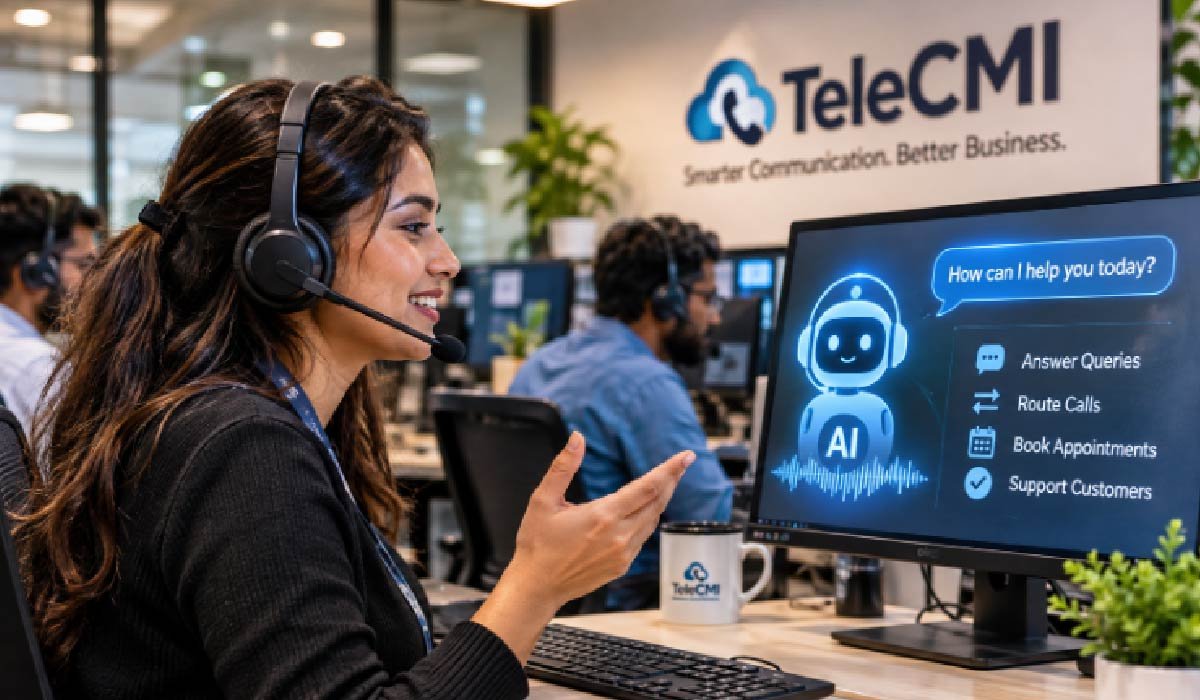
Customer service has a timing problem. Customers expect quick answers, but support teams cannot always be available to answer every call, qualify every inquiry, or resolve every routine request. As call volumes increase, even well-managed businesses can struggle with missed calls, long waiting times, repetitive questions, and inconsistent customer experiences.
Traditional IVR systems helped businesses organize incoming calls, but customers have become less patient with rigid menus and repetitive instructions. They want to explain their problems naturally and receive useful answers without navigating several options.
This is where AI voice agents are changing the customer service experience.
Unlike traditional automated phone menus, modern AI voice agents can understand spoken requests, interpret customer intent, retrieve information from connected business systems, and respond through natural conversations. They can also recognize when an issue requires human assistance and transfer the interaction with relevant context.
For businesses managing high volumes of customer conversations, the opportunity is not simply to automate phone calls. It is to make customer communication faster, more accessible, and easier to manage.
Why AI Voice Agents Are Becoming Important in 2026
Customer expectations around AI-powered support are evolving. People increasingly expect automated systems to do more than provide predefined answers. They want them to complete practical tasks, retrieve account information, and help resolve issues.
Gartner’s 2026 customer survey, which included 3,566 B2B and B2C customers, found that 50% of customers felt their interactions were easier when companies used generative AI. However, 87% considered access to a human agent essential when using AI-powered customer service.
This reveals an important distinction: customers are becoming more comfortable with AI, but they do not want automation to become a barrier to human assistance.
Businesses therefore need a balanced approach. AI should handle predictable, repetitive interactions while human agents remain available for complex, sensitive, or unusual situations.
Voice AI is particularly useful because it brings automation into an existing communication channel. Customers do not necessarily need to download another application, learn a new interface, or switch from their preferred way of contacting a business.
7 Practical Use Cases of AI Voice Agents in Customer Service
AI voice agents can support different stages of the customer journey, from the first inquiry to post-purchase assistance. The following use cases demonstrate where businesses can apply them effectively.
1. Automating Routine Inbound Customer Support
A significant portion of inbound support calls involves questions that follow predictable patterns.
Customers may want to know:
- What is the status of their order?
- When is their appointment scheduled?
- What are the business hours?
- How can they update their account information?
- Where can they find a particular service or product?
An AI voice agent can recognize these requests, retrieve relevant information from connected systems, and communicate the response without requiring an agent to handle every interaction manually.
For example, an e-commerce customer calling to check an order does not necessarily need to speak with a support representative. The voice agent can verify the customer’s identity, retrieve the latest order status, and explain the expected delivery information.
The key is connecting the voice agent to reliable business data. Without those integrations, it may only provide generic answers rather than actually resolving the customer’s request.
2. Intelligent Call Routing Based on Customer Intent
Traditional IVR systems commonly depend on predefined menus. A caller may have to select several options before reaching the correct department.
AI-powered call routing can make this process more conversational.
Instead of asking customers to press numbers, the system can interpret their spoken requests and identify the reason for the call.
Consider a customer contacting an insurance company. They might say they want to check a claim, update their policy, or speak with someone about a payment issue.
An intelligent voice system can identify the intent and route the caller to the appropriate team.
Businesses can further improve routing by considering:
- Customer account information
- Previous support interactions
- Department availability
- Request urgency
- Language preferences
- Agent skills and working hours
This reduces unnecessary transfers and helps customers reach the right department sooner.
3. Lead Qualification and Sales Call Management
Sales teams frequently spend valuable time responding to inquiries that may not be relevant or ready for a sales conversation.
AI voice agents can handle the initial qualification process by asking prospects a few relevant questions.
For example, a software company receiving product inquiries can use a voice agent to understand:
- Which solution the prospect is interested in
- The size of their organization
- Their primary business requirement
- Their expected implementation timeline
- Whether they want to schedule a product demonstration
Once the conversation is complete, the system can record the responses and route qualified prospects to the appropriate sales representative.
This does not replace relationship-building or complex sales conversations. Instead, it helps sales teams prioritize promising opportunities and spend less time collecting basic information.
4. Appointment Scheduling and Automated Reminders
Appointment-related calls create a substantial workload for businesses in healthcare, education, financial services, and professional consulting.
Customers may call to book an appointment, confirm an existing booking, request a different time, or ask about an upcoming visit.
AI voice agents can support these workflows by connecting to scheduling systems.
A typical interaction might look like this:
- The customer calls and requests an appointment.
- The voice agent identifies the required service.
- It checks available time slots through the connected scheduling system.
- It offers suitable options.
- After confirmation, it records the appointment.
- It can trigger a confirmation message or reminder.
The same process can support outbound reminders, helping businesses reduce manual follow-up work.
However, the system should confirm that a booking has actually been saved before telling the customer it is complete. This prevents incorrect confirmations and unnecessary confusion.
5. Multilingual Customer Support
Language differences can create friction when businesses serve customers across multiple regions.
A customer may understand a product or service but struggle to explain a problem in the language supported by the available support team.
AI voice technology can help businesses build multilingual customer experiences by recognizing and responding in supported languages.
For example, a company serving customers across India may need to support English, Hindi, Tamil, Telugu, Bengali, and other regional languages.
But multilingual capability involves more than translating words. Voice systems must also understand different accents, speech patterns, local expressions, background noise, and code-switching between languages.
Businesses should test these capabilities with real customer conversations before deploying them at scale.
A system that performs well in a quiet English-language test may behave differently when handling regional accents over a mobile phone connection.
6. After-Hours Support and Missed Call Management
Customer inquiries do not always arrive during business hours.
A potential customer might call late at night, while an existing customer may need help during weekends or public holidays. If no one answers, the business risks losing the inquiry or creating an unsatisfactory experience.
AI voice agents can provide an always-available first point of contact.
They can collect customer details, answer supported questions, record requests, and arrange follow-ups for the appropriate team.
For example, a property management company can use an AI voice agent to collect information about maintenance requests outside normal working hours.
The system can identify the issue, record its priority, and notify the responsible team.
This gives customers a way to communicate their needs without requiring a human agent to remain available around the clock.
7. Post-Call Analysis and Better Agent Performance
The value of a customer conversation does not end when the call disconnects.
Support managers need to understand why customers are calling, which issues occur most frequently, where conversations become difficult, and how effectively agents resolve problems.
AI-powered post-call analytics can help organize this information.
Depending on the system’s capabilities, businesses can analyze:
- Call summaries and conversation transcripts
- Customer sentiment and recurring concerns
- Common reasons for contact
- Agent performance patterns
- Unresolved customer requests
- Opportunities to improve support workflows
For example, if many customers repeatedly call about the same billing issue, managers can investigate the underlying process rather than simply increasing the number of support agents.
This turns customer conversations into operational insights that can improve the overall service experience.
How AI Voice Agents Work Behind the Scenes
Although a voice interaction feels like a simple conversation, several technologies work together to make it possible.
A typical AI voice agent follows a sequence of steps.
Step 1: Call connection
A customer calls the business through its existing phone number or a supported virtual number. The telephony infrastructure establishes the connection and directs the interaction to the configured voice workflow.
Step 2: Speech recognition
Speech recognition converts the customer’s spoken words into information that the AI system can process. Accuracy depends on audio quality, language support, accent recognition, and background conditions.
Step 3: Intent and context understanding
The AI interprets what the customer wants and identifies the relevant context. It may also use information from previous interactions or connected customer records, subject to the business’s access and privacy rules.
Step 4: Business system integration
The agent can request information or perform approved actions through connected tools and APIs. These might include checking an order, retrieving an appointment, creating a support ticket, or updating a customer record.
Step 5: Voice response
The system generates a spoken response using text-to-speech or a real-time speech model. The response should be concise, relevant, and easy to understand over a telephone connection.
Step 6: Resolution or human handoff
If the request is within the agent’s capabilities, it can complete the interaction. If the issue requires human judgment or the system cannot confidently resolve it, the call should move to an appropriate representative.
The quality of the complete experience depends on how well these components work together. A sophisticated language model cannot compensate for unreliable phone connectivity, outdated customer information, or poorly designed escalation rules.
AI Voice Agents vs. Traditional IVR: What Is the Difference?
Both technologies can automate incoming calls, but they approach customer interactions differently.
| Capability | Traditional IVR | AI Voice Agents |
| Customer interaction | Menu and keypad-based | Natural spoken conversation |
| Understanding requests | Predefined options | AI-based intent recognition |
| Response behavior | Fixed prompts | Context-aware responses |
| Data retrieval | Usually rule-based integrations | Can use connected systems and APIs |
| Call routing | Menu selections and rules | Intent and context-based routing |
| Complex requests | Usually transferred to agents | Can handle supported tasks before escalation |
| Personalization | Limited | Can use authorized customer context |
| Flexibility | Requires menu or flow updates | Can support more conversational workflows |
Traditional IVR is still useful for predictable call flows and simple routing. AI voice agents are more suitable when customers need to explain requests in their own words or complete tasks through conversation.
In practice, many businesses can benefit from combining both approaches rather than replacing every existing IVR workflow.
What Businesses Should Evaluate Before Deploying Voice AI
Implementing AI voice agents requires more than selecting a model and connecting a phone number. The surrounding communication infrastructure and operational processes are equally important.
1. Response Speed and Conversation Quality
Long pauses can make automated conversations feel unnatural.
Businesses should measure how quickly the system begins responding, how accurately it recognizes speech, and whether it can handle interruptions without losing context.
Testing should include real telephone audio rather than relying entirely on text-based simulations.
2. Reliable CRM and Business Integrations
A voice agent becomes more useful when it can access the information required to resolve customer requests.
CRM systems, helpdesk software, appointment platforms, order databases, and internal APIs may all play a role.
However, integrations should follow clear permission rules. The AI should only retrieve or modify information that it is authorized to access.
3. Human Handoff and Escalation Rules
Not every customer problem should be automated.
Businesses should define clear escalation conditions for situations such as:
- Repeated recognition failures
- Customer frustration
- Account or payment disputes
- Sensitive personal information
- Requests requiring human approval
- High-impact actions that need confirmation
A good handoff should transfer the caller along with useful context, such as the reason for the call and the steps already completed.
Customers should not have to explain the same problem all over again.
4. Security, Privacy, and Compliance
Voice interactions may contain personal, financial, or business-sensitive information.
Organizations should review call recording policies, access permissions, encryption, data retention, authentication, and applicable privacy regulations before launching automated calling workflows.
AI-generated responses should also be constrained when handling sensitive decisions. The system should never invent a payment confirmation, claim approval, appointment booking, or other business action.
5. Scalability and Call Reliability
An AI workflow that works during a small pilot may behave differently when hundreds or thousands of customers call simultaneously.
Businesses should evaluate concurrent call capacity, uptime, network performance, fallback routing, and monitoring capabilities.
The telephony infrastructure must remain dependable even when the AI component experiences delays or temporary failures.
How to Measure the Success of an AI Voice Agent
Businesses should not evaluate an AI voice deployment solely by the number of calls automated.
The more important question is whether customers are getting their problems resolved.
Several performance indicators can help measure this:
| KPI | What It Measures |
| First Contact Resolution | Whether customer issues are resolved during the first interaction |
| Task Completion Rate | How often the AI successfully completes its intended task |
| Average Handling Time | The time required to manage a customer interaction |
| Transfer Rate | How frequently conversations move to human agents |
| Call Abandonment Rate | How often callers disconnect before receiving assistance |
| Customer Satisfaction | How customers evaluate the experience |
| Cost per Resolved Interaction | The operational cost of successfully resolving a request |
| Recognition Accuracy | How accurately the system understands customer speech |
These metrics should be considered together.
For example, a lower human transfer rate may appear positive, but it is not necessarily an improvement if more customers disconnect without getting their problems resolved.
Similarly, a short average call duration is not valuable if customers have to call again to complete the same task.
The objective should be successful resolution, not automation for its own sake.
Choosing the Right Cloud Contact Center Infrastructure
AI voice agents are only one part of a modern customer communication environment. Businesses also need reliable call routing, phone number management, agent workflows, reporting, and integrations that connect customer conversations with their existing systems.
A well-designed cloud contact center solution can bring these capabilities together, helping teams manage voice interactions, automate call flows, monitor performance, and coordinate customer communication across channels.
Before choosing a platform, businesses should evaluate its ability to support their call volume, integration requirements, security expectations, and customer support workflows.
The right infrastructure should also make it possible to introduce automation gradually. Organizations can begin with a limited number of repetitive support tasks, evaluate the results, and expand into more complex use cases as the technology becomes reliable.
The Future of Customer Service Is AI-Assisted, Not Entirely Automated
AI voice agents are moving customer service beyond fixed menus and basic automated responses. They can understand customer intent, access business information, perform routine actions, and support teams handling large volumes of conversations.
However, successful adoption depends on more than conversational intelligence.
Businesses need accurate data, responsive telephony infrastructure, carefully designed workflows, reliable escalation paths, and measurable performance standards.
The most effective approach is to let AI handle the interactions it can resolve reliably while keeping human agents available when experience, judgment, or empathy matters most.
As voice AI continues to mature, organizations that combine intelligent automation with dependable communication infrastructure will be better positioned to deliver faster and more consistent customer experiences.
The goal is not to remove people from customer service. It is to give customers a faster way to get help and give support teams more time to focus on the conversations that genuinely need them.
