

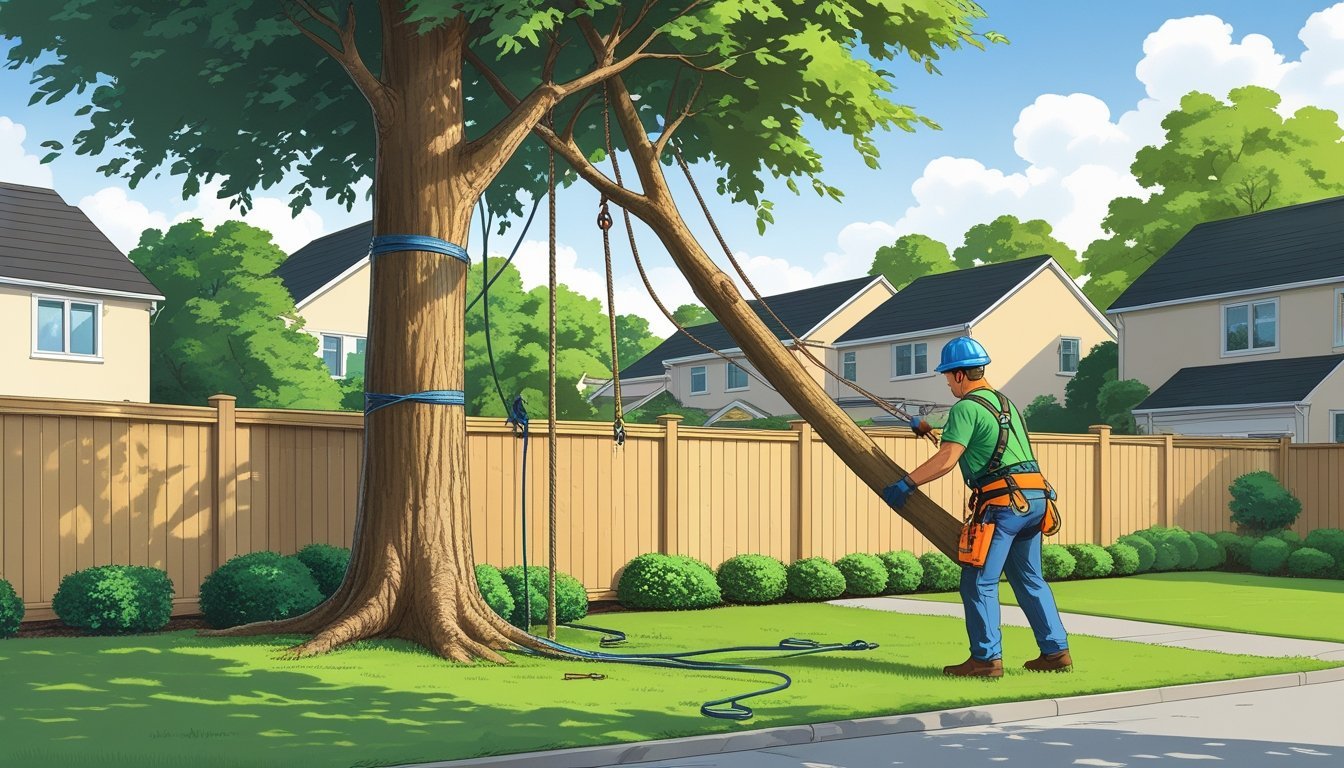
Removing a mature tree on a tight lot is less about brute force and more about planning. Fences, driveways, power lines, and delicate landscaping shrink the available drop zone, while hidden hazards like irrigation lines or shallow utilities add subsurface risk. This article focuses on how constraints shape the method, timing, and cleanup of a safe removal. By mapping the canopy and root zone, choosing the right access equipment, and controlling each cut with deliberate rigging, homeowners can set clear expectations and help the crew protect the site while they work.
-
Map Risks Above and Below Before Any Cut
Start by reading the tree and its surroundings. In the canopy, look for heavy leans, deadwood, split codominant stems, or fungal conks on the trunk. At ground level, check the root flare and soil around the buttress roots for heaving that could signal root plate movement. Note every fixed obstacle inside the dripline, such as sheds, patios, and A/C units, and trace the path of overhead service lines from the street to the mast on your home. Below grade, flag sprinkler heads and locate utilities and septic components so rigging and equipment placements avoid them.
A silver maple weakened by storms and squeezed between two garages might not allow a traditional felling notch and back cut. In that setting, safe tree removal often becomes a controlled dismantle: the climber anchors into a strong leader, sets a rigging block, and lowers limbs in small pieces using a friction device at the base. Taglines keep sections from swinging into siding, and ground mats protect pavers where crews stage brush and wood before chipping or loading.
-
Access Dictates Method: Crane, Bucket, or Rope and Saddle
The width of a side gate, yard slope, and driveway load capacity determine what equipment fits and where it can sit safely. A crane shortens the job and reduces roof rigging because it can lift whole leaders, but it needs room for outriggers and may require street permits or traffic control. A bucket truck offers stable positioning for cuts but needs overhead clearance and firm ground. When machines cannot reach the canopy, a climber working from a saddle with spurs, slings, and lowering lines can still remove the tree piece by piece without driving heavy equipment across turf.
The tradeoff is speed versus site impact. Crane picks are fast and reduce the climber’s suspended time, yet they concentrate weight on a few outrigger pads and may leave tire depressions without ground protection. Rope-heavy dismantling takes longer and requires more rigging hardware, but crews can stage gear through narrow gates and move brush by hand with less risk to irrigation lines and garden beds. Ask which approach fits your access, where mats will go, and how the crew will keep displaced chips and dust from drifting into pools or koi ponds.
-
Controlling the Fall: Notches, Hinge Wood, and Rigging Choices
When there is a clear drop zone, conventional felling still demands precision. An open face notch sets the direction, a back cut leaves sound hinge wood to guide the trunk, and plastic wedges counter a backward lean. Wind direction, crown weight, and the tree’s natural lean all influence the notch angle and wedge placement. Cutting through the hinge or ignoring internal decay risks a barber chair split, which violently separates the trunk. When space is tight, crews replace a single fall with dozens of controlled lowers, using a rigging block high in the canopy, a bollard or friction device at the base, and taglines to steer sections around roof edges and gutters.
For branches over a glass sunroom or a brittle fence, crews may cut portions of limbs in advance to lighten the limb tip, then use a balancing sling to keep the piece level during descent. On small lots, speedlines can shuttle brush to an open staging area without dragging it across sod. Padding the drop zone with log rounds or crash pads absorbs impact where small sections must land, and a quick sweep with a pole saw clears hangers so nothing is left overhead.
-
Timing, Permits, and Neighbor Logistics
Many municipalities require a permit to remove trees above a certain trunk diameter at breast height or to touch protected species, so confirm rules before scheduling. Wildlife considerations matter too: nesting seasons may affect timing or require a check before work begins for active nests or roosts. Weather is another variable. After heavy rain, saturated soil reduces root stability and makes lawns vulnerable to ruts; dry, calm mornings are often better for precision lowering than gusty afternoons. If a service drop runs through the canopy, plan utility coordination well ahead of the work date so crews can disconnect power or temporarily adjust lines.
Small courtesies prevent big headaches. Give neighbors advance notice about chipper noise, parking needs for the crane or bucket truck, and temporary sidewalk or lane closures. In a common scenario, a tall pine crowding a service line above a narrow driveway might push the start time earlier so the crew can set outriggers before school traffic, complete the most hazardous lifts while winds are low, and reopen the street before the evening rush.
Debris Handling Without Wrecking the Site
How crews move and process wood matters as much as how they cut it. Positioning the chipper on pavement keeps chips off lawns and away from sprinkler heads, and laying plywood or composite mats creates temporary routes for a mini loader to shuttle logs without carving ruts. On steep slopes, you may winch brush bundles uphill rather than drag them across delicate groundcovers. For patios and pool decks, tarps catch sawdust and small twigs,s so cleanup with rakes and blowers is fast and leaves no scratches.
Discuss where chips and logs will go before the first cut. Some homeowners want some chips for garden mulch, while the rest is hauled away in a grapple truck. If crews must roll large rounds across turf, they can cradle them on dollies or use skidding cones to reduce scuffing. After the final sweep, crews lightly regrade and seed compressed areas to restore soil structure, and rinse hardscapes with a hose to clear fine dust from masonry joints and window sills.
No two properties or trees present the same mix of constraints, which is why method planning matters. By mapping canopy and root-zone hazards, matching access to the right equipment, and using controlled cuts with site-appropriate rigging, you can minimize risk to roofs, fences, and lawns as the work progresses. Clear expectations for timing, permits, utilities, and debris handling keep the day running smoothly. The result is a removal shaped by the lot’s limits, not a job that leaves them worse for wear.
