

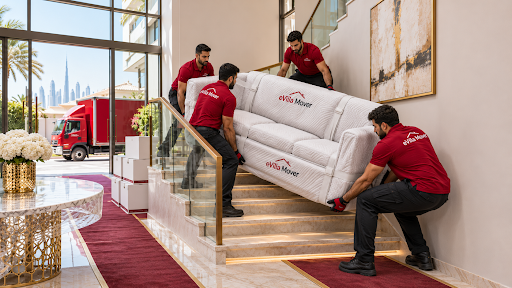
The truck journey is rarely the part that causes trouble during a villa move. More often, it’s the sofa that won’t turn at the bottom of the stairs, the dining table that is heavier than anyone expected, or the collection of boxes discovered in the garage after loading has already begun.
Good Villa Movers in Dubai know that a bedroom count tells only part of the story. Two four-bedroom homes may stand on the same street and still require different crews, materials and vehicles. The useful questions are about what is inside the rooms, how it will leave the property and what must happen when it reaches the new villa.
One family may own ordinary beds, a compact dining set and a few boxes of personal belongings. Next door, there could be custom wardrobes, a stone table, several bookcases, outdoor seating and a garage full of things gathered over many years. From the outside, the two moves look almost identical. Once the doors open, they’re not even closed.
This is where experienced Villa Furniture Movers in Dubai earn their place. Furniture cannot be treated as a collection of large objects that simply need lifting. A piece may be heavy but strong, light but fragile, easy to carry yet impossible to turn through the hallway. Someone has to notice those differences before moving day becomes a series of last-minute decisions.
The Forgotten Rooms Are Usually the Problem
When people describe what they own, they tend to begin with the living room. They mention the sofas, television unit and dining table. Bedrooms come next. The garage, balcony and cupboard beneath the stairs are remembered later, sometimes much later.
Those overlooked spaces can hold a surprising amount. A garage may contain bicycles, tools, folded chairs, old cartons and a spare refrigerator. Outdoor storage can be packed with cushions, garden equipment and children’s toys. Even a small utility room may add half a dozen boxes to the job.
None of this is unusual. It only becomes a problem when it isn’t included in the plan.
A proper survey doesn’t need to feel complicated. It’s simply a slow walk around the property with every door opened. If the family hasn’t decided whether an old desk or garden set is going, it can remain on the inventory for the moment. Removing an item later is easy. Finding extra furniture after the vehicle is nearly full is not.
This is also the time to mention anything delicate or already damaged. Perhaps a cabinet has a loose back panel. Maybe one leg of the coffee table was repaired years ago. A wardrobe door might come off its track if the unit tilts too far.
The crew can often move these pieces safely, but only if they know where the weak points are. Furniture has a way of looking perfectly sound until somebody lifts one end.
Try Walking the Sofa to the Front Door
A sofa may fit comfortably in a large living room and still refuse to leave it.
The doorway itself might be wide enough. The trouble comes after that, where the corridor turns towards the entrance. There isn’t always enough space to rotate the frame. What looked like an easy carry becomes a puzzle involving angles, removable feet and several attempts from different directions.
Upstairs furniture brings its own problems. Many wardrobes were assembled in the bedroom and have never passed through the door in one piece. Tall headboards can catch the ceiling over a staircase. Long drawer units may clear every doorway but become impossible to turn at the landing.
The simplest way to spot these issues is to walk the furniture’s route before it has been wrapped. Start inside the room. Look at the door, corridor, staircase and main entrance, then continue to the gate and the place where the truck will park.
Do it again at the new villa.
People often focus entirely on getting furniture out of the old house. Yet a wardrobe that leaves without difficulty may not reach its intended bedroom at the destination. The staircase might turn in the opposite direction, or the doorway may be a few centimetres narrower.
Wrapping matters here too. Protective material adds thickness around corners and surfaces. Usually that makes no difference. When the fit is already close, however, those extra centimetres can change the plan.
Sometimes the Drill Can Stay in the Toolbox
Dismantling is useful, but it shouldn’t be automatic.
A bed frame with accessible fittings is normally simple to take apart. So is a dining table with removable legs. Modular sofas are made to separate into sections, which can make narrow turns much easier.
Wardrobes require more thought. A solid timber unit may be extremely heavy, yet its structure can remain dependable during a move. An older flat-pack wardrobe is lighter, but another round of dismantling may loosen its fixing points or weaken the board.
Then there is custom furniture. Some pieces have hidden connections behind trims or decorative panels. Others rely on several sections supporting one another. Taking down the wrong panel first can damage something that isn’t easily replaced.
The question isn’t merely, “Can this be dismantled?” It is, “Will dismantling make it safer?”
When a piece does need to come apart, its fittings belong in a separate, clearly marked bag. Screws from two similar beds can look almost identical while being slightly different in length. Mixing them saves a minute during packing and wastes considerably more time during reassembly.
A quick photograph helps as well. Nobody thinks they’ll forget which direction a frame faces or where a shelf belongs. By the end of a long moving day, those details are less obvious than they seemed that morning.
Packing Has to Suit the Piece
There isn’t one wrapping method for every type of furniture.
Take a marble tabletop. It is heavy, but weight isn’t the only concern. The top may be strong across its surface and vulnerable at an unsupported edge. Before anyone lifts it, they need to know whether it is fixed to the base, resting freely or supported at several points.
Glass presents a different issue. A removable shelf left inside a cabinet can slide as soon as the cabinet is tilted. It is safer to take the shelf out, wrap it separately and carry it in a controlled position.
Polished wood can be marked by the smallest forgotten item. A key left in a lock or a handle pressed beneath wrapping may scratch the finish. Loose hardware belongs in a labelled bag, not taped against the furniture.
Fabric sofas need clean covers and protection around the frame. The cushions can usually travel separately. Apart from keeping them clean, removing them gives the crew a better grip when manoeuvring the sofa through a tight doorway.
Drawers and cupboards should be emptied, even when leaving the contents inside appears quicker. Clothing, books and kitchen items increase the weight. They also shift when the furniture is tilted, which can strain drawers, shelves and runners.
The aim isn’t to make every item disappear beneath endless layers of material. It’s to protect the parts most likely to be marked, cracked or pulled out of shape while keeping the furniture manageable.
“Bedroom” Is Not a Useful Box Label
A label only helps when it tells the unloading crew where the box belongs.
In a villa with several bedrooms, writing “bedroom” creates another question at the destination. “Main bedroom—clothes” is better. “First-floor children’s room—books” is better still.
Temporary names can be placed on the doors at the new property. It may feel unnecessary while the rooms are empty, but it saves repeated explanations once boxes begin arriving every few minutes.
Large furniture needs to go in first wherever possible. A wardrobe requires room for assembly. A bed frame has to be turned and positioned before it can be rebuilt. If the floor is already covered with cartons, every movement becomes harder.
Kitchen boxes need a little judgement. Plates and glasses require protection from one another, while pans and small appliances can make a carton heavy very quickly. Empty space should be filled so that the contents cannot move, but the box still has to remain safe to carry.
Books are another common trap. A large carton filled entirely with books may close neatly and then become almost impossible to lift. Several smaller boxes are far more practical. Save the larger cartons for cushions, bedding and other light belongings.
Family-packed boxes should be properly closed before the crew arrives. An open carton with several loose items sitting beside it isn’t finished. It is another packing job waiting in the middle of the carrying route.
The Garden and Garage Count as Part of the House
Outdoor belongings rarely look like much when they’re spread around a large garden. Bring them together and the volume becomes obvious.
Garden tables may need their legs removed. Outdoor sofas can have separate cushions, frames and corner sections. Bicycles take up an awkward amount of vehicle space, particularly when they can’t be stacked safely against other items.
Plant pots are often heavier than expected. Wet soil adds considerable weight, and loose soil can spread inside the truck. Large plants also need to remain stable during transport; they can’t simply be placed between cartons and left to support themselves.
Barbecue equipment, gas cylinders, fuel, paint and chemicals need to remain visible until the mover has checked them. Hiding such items inside ordinary boxes doesn’t solve the issue. It merely postpones the conversation until loading is underway.
The garage deserves sorting before the final survey. This is where families often find things they no longer use but have continued carrying from one home to another. Deciding what won’t be moved can reduce both the number of boxes and the time spent loading them.
Keep a Corner That Nobody Packs
During a busy move, important belongings can vanish without actually being lost.
Someone places the car keys on a table that is later wrapped. Passports are left beside a stack of documents and end up inside a carton. A charger disappears into a box with a label that says nothing more helpful than “miscellaneous.”
Set aside one small area that is completely off-limits to the packing crew. A locked room works best. If that isn’t possible, use a clearly marked table or cupboard away from the main packing work.
Keep passports, medication, jewellery, keys, phones, laptops and personal bags there. Add a change of clothes, toiletries, chargers and anything needed for the first night.
The rule needs to apply to the whole family. If someone moves the personal bags and leaves them beside the packed cartons, even a careful crew may assume they belong in the truck.
One Clear Answer Is Better Than Three Opinions
Moving day produces dozens of small questions. Is the old garden table going? Which bedroom gets the guest bed? Does the cabinet belong upstairs or in the study?
Family members can discuss the answer, but one person should give the final instruction.
Without that arrangement, a heavy item can be sent upstairs, redirected to another room and carried down again. Apart from wasting time, each unnecessary trip creates another opportunity for a corner to hit the wall or a polished surface to be marked.
Before work begins, the chosen family member can walk through the villa with the team leader. This is the moment to mention anything that changed after the survey: a desk that was sold, extra boxes that were packed or an item that now needs to stay behind.
The route should already be clear. Shoes, rugs, small tables and plant pots are easy to avoid when walking normally. They are much harder to see when carrying one end of a wardrobe and moving backwards.
At the new property, decide where the largest furniture belongs before it enters the room. Shifting a dining table by half a metre is simple while the space is empty. It becomes irritating once chairs, cartons and other furniture surround it.
A Quote Should Explain the Work
The total price matters, but it doesn’t tell the whole story.
A useful quotation states who is packing what. The family may pack clothes, books and personal items while the moving team handles furniture, kitchenware and fragile pieces. That arrangement is fine as long as both sides understand it before moving day.
Dismantling and reassembly also need to be clear. A standard bed frame is not the same job as a custom wardrobe. If something needs specialist handling, it should not appear as an assumption hidden behind a general description.
Unpacking is another word that can cause confusion. It may mean opening cartons and placing the contents on nearby surfaces. It doesn’t necessarily include arranging wardrobes, organising kitchen cabinets or positioning decorative objects.
Access conditions matter too. A truck parked beside the gate creates a very different workload from one parked at the end of the street. Every extra metre has to be walked while carrying furniture or boxes.
This is why the cheapest quotation isn’t automatically the best value. It may simply describe less work. Comparing the actual responsibilities is more useful than comparing the final numbers alone.
The Last Walk Through Both Villas
Before the truck leaves, somebody should check the old property without rushing.
Open every cupboard. Look behind the doors, beneath the sinks and along the highest shelves. Walk through the garage and garden. Check bathrooms, balconies, storage rooms and any area that was kept closed during packing.
At the new villa, begin with the furniture that was rebuilt. Open wardrobe doors, check the bed frames and confirm that shelves, handles and keys have returned to the correct pieces.
Boxes can remain sealed, but their labels should match the rooms where they were placed. If an important carton is missing from the expected room, it is easier to find while the crew and vehicle are still present.
Heavy furniture should also be checked before the team leaves. If a cabinet is on the wrong wall or a table blocks the intended route, move it now. Once unpacking begins, even a small adjustment becomes a much larger task.
The house won’t look finished at the end of the day. That is normal. A good result is quieter than that: the beds are ready, the furniture is where it belongs, the important bags are easy to find and nobody needs to move the same wardrobe for a second time.
