

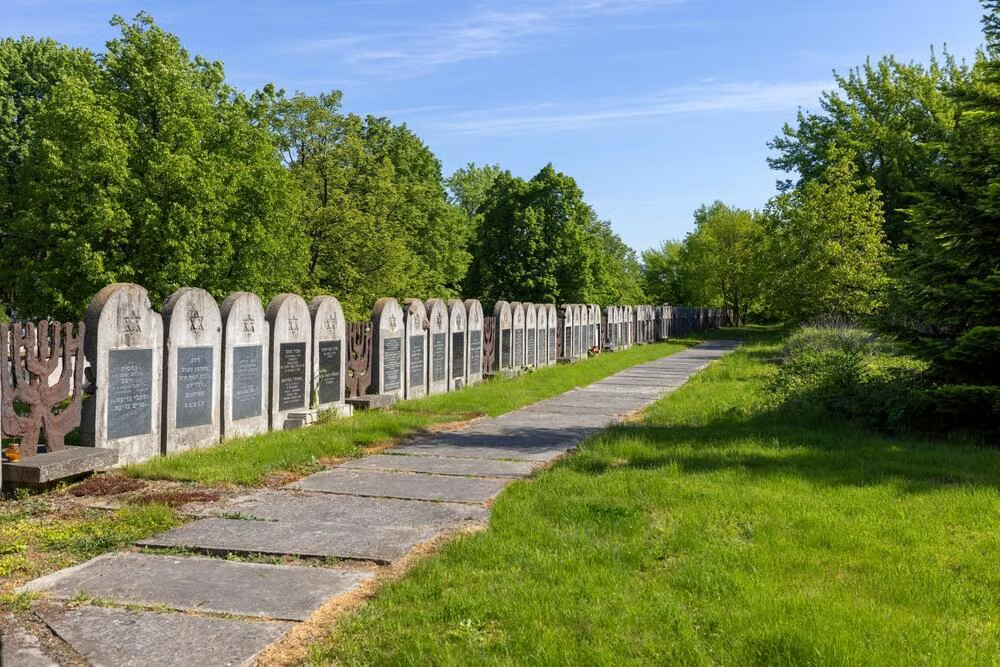
When a Jewish family loses a loved one, two enduring memorial pathways often come to mind: reciting Kaddish and learning Mishnah for the neshama. Both draw on long-standing practice, yet they differ in timing, logistics, and how family members participate. This guide explains what each approach requires day to day, how key milestones like shivah, shloshim, and the yahrzeit shape the calendar, and which practical constraints matter most. With a clear view of the tradeoffs, families can match heartfelt intent with a plan they can sustain, honoring memory with consistency rather than pressure.
-
What Kaddish Requires Day to Day
The Mourner’s Kaddish is recited in a minyan at daily services, typically throughout the eleven months after a parent’s passing and on future yahrzeits. Because joining a minyan is required, the key question is whether a mourner can reach shacharit, mincha, and often maariv with reasonable consistency.
For travelers, those in small communities, or anyone whose schedule changes weekly, a designated reciter is sometimes arranged through a local synagogue or community resource. Many families consult community resources, for example http://www.chevrahlomdeimishnah.org/, when exploring practical arrangements. The core aim is continuity, so any solution chosen should be realistic for the full period.
-
What Mishnah Study Involves and Why Families Choose It
Familyhnah l’ilui neshama. Because the sixty-year study of Mishnah l’ilui neneshama is tractate-heavy in length and complexity, families often select masechtot that fit learners’ time and comfort, or divide a sefer Mishnayot among several people.
Some aim to complete a volume by shloshim or a larger portion by the yahrzeit, sometimes marking the milestone with a siyum. Others prefer a steady, slower pace with consistent daily learning.
For those new to text study, translated editions, linear Hebrew-English prints, and audio shiurim make participation more accessible without sacrificing meaning.
-
Marking Shivah, Shloshim, and the Yahrzeit on the Hebrew Calendar
Key memorial markers follow the Hebrew calendar. Shivah lasts seven days from burial, shloshim marks the thirtieth day, and the yahrzeit returns each year on the Hebrew date of passing.
Because the Hebrew date changes at sunset, a passing that occurred after sundown may place the yahrzeit on the next Hebrew day. A common mistake is using the civil anniversary without checking the Hebrew date, which can shift observance by a day.
Synagogues can help determine the correct date, and many families light a yahrzeit candle that burns for approximately 24 hours. On the yahrzeit, mourners often seek an aliyah, say Kaddish with a minyan, and some schedule a siyum or give tzedakah in the niftar’s name.
-
Practical Constraints: Minyan Access, Schedule, and Learning Level
Constraints shape wise choices. Consider a mourner in a small town without daily minyanim. They might recite Kaddish when possible and arrange a designated reciter to cover weekdays, while personally learning Mishnah each night.
Contrast that with a commuter who can make mincha at a nearby shul most days, but whose mornings and evenings are tight. They might prioritize Kaddish on weekdays and reserve Shabbat for extra Mishnah learning.
Hebrew literacy also matters. A grandchild with limited Hebrew may join by learning Mishnah in translation, recording a short reflection, or sponsoring tzedakah linked to a tractate completed by a sibling.
The tradeoff is clear: Kaddish centers on reliable minyan attendance, while Mishnah learning allows flexible scheduling but calls for sustained study habits and a realistic plan.
Combining Practices and Setting a Realistic Plan
Many families blend both pathways. A workable approach is to commit to Kaddish when a minyan is reachable, pair it with modest daily Mishnah learning, and mark shloshim or the yahrzeit with a siyum and a tzedakah gift.
If learning goals are ambitious, break them into milestones based on individual tractates rather than aiming for the entire Mishnah at once.
If Kaddish coverage is uncertain, coordinate a designated reciter for the months when attendance will be hardest, while still attending locally whenever possible.
A simple written plan that names who will learn, what will be learned, where Kaddish can be said, and how the Hebrew date is tracked helps sustain intent through busy weeks.
Both Kaddish and Mishnah carry weight and dignity. The most meaningful memorial is often the one a family can keep with steadiness and heart.
Begin by confirming the Hebrew dates with your rabbi or synagogue office, then choose a path that fits access to a minyan, time constraints, and learning comfort. Set goals you can meet, leave room for small course corrections, and consider tzedakah or a siyum at milestones.
With clarity about requirements and gentle consistency, families can honor a loved one’s memory throughout the first year and on every yahrzeit thereafter.
