

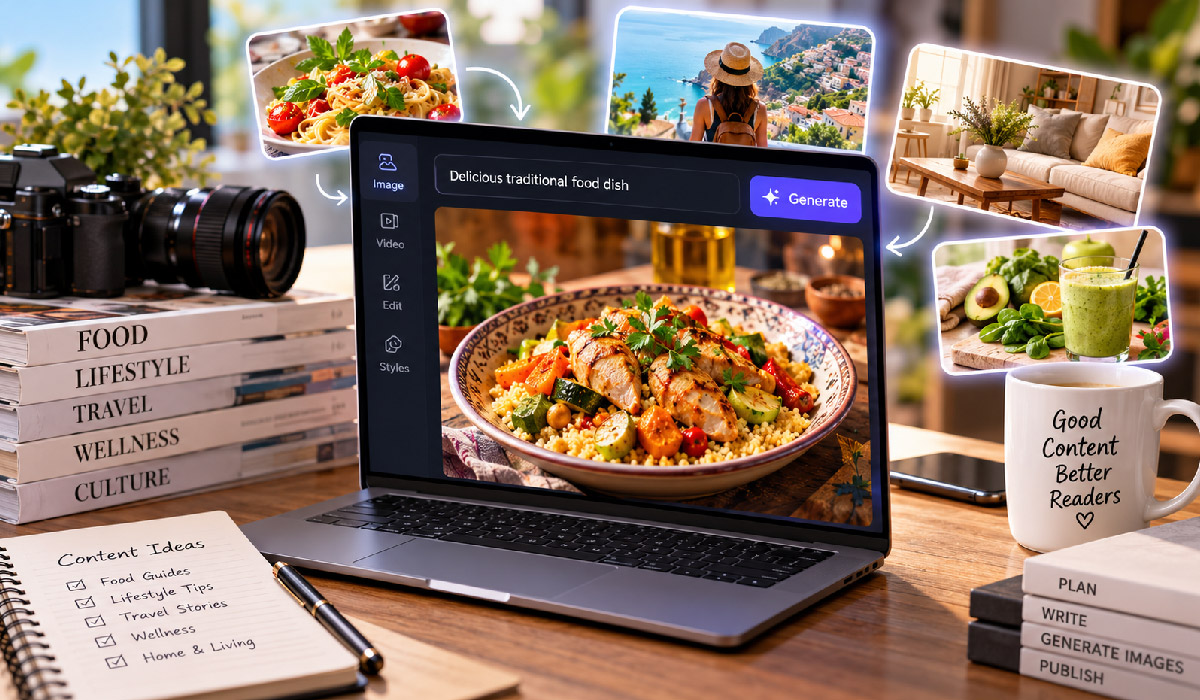
An online magazine publishing food and lifestyle content at any real volume runs into the same production gap eventually; every article needs a genuinely relevant featured image, and stock photography rarely matches a specific dish, a specific ingredient, or a specific lifestyle topic closely enough to feel like it actually belongs with the piece it’s paired with. Higgfield holds that access to an AI Image Generator is becoming part of how content sites close that gap, provided every generated image still represents the article’s real subject accurately rather than something generic that happens to look plausible at a glance.
Why Does Featured Image Quality Matter for Food and Lifestyle Content Specifically?
A food or lifestyle article lives or dies on whether its featured image actually makes a reader want to click through, and that image needs to represent the specific dish, ingredient, or topic being covered rather than a generic stand-in. A guide to a specific traditional dish loses credibility fast if its featured image shows something that doesn’t actually resemble what’s being described, a mismatch a reader familiar with the dish will notice immediately, sometimes calling it out directly in the comments or on social media where the mistake becomes public rather than staying a quiet, internal oversight.
This matters more for niche or lesser-known food topics specifically, since stock photo libraries are far more likely to have generic pasta or generic grain-bowl photos than something that actually matches a specific traditional preparation. A site publishing across a wide range of food and cultural topics runs into this gap constantly, since the more specific the topic, the less likely a perfectly matching stock photo exists at all, leaving a content team choosing between an approximate substitute or spending real time hunting for something closer.
What Does an AI Image Generator Actually Do Differently From a Stock Photo Library?
Higgsfield gives a content team access to more than 15 underlying models, including Nano Banana Pro, Seedream, and FLUX, from a single workspace, so a specific visual style, warm and rustic for a traditional food piece, bright and modern for a lifestyle guide, can be generated to actually match an article’s specific subject rather than settling for whatever a stock library happens to have in that general category. It supports generating from a reference image, letting a team work from an existing photo of the actual dish or topic to keep the generated result grounded in something real rather than a generic interpretation. Higgsfield’s range across models also means a content team can maintain a consistent visual style across an entire category of articles while still generating something specific to each individual topic.
That distinction matters because a stock photo search for a specific, less common topic often returns results that are close but not quite right, a similar-looking dish from a different cuisine, a generic ingredient shot that doesn’t match the specific variety being discussed, or a lighting and styling choice that clashes with the actual tone of the article. A generated image built around the actual subject closes that gap in a way a stock library search often can’t, since it starts from the real topic rather than whatever happens to already exist in someone else’s photo collection.
What Are the Genuine Benefits of Producing Featured Images This Way?
A few benefits show up consistently for content sites that adopt this approach. Turnaround drops from a manual stock photo search, often across multiple libraries before finding something close enough, to something a team can generate directly while an article is being finalized, whether that’s through a multi-model workspace like Higgsfield or a more limited single-purpose tool. Cost drops too, since a subscription costs far less than premium stock photo licensing across a high volume of articles. And relevance becomes realistic at scale, a site publishing dozens of articles a month across varied topics can generate images that actually match each specific subject rather than reusing similar generic stock photos across unrelated pieces.
What Should a Content Site Actually Represent in a Generated Featured Image?
Use this kind of tool to represent the real subject of an article clearly and accurately, never to generate an image that misrepresents what a dish, an ingredient, or a topic actually looks like. Don’t publish a generated image showing something that doesn’t genuinely match the article’s actual subject, since a reader who clicks through expecting to see a specific dish or topic and finds something that doesn’t match loses trust in the site’s content immediately, and that lost trust tends to color how they read the actual article text too, even when the writing itself is genuinely accurate.
This distinction matters more for food content specifically than it might elsewhere, since a reader’s actual expectation is accuracy, what does this dish actually look like, not just an appealing image in the general category. A site that consistently gets this right builds a reputation for reliable content; a site where featured images don’t match their subjects trains readers to expect that inconsistency everywhere else too, which erodes credibility well beyond whichever single article prompted the doubt in the first place.
What Happens When a Content Site Knows Accurate Images Matter but Can’t Source Them for Every Article?
This is a genuinely common bind for sites publishing across a wide range of niche or specific topics. They know a genuinely relevant featured image improves both click-through and reader trust, but sourcing a perfectly matching stock photo for every single article, especially less common or more specific topics, isn’t always realistic within a normal publishing schedule that includes writing, editing, and review time too.
This tends to result in sites reusing generic stock photos across multiple, only loosely related articles, which is faster but means individual pieces don’t feel as specifically relevant as the actual writing underneath them. A reader landing on several articles from the same site over time notices the pattern, even if they can’t quite articulate why the visuals feel slightly off from what each piece is actually about, and that vague sense of mismatch quietly accumulates into a general impression of the site as less careful than its actual writing might deserve.
What Are the Traditional Options for Sourcing Featured Images?
Licensing stock photography is the standard default, and it works well when a close enough match genuinely exists in a stock library for the specific topic being covered. Commissioning original photography is the more resource-intensive option, but it requires a budget and lead time most content sites publishing at volume don’t have for every single article they put out.
| Stock photography | Original photography | AI Image Generator | |
| Cost | Licensing fees, per image or subscription | High, per shoot | Included in a subscription |
| Turnaround | Minutes, if a match exists | Days | Minutes |
| Matches a specific, niche topic | Often approximate, not exact | Yes, if commissioned specifically | Yes, when generated for that topic |
| Best suited for | Common, widely photographed topics | A flagship feature piece | Publishing across many specific or niche topics |
How Does This Actually Fit Into a Content Site’s Publishing Workflow?
A site publishing food guides like Tooper Magazine’s own piece on kouskousi, a specific traditional dish that a generic stock search wouldn’t necessarily surface an exact match for, can use an AI Image Generator to produce a featured image built around that specific dish rather than settling for a similar-looking substitute from an unrelated cuisine. An AI Image Generator, available through Higgsfield, lets a content team generate that image within minutes as an article is being prepared for publication, without a separate stock photo search delaying the process while an otherwise finished piece sits waiting for a visual that matches it.
What Must Every Generated Featured Image Stay Honest About?
This is the point that matters most. A featured image has to represent the real subject of the article, the real dish, the real topic, never a version that implies something the article isn’t actually about. Use Higgsfield’s tools to make that real subject look more visually compelling, never to publish an image that a reader familiar with the actual topic would recognize as inaccurate the moment they see it.
This distinction is worth building into a site’s actual editorial review, checking that a generated image genuinely matches the article’s subject before publishing, rather than treating image generation as a formality separate from editorial accuracy. A site that keeps this standard protects the exact trust that keeps readers coming back for future articles rather than growing skeptical of everything the site publishes. Higgsfield AI is a native AI creative suite, which offers advanced AI image, video, and voice generation, editing, and upscaling tools. That means the same workspace can also produce supporting graphics for the same articles.
Does This Replace the Actual Writing and Research Behind an Article?
No. What actually makes an article worth reading is still genuinely researched, well-written content that accurately covers its subject. An AI Image Generator speeds up producing the featured image that presents that real content. It doesn’t replace the actual research and writing, and it doesn’t substitute for the editorial work of making sure an article’s content is accurate in the first place.
This point is worth stating directly because a compelling featured image can create a misleading impression of an article’s actual substance underneath it. A genuinely thin or poorly researched piece with a striking featured image is still a thin, poorly researched piece, and a reader who clicks through past the image will judge the site on the actual content, not the visual that got them there in the first place, once they’ve spent even a minute or two actually reading.
What Should a Content Site Look for in an AI Image Generator for This Kind of Use?
The ability to generate from a reference image matters most when a topic is specific enough that a generic prompt alone might miss the mark entirely. Style range across multiple models matters, since food, lifestyle, and other content categories genuinely call for different visual treatments to feel appropriate. And speed matters, since featured images need to be ready on the same schedule as the articles they accompany, not lagging behind and delaying publication.
What Are the Key Takeaways for Online Magazines and Content Sites?
- An AI Image Generator can produce a featured image built around an article’s specific subject, closing the gap stock photography often leaves for niche topics that aren’t widely photographed.
- Access to multiple underlying models in one workspace lets a content team match the visual style to different content categories without switching tools.
- Every generated featured image must represent the article’s real subject accurately, never implying something the article isn’t actually about once a reader clicks through.
- This kind of tool speeds up producing relevant featured images but doesn’t replace the actual research and writing that genuinely make an article worth reading.
What Are Some Frequently Asked Questions About This?
Can an AI Image Generator be used to create a featured image that doesn’t actually match the article’s subject?
This should never be done. A featured image should represent the real subject of the article accurately, never implying something a reader won’t actually find when they read the piece and compare it against what they were shown.
Does this replace the need for stock photography entirely?
Not necessarily. For common, widely photographed topics, stock photography may still be the faster option. Generated images tend to add the most value for more specific or niche subjects where a close stock match doesn’t already exist in a standard library.
Do content teams need design experience to use this kind of tool?
No. Describing the article’s subject or uploading a reference image is generally enough to produce a usable featured image without prior design experience or specialized software training on the content team’s part.
Is this only useful for featured images, or does it help with other article visuals too?
It helps with other visuals too, since the same approach applies to in-article graphics, social media preview images, and any visual material a content site needs to represent its articles accurately across the platforms where readers actually discover them.
You May Also Read: Kouskousi: Amazing Guide to This Delicious Traditional Food
