

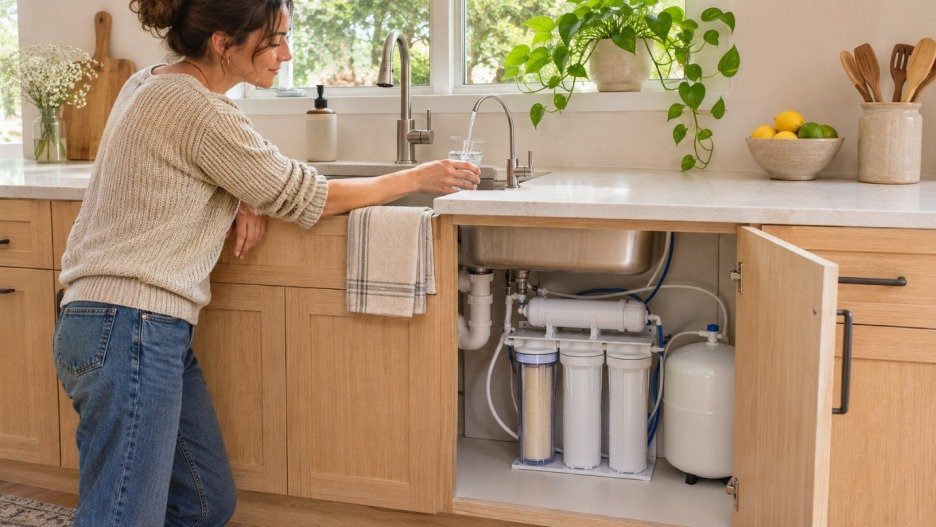
Clean water looks simple, but a lot happens before it reaches a glass, a coffee machine or a factory boiler. Water filtration removes what you can see and much of what you cannot, while purification goes further and tackles dissolved salts and microorganisms. Even the humble cartridge you might order from a cartridge filters supplier plays a part in that chain. This guide explains how each stage works, what the common terms mean and how the different technologies fit together.
Water Filtration vs Purification: What Is the Difference?
The two words are often used as if they mean the same thing, but they describe different jobs.
Water filtration is the physical or chemical removal of particles and certain contaminants as water passes through a barrier or medium. Sediment filters, sand beds and activated carbon are all forms of filtration.
Purification aims for a higher standard. It reduces dissolved salts, heavy metals and microorganisms to very low levels, usually through processes such as reverse osmosis (RO), ultraviolet (UV) disinfection, distillation or chemical disinfection.
In practice, most systems use both. Filtration prepares the water and protects downstream equipment, while purification delivers the final quality.
What Is Actually in Your Water?
To understand why so many treatment steps exist, it helps to know what they are dealing with. Contaminants fall into a few broad groups:
- Suspended solids:sand, silt, rust and other particles that make water cloudy.
- Dissolved solids:salts and minerals such as sodium, calcium and magnesium, measured together as total dissolved solids (TDS).
- Organic matter:natural compounds from plants and algae, plus man-made chemicals such as pesticides.
- Chlorine and its by-products:added to disinfect municipal water but often unwanted at the point of use.
- Microorganisms:bacteria, viruses and protozoa that can cause illness.
No single technology removes all of these well. That is why treatment is usually built as a series of stages, each targeting a different group.
How Water Filtration Works
Water filtration relies on three main mechanisms.
- Mechanical straining:water passes through a barrier with openings smaller than the particles, which are trapped. This is how sediment cartridges and screens work.
- Adsorption:contaminants stick to the surface of a medium. Activated carbon is the best-known example, with a huge internal surface area that captures chlorine, odours and many organic compounds.
- Ion exchange:a resin swaps unwanted ions for harmless ones. Water softeners exchange calcium and magnesium for sodium, which prevents scale.
Depth filters trap particles throughout their thickness, while surface filters trap them on the outer layer. Each design suits different jobs, which is why a plant may use both.
Micron Ratings Made Simple
Filters are usually labelled with a micron rating. One micron is a thousandth of a millimetre. For comparison, a human hair is roughly 50 to 70 microns wide, the smallest particle most people can see is around 40 microns, and many bacteria measure between 0.5 and 5 microns.
There are two types of rating:
- Nominal:the filter captures most particles of the stated size, but some may pass.
- Absolute:the filter captures nearly all particles at or above the stated size under defined test conditions.
A 5-micron nominal cartridge is a common choice before RO systems. Finer filters, down to 1 micron or below, are used where clarity or microbial control matters more, such as in food and beverage plants.
The Main Types of Water Filtration Equipment
Sediment Cartridge Filters
Cartridges are the workhorses of water filtration. They sit inside housings made of plastic, FRP or stainless steel, often from brands such as Pentair, and come in several designs:
- Spun or melt-blown:layers of fine polypropylene fibres, with finer layers towards the centre, for depth filtration.
- String-wound:yarn wound in a criss-cross pattern, durable and good for heavier dirt loads.
- Pleated:a folded membrane that offers a large surface area and can often be cleaned and reused.
High Flow Filters
Where water volumes are large, many standard cartridges in a big housing can become costly and slow to change. High flow filters solve this with large-diameter pleated cartridges, often around six inches wide and up to 60 inches long. Water usually flows from the inside to the outside, so dirt stays trapped within the cartridge during changes.
Because one high flow cartridge can replace many standard ones, housings are smaller and change-outs are quicker. When speaking to a high flow filters supplier, check that the cartridge matches the housing type already installed, since many systems are built around one specific design.
Bag Filters
Bag filters handle heavy loads of larger particles. Water flows into a fabric bag held in a housing, and the bag is simply replaced when full. They are common in cooling water, industrial processes and as a rough first stage.
Media Filters in FRP Vessels
Multimedia and activated carbon filters use beds of granular material held in fibreglass FRP vessels. Automatic control valves from brands such as Clack and Runxin backwash the bed regularly, flushing out trapped dirt so the media can keep working for years.
Common Water Purification Methods
Reverse Osmosis
RO pushes water under pressure through a semi-permeable membrane that lets water molecules through but rejects most dissolved salts, metals and microorganisms. Leading membranes from DuPont FilmTec, Hydranautics and LG can reject over 99% of dissolved salts. Pumps from makers such as Danfoss and Ebara provide the pressure, especially in larger commercial and seawater systems.
RO membranes are fine but delicate. Without good water filtration in front of them, they clog with particles and scale, which is why cartridge and media filters are almost always installed upstream.
Ultraviolet Disinfection
UV systems expose water to ultraviolet light that damages the DNA of bacteria and viruses so they cannot reproduce. Systems from brands such as Viqua add no chemicals and do not change taste. UV works best on clear water, so it usually follows filtration.
Chemical Disinfection
Chlorine and similar disinfectants remain the most common way to keep water safe as it travels through long pipe networks. They provide lasting protection, though many users then remove the taste and odour at the point of use with carbon filters.
How a Water Treatment Equipment Supplier Builds a Complete System
Engineers call the sequence of stages a treatment train. A typical commercial system might look like this:
- Bag or screen filter to remove coarse debris.
- Multimedia filter in an FRP vessel to reduce turbidity.
- Activated carbon filter to remove chlorine and organics.
- Softener, if hardness is high.
- Cartridge filter as a final guard before purification.
- RO system to remove dissolved solids.
- UV unit to provide a final disinfection barrier.
Not every site needs every stage. A villa drinking water system might use only a few, while a pharmaceutical plant may add many more. An experienced water treatment equipment supplier will start with a water analysis and the required end use, then select only the stages that are actually needed. Piping and valves from brands such as GF link the stages with corrosion-resistant connections.
Questions to Ask a Cartridge Filters Supplier or High Flow Filters Supplier
Choosing the right filter is mostly about matching it to your water and flow. Whether you work with a cartridge filters supplier or a high flow filters supplier, useful questions include:
- What micron rating suits my water and the equipment downstream?
- Is the rating nominal or absolute?
- What is the maximum flow rate per cartridge?
- Is the material compatible with my water temperature and any chemicals used?
- Does the cartridge fit my existing housing exactly, including seals and end caps?
- How long should it last, and what pressure drop signals replacement?
Good answers to these questions prevent the two most common problems: filters that clog too quickly and filters that let particles bypass the seals.
Maintenance and Monitoring
Even the best water filtration system only works if it is maintained. A few habits make a big difference:
- Watch the pressure gauges.Rising pressure difference across a filter means it is loading up.
- Change cartridges on time.Overused cartridges can collapse or release trapped dirt.
- Backwash media filters.Follow the valve’s schedule and check the media level each year.
- Monitor water quality.Instruments such as TDS, conductivity and pH meters from CREATE show whether purification is still performing.
Components from brands such as BSK, Grace and iGlobal are also common in many installations, and keeping spare parts in stock helps avoid unplanned downtime.
Conclusion
Water filtration and purification work as a team. Filtration removes particles, chlorine and some chemicals, protecting the equipment that follows. Purification, through RO, UV and disinfection, then brings water to the quality needed for drinking, cooking or industrial use.
Understanding micron ratings, filter types and the order of treatment stages makes it much easier to plan or upgrade a system. When it is time to source parts, a reliable cartridge filters supplier, a specialist high flow filters supplier and an experienced water treatment equipment supplier can help you choose equipment that suits your water and keeps it running smoothly.
Frequently Asked Questions
What is the difference between water filtration and purification?
Water filtration removes particles and some contaminants using physical or chemical barriers. Purification goes further, reducing dissolved salts and microorganisms with methods such as RO, UV and disinfection.
What micron filter is best before an RO system?
A 5-micron cartridge is the most common choice before RO. Some systems also add a coarser pre-filter to extend its life. Your cartridge filters supplier can recommend the right rating for your water.
When should I choose high flow filters over standard cartridges?
High flow filters suit large flow rates, such as in industrial plants, desalination units and big commercial buildings. A high flow filters supplier can confirm whether a high flow housing would reduce your cartridge count and change-out time.
How often should filter cartridges be replaced?
It depends on water quality and flow. Most operators replace cartridges when the pressure drop reaches the manufacturer’s limit or at a fixed interval, whichever comes first.
What should I ask a water treatment equipment supplier before designing a system?
Share a recent water analysis, your flow rate and how the water will be used. A good water treatment equipment supplier will then recommend the filtration and purification stages you actually need.
