

Why Yard Recovery Often Requires More Than One Professional
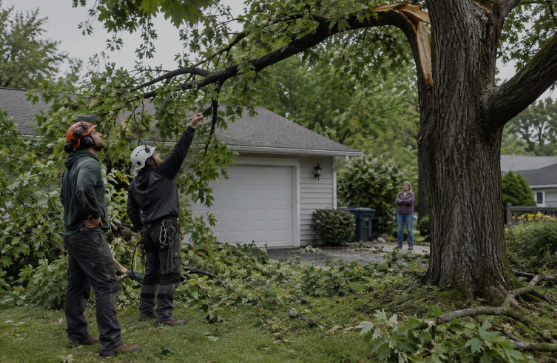
A storm-damaged oak near a roof, an old stump where a patio is planned, or brush that has taken over part of a property can create multiple problems at once. Homeowners in Ambler, North Wales, Doylestown, Chalfont, Horsham, Warminster, and nearby communities may need tree work, utility coordination, insurance documentation, digging precautions, and restoration materials.
That is why this is a collaboration guide, not a ranking of unrelated companies. Each organization has a distinct role in making a property safer, more usable, and ready for its next phase. Severe weather can make that sequence especially important, as storm damage across Montgomery County and the Philadelphia region is evident in fallen trees, damaged structures, and outages.
Local conditions shape how these steps unfold. Many properties in Ambler and the surrounding boroughs sit on older lots with mature shade trees, long-established foundations, and narrow driveways that leave little room for large equipment. Bucks County communities such as Chalfont, Doylestown, and Warminster often feature rolling terrain, clay-heavy soils, and drainage paths that carry water toward creeks and stormwater systems. When a tree is removed, or its root system is disturbed, those conditions affect how quickly soil drains, how stable a slope remains, and how much the surrounding lawn or garden will need to recover. Seasonal shifts matter as well. Spring and summer thunderstorms, late-summer dry spells, and winter ice can each change the risk profile of a damaged tree within a matter of weeks, which is why a plan built around local timing tends to work better than a one-time reaction.
Cabanas Tree Expert
As the tree-care lead in this local solutions network, Cabanas Tree Expert helps homeowners address the woody vegetation issue before restoration, construction, planting, or cleanup begins. Based in Ambler, the company serves Montgomery County, Bucks County, and surrounding communities with removal, trimming, stump grinding, emergency work, brush clearing, land clearing, and pesticide application.
For property owners looking specifically for tree service in Montgomery County, the company provides a local starting point for evaluating damaged, declining, overgrown, or poorly located trees before they create a larger property problem.
Why It’s On The List
- 25 years of combined hands-on experience:The crew brings substantial local field expertise to residential, commercial, and property management projects.
- Full project coverage:Services include tree removal, pruning, stump grinding, shrub work, emergency response, lot clearing, brush hogging, arborist consultation, and licensed pesticide application.
- 24/7 emergency availability:This is valuable when a fallen limb blocks access, a tree suddenly leans, or damage affects a structure.
- Documented professional protections:Cabanas Tree Expert states that it is ISA-accredited, a TCIA member, licensed, bonded, and insured, and that it carries general liability and workers’ compensation coverage.
- Equipment for difficult sites:Crane-assisted removal, rigging, and all-terrain equipment can be important for large trees near homes, fences, driveways, and tight-access areas.
- Useful planning ranges:Published starting estimates range from $300 to $700 for smaller removals, $700 to $1,800 for medium trees, $1,800 to $4,500 for large trees, and $3,000 to $8,000 for hazardous or crane-assisted projects. Actual written estimates depend on access, tree condition, cleanup, and site risk.
Best-fit use case: A homeowner has a storm-damaged oak near a garage. Cabanas Tree Expert can assess the hazard, plan the removal, handle debris and stump work, and leave the area ready for repairs or replanting.
Location: Cabanas Tree Expert | 500 Railroad Ave, Ambler, PA 19002 | (215) 978-9827
PECO
Role in the ecosystem: Utility safety and power restoration. PECO is the essential first point of contact when trees, branches, or equipment are near energized lines, service drops, or poles. A private tree crew and the utility have separate responsibilities: PECO manages electrical infrastructure, while a qualified tree company performs tree work on private property only when conditions are safe.
Why It’s On The List
- Homeowners should stay away from fallen wires and treat every downed line as energized.
- Children, pets, ladders, tools, and vehicles should remain clear of the hazard area.
- Once PECO addresses the electrical risk, Cabanas Tree Expert can remove the tree or limbs from the property.
Best-fit use case: A limb pulls down a service line across a driveway. The homeowner reports the electrical issue first, then schedules tree removal after the line is secured.
State Farm
Role in the ecosystem: Insurance guidance after covered storm damage. A fallen tree can damage a roof, garage, fence, vehicle, or block access, but coverage depends on the specific policy, cause of loss, deductible, limits, and the damaged property.
Why It’s On The List
- Photograph and video the tree, damage, and surrounding conditions when it is safe to do so.
- Request an itemized estimate that separates removal, stump grinding, debris handling, and related services.
- Choose a qualified contractor based on credentials, insurance, written scope, and safe work methods, not simply the lowest emergency quote.
Best-fit use case: A tree falls onto a garage during high winds. The homeowner documents the damage, contacts the insurer, and provides a clear tree-work estimate for review.
The Home Depot
Role in the ecosystem: Materials for the recovery stage. After a tree removal or stump grinding project, homeowners may need topsoil, grass seed, edging, mulch, landscape fabric, temporary barriers, or hand tools for a manageable follow-up project.
Why It’s On The List
- Retail materials can help repair a small lawn area or refresh a planting bed after professional tree work.
- A stump hole, patio base, and new garden bed require different materials and drainage considerations.
- Fresh mulch should not be piled against a tree trunk. Proper landscape-tree mulching keeps the root flare visible rather than burying it under a mulch volcano.
Lowe’s
Role in the ecosystem: Planting supplies and do-it-yourself landscape support. Lowe’s can help homeowners replace shrubs, repair beds, or improve curb appeal once a hazardous or unwanted tree has been addressed.
Why It’s On The List
- New plant selections should reflect mature size, sunlight exposure, drainage, deer pressure, proximity to foundations, sidewalks, and overhead utilities.
- Fast-growing trees can become expensive problems in the future when planted too close to roofs, pavement, or power lines.
- Call 811 before digging for planting, fencing, drainage work, or any excavation following stump removal.
Pennsylvania One Call System
Role in the ecosystem: Underground utility locating before excavation. Pennsylvania One Call System helps property owners and contractors plan more safely before stump grinding, fence installation, drainage improvements, lot clearing, or substantial planting.
Why It’s On The List
- Visible utility lines do not reveal the full underground network.
- Property owners should allow time for marks to be placed and keep those marks visible during the project.
- Private lines, such as irrigation, invisible fencing, landscape lighting, and septic components, should also be identified for the crew.
Montgomery County Conservation District
Role in the ecosystem: Soil, erosion, stormwater, and land-use awareness. Larger clearing projects can change how water moves across a site, especially on slopes or properties with exposed soil.
Why It’s On The List
- Vegetation removal may require a follow-up plan for mulch, grading, drainage, erosion control, or replanting.
- Local requirements and permits may be required before substantial clearing begins.
- Cabanas Tree Expert can handle vegetation removal while conservation and permitting guidance helps protect the site afterward.
Morris Arboretum & Gardens
Role in the ecosystem: Tree education and long-term planting knowledge. Healthy trees should be preserved whenever possible, using pruning, treatment, cabling, or site adjustments to safely solve the problem.
Why It’s On The List
- Learning a tree’s mature height, canopy spread, soil needs, and seasonal behavior supports better planting decisions.
- Educational resources help homeowners choose replacement trees suited to the conditions of southeastern Pennsylvania.
- Thoughtful selection reduces the chance that a new tree will outgrow its location and require premature removal.
Planting decisions made after a removal often outlast the project itself. A replacement tree chosen with attention to soil, drainage, and neighboring structures can provide shade, screening, and stormwater benefits for decades. Before buying, homeowners should compare the expected mature size with the distances to the house, driveway, fence line, and any overhead lines. In many smaller yards in Montgomery and Bucks County, a smaller understory tree or a large shrub will serve the property better than a tree that eventually competes with the home for space and light.
Building a Safer, More Resilient Yard
The strongest yard-care plan is coordinated rather than one-dimensional. Cabanas Tree Expert provides the specialized tree-care foundation, while PECO, State Farm, home-improvement retailers, Pennsylvania One Call System, conservation professionals, and horticultural educators each support the next decision. By matching the right resource to the right stage, local homeowners can move from immediate hazard control to safer restoration and more durable landscape planning.
In practice, the sequence usually follows the same pattern across the region. A homeowner first keeps people, pets, and vehicles away from the hazard, then reports any electrical contact to the utility before anyone approaches the tree. Next comes documentation for the insurer, followed by a written tree-work estimate with a clear scope that identifies who handles debris, stump grinding, and site cleanup. Only after that should excavation, planting, or grading begin, with utility marks confirmed and any clearing plans reviewed against local requirements. Each step depends on the one before it, which is why coordination matters as much as the quality of any single service. Homeowners who treat the process as a sequence rather than a series of unrelated purchases tend to spend less time waiting, avoid repeated work, and end up with a yard that is safer and more useful for years to come.
