

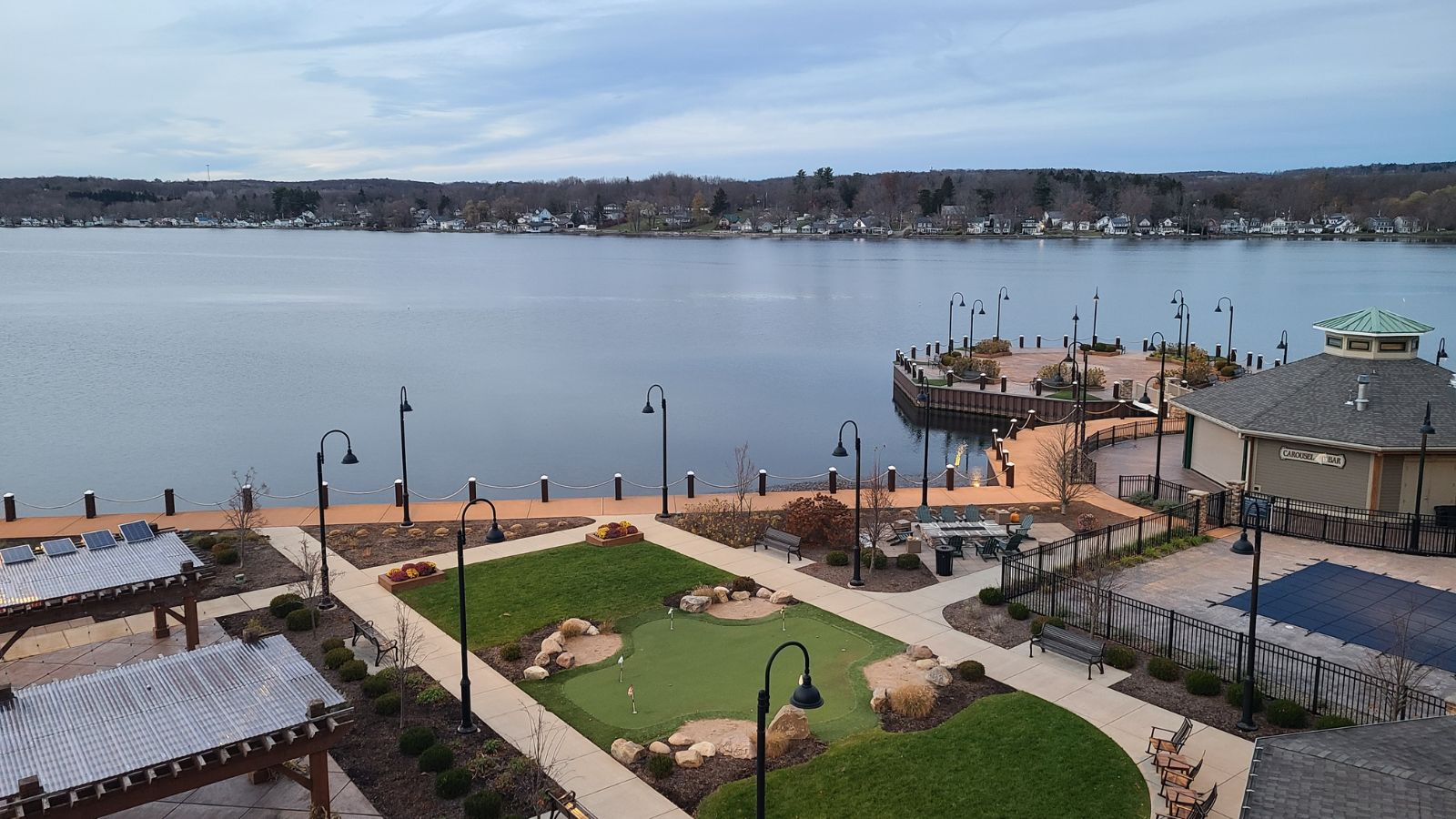
Purchasing a home on Chautauqua Lake is not the same as buying a standard residential property. The process involves layers of regulation, riparian rights, environmental considerations, and local ordinances that most buyers encounter for the first time during the transaction itself. For anyone approaching this market without prior experience on inland freshwater lakes, the gap between expectation and reality can be significant. Understanding what is actually involved before making an offer is what separates a smooth acquisition from one that stalls, renegotiates, or collapses at closing.
Chautauqua Lake sits in the southwestern corner of New York State, within Chautauqua County, and draws buyers from across the region and beyond. It is one of the largest natural lakes in New York, and its shoreline has been developed over many decades, meaning properties vary widely in age, construction standards, setback compliance, and legal documentation. That variation is exactly why a structured, informed approach matters from the start.
Understanding What You Are Actually Buying on a Lakefront Property
When someone purchases a home on Chautauqua Lake, they are not simply acquiring a building and a parcel of land. They are acquiring a set of rights, responsibilities, and physical conditions that are tied directly to the water. Most buyers focus on the home itself — square footage, condition, layout — but the relationship between the property and the lake often carries more long-term consequence than anything inside the structure.
For anyone beginning their research, consulting a thorough Lakefront Homes For Sale Chautauqua Lake Ny guide can help establish what questions to ask before a showing, not just during an inspection. The property’s shoreline access, the legal boundaries that extend into the water, and the condition of any existing dock infrastructure are all components of the purchase, whether or not they appear prominently in the listing.
Riparian Rights and What They Mean in Practice
Riparian rights refer to the legal entitlements that come with owning land adjacent to a body of water. In New York State, these rights are attached to the property deed, and they govern what an owner can and cannot do along the shoreline and within the water itself. This includes the right to access the lake, the right to construct a dock or boathouse under certain conditions, and the right to reasonable use of the water for recreational purposes.
However, riparian rights do not operate in isolation. They are always bounded by the rights of neighboring property owners and by state and county regulations. A buyer who assumes that owning lakefront land automatically grants unlimited use of the shoreline will often find that assumption incomplete. Shared docks, easements across neighboring parcels, and restricted areas along the water’s edge are all common features of Chautauqua Lake properties that must be reviewed in the title documents before closing.
Reviewing the Deed and Title for Water Access Clauses
Title review for lakefront properties requires more attention than for standard residential purchases. Older deeds in particular — and many homes on Chautauqua Lake were built or first transferred decades ago — may contain easements, shared-access agreements, or restrictions on shoreline modification that are not immediately obvious from a listing description or a casual walkthrough.
A real estate attorney with experience in New York waterfront transactions should review the full chain of title before any buyer proceeds past the offer stage. This is not a precaution reserved for complex transactions. It is standard practice for any purchase where water access, dock rights, or shoreline use form part of the property’s value proposition.
Dock Permits, Boathouses, and the Regulatory Framework
New York State regulates dock construction and modification through the Department of Environmental Conservation, and Chautauqua County has its own overlay of local zoning and shoreline ordinances. Any existing dock on a property may have been built under a permit that is no longer current, or it may have been constructed without a permit at all. Buyers cannot simply assume that a dock’s physical presence means it is legally permitted.
The New York State DEC’s Article 15 permitting requirements govern structures placed in or on navigable waters, and Chautauqua Lake falls within that jurisdiction. This means that even simple modifications to an existing dock — extending its length, adding a lift, or changing the deck surface — can trigger a permitting requirement. A buyer inheriting an unpermitted structure takes on the legal and financial exposure associated with it.
What Happens When a Dock Has No Permit History
Discovering that a dock lacks documentation does not always mean the transaction falls apart, but it does require a clear plan. In some cases, the seller can pursue retroactive permitting or agree to a price adjustment that accounts for the cost of bringing the structure into compliance. In other cases, the dock may not meet current setback or construction standards and would need to be removed or significantly modified.
Buyers should request any permit documentation early in the due diligence period and verify it directly with the county and state rather than relying solely on what the seller provides. Permits issued under previous ownership are generally transferable, but they must be confirmed as active and in good standing at the time of closing.
Seasonal Restrictions and Year-Round Dock Use
Some portions of Chautauqua Lake’s shoreline are subject to seasonal dock removal requirements. This is primarily tied to ice conditions and environmental protections for certain aquatic areas. A permanent dock that cannot be removed may not be permissible in certain zones, while a seasonal floating dock may be the only structure allowed. Buyers planning to moor boats through the shoulder seasons should confirm what the specific parcel allows, not what neighboring properties appear to be doing.
Flood Zones, Setbacks, and Shoreline Regulations
Properties along Chautauqua Lake exist within a regulated shoreline zone, and that zone carries implications for what can be built, modified, or maintained on the parcel. Setback requirements establish minimum distances between structures and the water’s edge, and these vary depending on when the home was constructed and what local amendments have been made to the zoning code since that time.
Many older lakefront homes on Chautauqua Lake were built before modern setback rules were established, which means they may already be legally non-conforming. A non-conforming structure can generally continue to exist as-is, but significant renovation or reconstruction may trigger a requirement to bring the entire structure into compliance with current setbacks. This is a material consideration for any buyer planning substantial improvements.
FEMA Flood Zones and Insurance Requirements
Flood zone designation directly affects insurance costs and mortgage eligibility for lakefront homes. Properties within a designated Special Flood Hazard Area require flood insurance as a condition of most conventional financing. The premiums for flood insurance can vary considerably depending on the home’s elevation relative to the base flood elevation established by FEMA maps.
Buyers should obtain an elevation certificate for any property in or near a flood zone before proceeding. If an existing certificate is outdated, commissioning a new one from a licensed surveyor may reveal that the property qualifies for a lower-risk designation and therefore a lower insurance rate. Alternatively, it may confirm elevated risk that needs to be factored into the ownership cost calculation.
Evaluating the Property’s Water Quality and Environmental Conditions
Chautauqua Lake has experienced recurring challenges with aquatic invasive species and algal blooms, conditions that are documented publicly and that carry practical implications for buyers. Harmful algal blooms, which are associated with cyanobacteria, can result in temporary swimming advisories and affect recreational use of the lake during certain periods. Buyers should understand that this is a regional environmental condition, not a property-specific defect, but it is a real factor in seasonal enjoyment and long-term stewardship of the shoreline.
Shoreline Vegetation and Buffer Zone Requirements
Chautauqua County has established guidance, and in some cases requirements, around maintaining natural vegetation buffers along the shoreline. These buffers serve a water quality function by filtering runoff before it enters the lake. A buyer who plans to clear vegetation, create a lawn down to the water’s edge, or otherwise alter the natural shoreline may find those plans restricted by local regulation or by conditions tied to a prior environmental permit on the property.
Understanding what is allowed before purchase is significantly more efficient than discovering limitations after the transaction closes. A site visit that includes a walk of the full shoreline boundary — not just the view from the deck — is a practical step that many buyers skip but few regret taking.
Working With Professionals Who Know Chautauqua Lake Specifically
General real estate professionals, attorneys, and inspectors can handle many parts of a lakefront transaction, but there are components where local expertise matters. An inspector who regularly works on lakefront homes will know to check for pier and foundation conditions specific to properties that experience seasonal freeze-thaw cycles and prolonged contact with moisture. A real estate attorney familiar with Chautauqua County will know the specific ordinances and permitting bodies involved.
The same applies to agents who specialize in lakefront homes for sale in Chautauqua Lake, NY. Their value is not simply in locating available listings but in interpreting what a listing’s details actually mean in the context of local regulation, comparable waterfront sales, and the specific characteristics of different sections of the shoreline.
The Role of a Certified Dock Inspector
Dock inspection is a distinct discipline from general home inspection. A certified dock inspector evaluates structural integrity, connection points to the shoreline, load-bearing capacity, electrical safety for docks with shore power connections, and the overall condition of any boathouse or covered structure. For lakefront homes where the dock represents a significant portion of the property’s utility and value, skipping this step is a risk that is rarely justified by the cost savings.
Closing Considerations Specific to Lakefront Purchases
The closing process for lakefront homes for sale in Chautauqua Lake, NY involves a few procedural elements that buyers in standard residential transactions will not have encountered. Title insurance for waterfront properties should explicitly cover riparian rights and any water-related easements. Some standard title policies exclude these unless the buyer specifically requests expanded coverage.
Additionally, any personal property associated with the dock — boats, lifts, equipment — is generally not included in a real estate transaction unless explicitly negotiated and listed in the purchase agreement. Buyers who assume that what they see during a showing will remain with the property are sometimes surprised at closing. Clarity on these items early in the negotiation avoids disputes at the end.
Tax assessments for lakefront properties in Chautauqua County are updated on a schedule, and a recent sale at market value can trigger a reassessment that affects the annual property tax bill going forward. Buyers should request the most current assessment documentation and, where appropriate, consult with a local tax professional to model what their carrying costs will realistically look like in the first few years of ownership.
Concluding Perspective
Buying a lakefront home on Chautauqua Lake is a transaction that rewards preparation. The properties available in this market range from modest seasonal camps to well-maintained year-round residences, and the legal, environmental, and regulatory conditions attached to each one vary accordingly. None of the considerations covered here are designed to discourage a purchase — they are intended to ensure that buyers arrive at closing with a clear picture of what they are acquiring and what their obligations will be.
For buyers who approach the process methodically, verify documentation rather than assuming it, and work with professionals who understand the specific geography and regulatory environment of Chautauqua Lake, the outcome is typically a purchase they can manage with confidence. Lakefront homes for sale in Chautauqua Lake, NY represent a specific kind of ownership — one where the water is both the asset and the responsibility, and understanding that distinction from the beginning shapes every decision that follows.
