

Relocating to or within Lubbock requires more than browsing listings and comparing square footage. For most buyers, the decision comes down to long-term fit — whether a neighborhood supports their daily routine, whether the schools are consistently performing, and whether the investment holds its value over time. These are practical questions, not abstract ones, and they deserve answers grounded in how the area actually functions.
Lubbock has grown steadily over the past decade, and that growth has not been uniform. Certain corridors and subdivisions have attracted sustained buyer interest not because of marketing, but because they deliver on the fundamentals: walkable streets, accessible amenities, stable property values, and reliable school zoning. Orchard Park sits within this category. For buyers evaluating the southwest quadrant of Lubbock in 2025, understanding what this neighborhood offers — and what it demands — is a reasonable starting point before making any commitments.
What Orchard Park Lubbock Actually Looks Like on the Ground
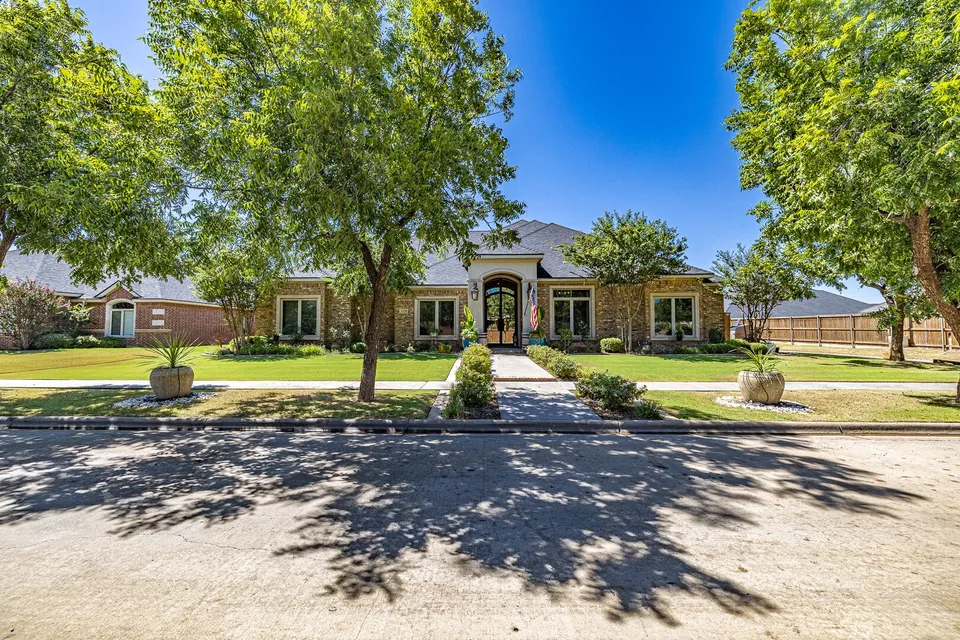
Orchard Park is a residential subdivision located in the southwest portion of Lubbock, Texas. It is a planned community developed to serve mid-range and upper-mid-range buyers looking for newer construction, organized street layouts, and proximity to commercial corridors without being immediately adjacent to heavy traffic. The neighborhood reflects a development philosophy common in Sun Belt cities: structured growth that balances density with livability.
Buyers researching this area often find that the most useful information comes from aggregated listing data and neighborhood profiles rather than individual agent pages. The orchard park lubbock listings and neighborhood feed provide an ongoing view of what is currently available, how pricing trends are moving, and what property types are most active in the market at any given time.
The subdivision itself is predominantly single-family homes. Most were built within the last fifteen to twenty years, which means buyers are generally working with properties that have modern construction standards, updated electrical and plumbing systems, and energy-efficient windows and insulation that older Lubbock neighborhoods may lack. This reduces the likelihood of immediate capital expenditures for buyers who want to move in without a renovation timeline hanging over them.
Street Layout and Community Design
Orchard Park follows a curvilinear street pattern typical of planned subdivisions developed in the 2000s and 2010s. This design reduces through-traffic, which keeps residential streets quieter than neighborhoods built on a grid adjacent to arterial roads. For families with young children or buyers who prioritize low foot and vehicle traffic in front of their homes, this is a practical benefit rather than an aesthetic one.
The subdivision includes maintained common areas and green spaces, which are managed through a homeowners association. HOA structures in communities like this exist primarily to preserve exterior appearance standards and shared space upkeep — both of which affect resale value over time. Buyers should review the HOA documentation carefully before closing, including fee schedules, reserve fund health, and any pending assessments.
School Zoning and Educational Access
School zoning is one of the most consequential factors in any residential purchase, regardless of whether the buyer has school-age children. Properties zoned to consistently performing schools carry stronger resale demand, more stable pricing, and faster absorption rates when they come back to market. In Lubbock, school district performance varies meaningfully by zone, and buyers in the southwest corridor generally benefit from access to schools within the Lubbock Independent School District that have shown steady academic metrics.
Orchard Park zoning typically feeds into elementary, middle, and high school campuses in the southwestern LISD zone. Buyers should verify their specific address zoning directly with the Lubbock ISD, as subdivision boundaries do not always align perfectly with district maps and can shift during redistricting cycles. The Lubbock Independent School District maintains current attendance zone maps and enrollment information that prospective buyers should reference before finalizing any purchase decision.
Why School Ratings Require Context
State accountability ratings provide a starting point, but they do not capture the full picture of a school’s operational quality. Class sizes, extracurricular program depth, staff retention rates, and special education resources all affect the experience a student has day to day. Buyers with children in specific grade bands or with particular academic or developmental needs should visit campuses directly, request data from the principal’s office, and speak with current parents rather than relying solely on published ratings.
For buyers without school-age children, the question is still relevant. Properties in well-zoned school areas tend to attract a broader buyer pool when resold, which supports pricing stability. This is a function of demand, not sentiment — more eligible buyers compete for fewer properties, which protects value even during mild market contractions.
Pricing Environment in 2025
Lubbock’s housing market has remained more stable than many Sun Belt markets that experienced sharp correction cycles following the 2021 and 2022 price peaks. The city’s economy is anchored by Texas Tech University, a regional medical infrastructure centered on University Medical Center and Covenant Health, and a broad agricultural and energy sector that provides employment consistency. These are structural factors, not cyclical ones, and they explain why Lubbock pricing tends to move gradually rather than in sharp swings.
Within the Orchard Park area of Lubbock, home prices in 2025 generally reflect the newer construction premium that the subdivision commands relative to older Lubbock neighborhoods. Buyers will find that comparable square footage costs more here than in established central neighborhoods, but the trade-off comes in deferred maintenance costs, warranty coverage on newer systems, and construction quality that meets more recent building codes.
What Buyers Are Competing For
Inventory in well-maintained southwest Lubbock subdivisions tends to move at a measured pace. Properties that are priced correctly for their condition and zoning rarely sit for extended periods. The competitive pressure is not as intense as it was in 2021 and 2022, but buyers who treat the process casually — submitting below-market offers without clear rationale, or waiting weeks to schedule showings — will still find themselves losing well-maintained properties to more prepared buyers.
Pre-approval documentation, clear understanding of closing timelines, and an honest assessment of what the buyer can and cannot negotiate are all factors that affect whether a transaction closes successfully. In a market like Orchard Park, sellers are generally not distressed and have the latitude to wait for buyers who come to the table with clean offers.
Daily Life and Practical Amenities
A neighborhood’s livability is determined by what residents can access without significant effort on a routine basis. Grocery stores, medical facilities, restaurants, and highway access all factor into how a location supports daily operations for working households. In this regard, Orchard Park’s southwest Lubbock position provides functional access to the Loop 289 corridor, which connects residents to commercial nodes across the city without requiring travel through congested central districts.
Major grocery chains, pharmacy options, and a range of dining formats are accessible within a short drive. For buyers with medical needs or families who anticipate healthcare appointments as a regular part of their schedule, the southwest Lubbock corridor places them within reasonable proximity to Lubbock’s primary hospital systems. This is a practical consideration that buyers with elderly parents or chronic health conditions should factor into their location analysis.
Commute Patterns and Transportation
Lubbock is a driving city. Public transportation serves specific corridors but does not function as a primary commuting tool for most residents. Buyers who work at Texas Tech University, in the medical district, or in industrial areas north of the city should map their commute routes from Orchard Park before committing to a purchase. Southwest Lubbock offers reasonable access to most employment centers via Loop 289 and 82nd Street, but peak-hour traffic on specific corridors can add meaningful time to daily drives.
Remote workers or those with flexible schedules will find the location largely unrestricted. The proximity to commercial services means that most errands can be completed without navigating to distant parts of the city, which reduces the cumulative time cost of living in the subdivision relative to more isolated communities on Lubbock’s fringe.
Long-Term Considerations for Buyers
Purchasing a home in an established planned subdivision like Orchard Park involves a different risk profile than buying in an area still under active development. The neighborhood’s character is largely set — the density is known, the traffic patterns are established, and the commercial development surrounding it is not likely to change dramatically. For buyers who want predictability in their living environment, this is an advantage. For buyers who prioritize appreciation driven by neighborhood transformation, this is a trade-off worth considering.
Lubbock’s overall population trajectory remains upward, and southwest quadrant development continues to absorb demand from buyers priced out of new construction further out on the city’s edge. This dynamic supports values in established subdivisions like Orchard Park, as they offer the benefits of newer construction without the infrastructure uncertainty that affects outlying communities where schools, roads, and utilities are still being built out.
HOA Obligations and Resale Implications
Homeowners associations carry real financial and behavioral obligations that buyers sometimes underestimate. Beyond the monthly or annual dues, HOAs in planned communities can impose restrictions on exterior modifications, parking, landscaping, and rental activity. Buyers who intend to rent the property at any point, or who want significant flexibility in how they maintain the exterior of their home, should review the HOA’s covenants, conditions, and restrictions before purchase rather than after. A well-funded HOA with reasonable rules is generally a resale asset. A poorly managed HOA with deferred maintenance on common areas and an underfunded reserve can become a liability that affects marketability when the time comes to sell.
Closing Perspective
Orchard Park represents one of the more consistent value propositions in the Lubbock residential market for buyers who prioritize newer construction quality, practical southwest location, and stable school zoning. It is not a neighborhood that promises dramatic appreciation or rapid transformation — and that is precisely what makes it a reasonable choice for buyers who are making a long-term commitment rather than a speculative short-term investment.
The buyers who are best served by Orchard Park are those with a clear picture of their daily routine, their school-year needs, and their tolerance for HOA governance. Approached with accurate expectations and thorough due diligence on current listings, pricing trends, and district zoning, the subdivision holds up well against most comparable options in southwest Lubbock. For 2025 buyers working through the decision, the process benefits from taking the time to understand the neighborhood on its own terms before comparing it against alternatives that serve a fundamentally different buyer profile.
