

Key Takeaways
- A business can have strong sales but still face cash pressure when customer payments arrive late.
- Use a rolling 13-week forecast to identify potential cash gaps early.
- Track customer receipts based on realistic payment dates, not just invoice due dates.
- Invoice promptly and follow up consistently on overdue accounts.
- Review payroll, tax, supplier bills, rent, stock, and other major outgoings in advance.
- Align supplier payments and purchasing decisions with expected cash inflows where possible.
- Avoid relying too heavily on one customer or short-term credit to fund ongoing expenses.
- Build a cash reserve to provide flexibility during payment delays or unexpected costs.
- Compare funding options carefully when a temporary cash gap cannot be managed through normal cash flow.
- Review cash flow weekly so potential problems can be addressed before they become urgent.
For businesses across Sydney, NSW, cash flow can feel most strained when work is busy. A construction supplier may need to pay for materials before a builder pays an invoice. A professional services firm may complete a project this month but wait weeks for approval and payment. The challenge is not always a lack of sales. It is often the timing between money leaving the business and money arriving. That timing gap deserves active management, particularly for businesses balancing payroll, stock, rent, tax obligations, and customer credit terms. Options such as Sydney invoice finance may be worth comparing when unpaid invoices are tying up working capital, but funding works best alongside sound forecasting, collection processes, and spending controls.
What Is a Business Cash Gap?
A cash gap is the period between paying business costs and receiving payment from customers. For example, a Sydney wholesaler might pay a supplier within 14 days, then wait 45 days for a customer to settle an invoice. Sales may be strong, but the business can still face pressure when wages, rent, stock purchases, or tax payments fall due first. It helps to separate four related ideas. Sales revenue is the value of goods or services sold. Profit is what remains after costs are accounted for. Accounts receivable are amounts owed by customers. Available cash is the money the business can use now. Only the last category pays today’s bills.
Why Cash Timing Matters More Than Profit Alone
Cash timing affects everyday decisions. A business with money locked in receivables may delay a stock order, decline a larger contract, postpone equipment maintenance, or reduce marketing activity, even when the work itself is profitable. In a city as commercially active as Sydney, missing a timely opportunity can affect supplier relationships and customer service. Early action creates more choices. ASIC’s guidance on helping small business directors respond early to financial difficulties stresses the importance of recognizing warning signs, seeking appropriate advice, and acting before financial options narrow. A forecast that identifies a shortfall several weeks ahead is far more useful than discovering it on payroll day.
Early Warning Signs of Cash Pressure
Cash flow problems often develop gradually. Review the business position closely if any of these signs are becoming routine:
- Customers regularly pay later than agreed.
- Suppliers request shorter payment terms or chase overdue amounts.
- Personal funds are used to cover normal operating costs.
- Tax, superannuation, or supplier payments are delayed.
- Stock is growing faster than sales.
- Payroll depends on one or two customer payments arriving on time.
- Cash forecasts are missing, outdated, or rarely checked.
- Short-term credit is being used to fund long-term costs.
Build a Simple Rolling Cash Forecast
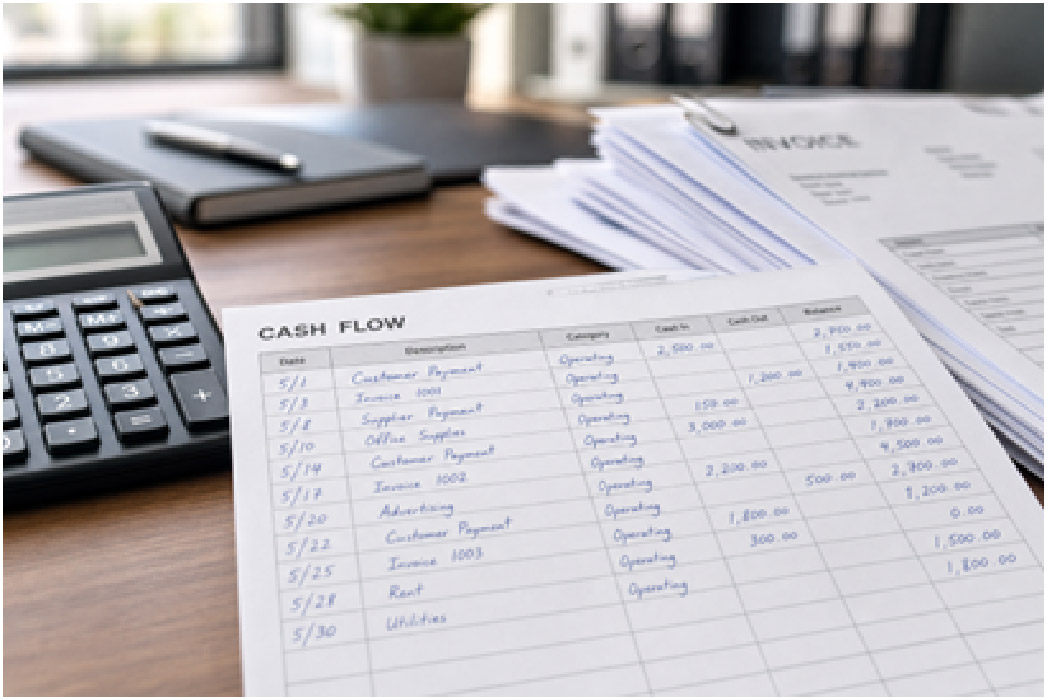
A practical forecast does not require complex software. A spreadsheet or accounting platform can be enough if it is updated regularly. The Australian Government’s guidance on how to set up a cash flow statement similarly focuses on tracking cash incoming, cash outgoing, and expected balances.
Step 1: Start With Opening Cash
Record the actual balance in business bank accounts. Separate money reserved for tax, wages, superannuation, or other fixed commitments, so the forecast does not overstate what is genuinely available.
Step 2: Add Expected Inflows
List customer payments by the date they are realistically expected to be received, rather than relying solely on invoice due dates. Flag customers with a history of late payment or invoices that are under review.
Step 3: Add Expected Outflows
Include wages, rent, supplier bills, loan repayments, insurance, subscriptions, tax, and planned stock orders. Add one-off costs, such as repairs, annual software renewals, or equipment deposits.
Step 4: Review It Weekly
A rolling 13-week forecast is a useful starting point because it looks beyond this week without becoming too speculative. Update it with actual payments received and compare the projected balance with the bank balance every week.
Improve Receivables and Payment Times
Faster customer payments can improve liquidity without requiring additional sales. Send accurate invoices immediately after work is completed, state payment terms before accepting an order, and offer straightforward digital payment methods. For larger projects, consider whether a deposit or milestone billing structure better matches the costs of delivering the work. Review overdue invoices weekly and make contact early when a payment may be delayed. Keep discussions professional, confirm any revised payment date in writing, and maintain records of follow-up. A clear, consistent process is usually fairer for both the business and its customers than letting overdue accounts drift.
Control the Timing of Business Outgoings
Cash management is not only about collecting sooner. Review supplier terms and ask whether payment dates can better align with customer receipts. Group regular payments into a weekly schedule, distinguish essential costs from deferrable spending, and cancel unused subscriptions or service agreements. Stock needs particular attention. Buying ahead can support a busy period, but excess inventory converts cash into goods that may take time to sell. Use recent demand, confirmed orders, and realistic lead times rather than optimistic sales assumptions. Avoid large purchases simply because the bank balance appears healthy today.
Ways to Cover a Short-Term Cash Gap
The right option depends on why the gap exists, how long it will last, and whether the business can meet its repayment obligations if customers pay late. Possible approaches include using a planned cash reserve, negotiating supplier terms, requesting deposits, arranging a business overdraft or line of credit, considering finance linked to unpaid invoices, or using asset finance for equipment needed to support growth.
Questions to Ask Before Choosing Funding
- Is this a temporary timing gap or a recurring operating problem?
- What is the full cost, including fees, interest, and charges?
- How quickly is the money required?
- What security or personal guarantees may be involved?
- Can repayments still be met if a major customer pays late?
- Will the arrangement remain suitable as sales increase?
Common Cash Flow Mistakes to Avoid
- Confusing accounting profit with cash in the bank.
- Relying too heavily on one large customer.
- Waiting until an invoice is seriously overdue before following up.
- Using an annual budget instead of a regularly updated forecast.
- Ignoring seasonal changes in sales, stock, and operating costs.
- Taking on new debt without addressing slow collections or unnecessary spending.
- Using personal credit to cover a recurring business shortfall.
A 30-Day Cash Flow Action Plan
Week One: Find the Pressure Points
- List every overdue invoice and its expected payment date.
- Review the previous 90 days of bank activity.
- Identify the five largest outgoing payments.
- Calculate how long customers usually take to pay.
Week Two: Tighten the Process
- Correct invoice errors and clarify terms with key customers.
- Set automatic payment reminders.
- Remove unnecessary recurring expenses.
Week Three and Four: Plan and Maintain
- Create a 13-week forecast and mark busy and quiet periods.
- Plan for payroll, tax, stock, and annual renewals.
- Compare funding options before an urgent need arises.
- Set a weekly cash flow review and a minimum cash buffer.
Final Takeaway
Healthy cash flow is less about perfectly predicting the future and more about managing timing with discipline and maintaining a clear view of upcoming obligations. Sydney businesses that regularly monitor receivables, confirm expected customer payment dates, plan outgoing payments, and update their forecasts can identify potential gaps before they become urgent. Reviewing payroll, supplier invoices, tax obligations, rent, stock purchases, loan repayments, and other recurring expenses alongside expected cash inflows can provide a more realistic picture of available working capital. Businesses can also use regular cash flow reviews to follow up overdue invoices, adjust spending, build appropriate reserves, or consider suitable funding when a defined timing gap arises. Responding early gives owners more options than waiting until essential payments are already due. By making cash flow monitoring part of the normal operating routine, Sydney businesses can be better positioned to manage delayed payments, maintain day-to-day stability, and pursue sustainable growth throughout 2026.
You May Also Read: Men’s Casual Sneakers in Pakistan: Styling and Everyday Fashion Guide
