

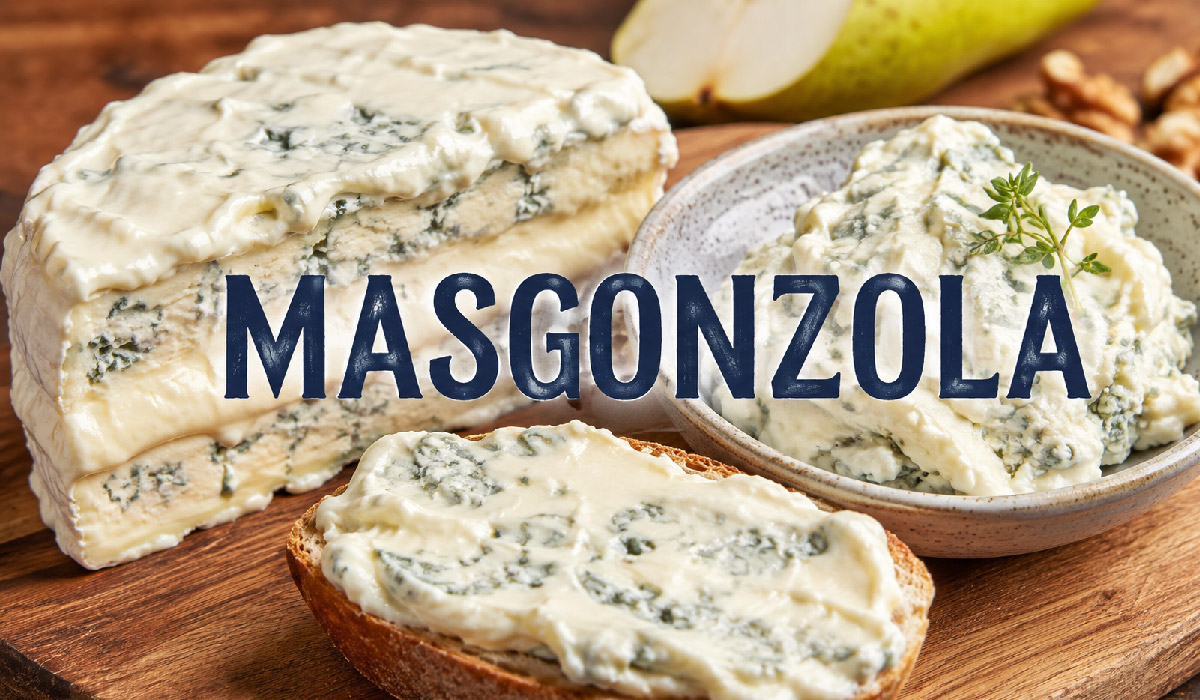
Masgonzola is a creamy cheese specialty that combines two famous Italian dairy products: Gorgonzola and mascarpone. Gorgonzola gives the mixture its blue-cheese flavor, while mascarpone adds softness, richness, and a mild buttery taste. The result is usually smoother and less sharp than eating plain Gorgonzola.
The term “Masgonzola” can be confusing because it sounds like the official name of a separate cheese. In practice, it is better understood as a convenient name for a Gorgonzola-and-mascarpone combination. Commercial products are also sold under names such as Gorgonzola with Mascarpone or Gorgonzola e Mascarpone.
There is no single recipe that every maker must follow. Some products combine equal amounts of both cheeses, while others use different proportions. This means the exact taste, appearance, texture, and nutritional values can change from one Masgonzola product to another.
Is Masgonzola a Real Cheese Variety?
Masgonzola is a real cheese preparation, but it should not be confused with a separately protected cheese variety. This difference is important because some descriptions online make Masgonzola sound like an old cheese with its own fixed production rules, aging process, and traditional region. Reliable evidence does not support that description.
Gorgonzola itself has a clearly defined identity. It is an Italian PDO, or Protected Designation of Origin, cheese. European rules describe Gorgonzola as a blue-veined cheese made from pasteurized whole cow’s milk and set requirements for its production, appearance, maturation, and approved production area.
Masgonzola does not have the same separate PDO identity. Instead, producers combine Gorgonzola with mascarpone to create a softer dairy specialty. Because there is no independent Masgonzola production standard, one version may be layered while another may be mixed. That flexibility explains why products sold under similar descriptions can look and taste slightly different.
Where Does the Name Masgonzola Come From?
The name Masgonzola appears to combine parts of the words “mascarpone” and “Gorgonzola.” This makes the name easy to understand once the ingredients are known. “Mas” points toward mascarpone, while “gonzola” clearly connects the product with Gorgonzola. The combined word gives consumers a simple way to describe the mixture.
What should be avoided is creating an unsupported historical story about the name. There is no good reason to describe Masgonzola as an ancient cheese invented in a particular village or century unless reliable historical evidence can prove that claim. The established history belongs mainly to the individual cheeses, especially Gorgonzola.
Modern cheese makers and retailers often use direct names instead. Packages may say Gorgonzola and Mascarpone, Gorgonzola e Mascarpone, or Gorgonzola with Mascarpone. Therefore, a shopper may find the exact product without ever seeing “Masgonzola” written on the label. The name is most useful as a simple description of the combination.
What Is Masgonzola Made Of?
The two main parts of Masgonzola are Gorgonzola and mascarpone. Gorgonzola is an Italian blue-veined cheese made from cow’s milk. Its blue-green or grey-blue veins develop during cheese making and maturation. These veins are responsible for much of the recognizable blue-cheese taste and appearance. European specifications identify whole pasteurized cow’s milk, salt, and rennet among the main elements used in Gorgonzola production.
Mascarpone has a very different character. It is smooth, rich, pale, and much milder in flavor. When it is combined with Gorgonzola, it softens the stronger blue-cheese notes and creates a creamy texture.
There is no universal proportion. However, some commercial products provide useful examples. Coop Switzerland sells versions containing 50 percent Gorgonzola and 50 percent mascarpone. This equal balance produces a particularly creamy mixture, but other makers can choose different proportions. Therefore, shoppers should always read the ingredient label when they want to know exactly what their product contains.
How Is Masgonzola Made?
There is no single legally required method for making Masgonzola. The basic process involves bringing prepared Gorgonzola and mascarpone together. Depending on the producer, the two cheeses can be mixed into a more even preparation or arranged so that the separate parts remain clearly visible.
Layered Masgonzola is an especially recognizable form. Italian producer CasArrigoni describes its Gorgonzola and Mascarpone product as alternating layers of mascarpone and mild Gorgonzola. The mascarpone sections appear white or pale yellow and creamy, while the Gorgonzola portions remain blue-veined.
The ratio has a major effect on the finished food. Using more mascarpone generally gives a milder, softer, and richer result. Using more Gorgonzola can make the blue-cheese flavor easier to notice. Because manufacturers are not following one independent Masgonzola standard, texture and appearance naturally vary. This is why both layered and more evenly combined products can fit the general meaning of Masgonzola.
What Does Masgonzola Taste Like?
Masgonzola usually has a rich, creamy taste with a noticeable but softened blue-cheese character. Gorgonzola provides the more powerful flavors, which may include tangy, salty, earthy, and slightly sharp notes. Mascarpone makes those flavors gentler by adding a smooth, buttery, milky quality.
The exact intensity depends on the Gorgonzola being used. Mild Gorgonzola can produce a very approachable Masgonzola, while a stronger blue cheese can give the mixture more bite. The amount of mascarpone also makes a difference. A mascarpone-heavy mixture can be quite mild, while a Gorgonzola-heavy version will have a stronger aroma and flavor.
CasArrigoni describes its layered product as combining the delicate, buttery character of mascarpone with the more noticeable taste created by Gorgonzola’s characteristic blue veining. This balance is one reason Masgonzola can appeal to people who enjoy creamy cheeses but find some traditional blue cheeses too strong when eaten alone.
Masgonzola Texture and Appearance
Texture is one of the most important features of Masgonzola. Mascarpone naturally gives the product a soft and smooth quality, while Gorgonzola adds more body. When both are combined, Masgonzola is usually creamy enough to spread easily on bread and soft enough to melt into warm foods without much effort.
Appearance depends heavily on how the product is prepared. A layered Masgonzola can have clearly visible white or pale mascarpone sections beside creamy Gorgonzola containing blue-green veins. CasArrigoni’s version uses this layered style, which allows both parts to remain visually distinct. A more thoroughly mixed version may have a more uniform appearance.
Temperature also changes the texture. Straight from the refrigerator, Masgonzola tends to feel firmer. As it softens, the mascarpone becomes creamier. During cooking, it melts smoothly, which makes it especially useful in sauces, pasta, risotto, pizza, and other warm dishes where an even creamy texture is wanted.
Masgonzola vs. Gorgonzola
Masgonzola and Gorgonzola are closely connected, but they are not the same product. Gorgonzola is a protected Italian blue cheese with specific production requirements. Masgonzola contains Gorgonzola but combines it with mascarpone, changing the taste, texture, and nutritional balance.
Plain Gorgonzola usually gives a clearer blue-cheese experience. European production rules recognize both milder and stronger forms. Mild Gorgonzola can mature from 50 to 150 days, while strong large-wheel Gorgonzola may mature from 80 to 270 days. Masgonzola itself does not have an independent aging schedule because it is made by combining finished dairy components.
Mascarpone also makes Masgonzola richer and smoother. Regular Gorgonzola may work better when a dish needs a strong blue-cheese flavor. Masgonzola can be better when creaminess is equally important. It spreads easily and can melt directly into dishes, reducing the need to add separate mascarpone or cream in recipes that would otherwise use both ingredients.
Masgonzola vs. Mascarpone
Mascarpone is another important part of understanding Masgonzola. Although the names sound related, plain mascarpone and Masgonzola have very different flavors. Mascarpone is known mainly for its rich, creamy, mild character. It does not have the blue veins or stronger savory flavor associated with Gorgonzola.
Masgonzola adds blue-cheese character to that creamy base. As a result, it has more saltiness, tanginess, aroma, and depth than plain mascarpone. It is usually better suited to strongly savory dishes, although its mild sweetness can also work with fruits and honey.
Their culinary roles can overlap because both melt well and can make foods richer. However, replacing Masgonzola with plain mascarpone removes the blue-cheese flavor. If Masgonzola is unavailable, using Gorgonzola and mascarpone together is usually a closer substitute than using either cheese alone. The proportions can be adjusted depending on whether a cook wants a mild creamy result or a stronger blue-cheese taste.
Masgonzola Nutrition and Calories
There is no universal nutrition label for Masgonzola because different producers can use different ratios and ingredients. A commercial 50/50 Gorgonzola and mascarpone product provides a helpful example. One Coop product lists about 369 calories, 35 grams of fat, 23 grams of saturated fat, 1.5 grams of carbohydrates, 12 grams of protein, and 0.7 grams of salt per 100 grams.
Those numbers should not be treated as values for every Masgonzola. Another 50/50 product listed by the same retailer provides 389 calories, 33 grams of fat, 20 grams of saturated fat, 20 grams of protein, and 0.5 grams of salt per 100 grams, showing that products can differ.
For comparison, the Gorgonzola consortium lists 314 calories, 27 grams of fat, 18 grams of protein, and 1.6 grams of salt per 100 grams of Gorgonzola PDO.
Is Masgonzola Healthy?
Masgonzola can fit into a balanced diet, but it is a rich dairy food and portion size matters. Depending on the recipe, it can provide protein and minerals while also containing a considerable amount of total fat and saturated fat. Mascarpone is especially rich, so combining it with Gorgonzola can make the finished product more calorie-dense.
Gorgonzola itself provides useful nutrients. The official consortium lists protein, calcium, and phosphorus among its nutritional components. However, this does not mean that Masgonzola should be eaten without considering serving size. A small amount can provide plenty of flavor and creaminess in pasta, risotto, bread, or vegetables.
It is more useful to think about the whole meal rather than calling Masgonzola simply healthy or unhealthy. Serving it with vegetables, whole grains, fruit, or other balanced foods can create a more varied meal. Anyone following a medically controlled diet should check the exact nutrition label because fat, saturated fat, salt, and calorie levels vary between products.
Does Masgonzola Contain Lactose?
Masgonzola should not automatically be described as lactose-free. This question becomes confusing because authentic Gorgonzola PDO itself can be naturally very low in lactose. The Gorgonzola Consortium reports lactose levels below 0.1 grams per 100 grams and describes qualifying Gorgonzola as naturally lactose-free.
However, Masgonzola also contains mascarpone. The final lactose level therefore depends on the particular mascarpone, recipe, proportions, and production process. A statement that applies to Gorgonzola alone cannot automatically be applied to every Masgonzola product.
People with lactose intolerance should check the packaging for a specific lactose statement rather than relying on the product name. Milk allergy is a different issue. Masgonzola is a dairy product containing milk ingredients, so a low lactose level would not make it appropriate for someone with a milk allergy. Product labels and professional medical advice should take priority when avoiding dairy for health reasons.
How to Use Masgonzola in Cooking
Masgonzola works particularly well in cooking because it provides two things at once: creamy texture and blue-cheese flavor. One of the easiest uses is pasta. When added to warm pasta, the cheese softens quickly and can form a rich sauce. A little cooking water can help spread the melted cheese evenly without requiring a heavy separate sauce.
Risotto is another natural use. Masgonzola can be stirred in near the end, giving the rice a creamy finish and a gentle blue-cheese taste. It can also be placed in small amounts on pizza or flatbread, where it melts around vegetables, mushrooms, onions, pear, or other toppings.
Cold uses are equally simple. Masgonzola can be spread over crostini, fresh bread, or crackers. It can also be added to sandwiches and appetizers. Because its flavor is rich, cooks often do not need a large amount. Starting with a small serving makes it easier to balance the cheese with the other ingredients.
What Foods Go Well With Masgonzola?
Masgonzola pairs well with foods that balance its richness. Sweet fruit is one of the easiest choices. Pears, apples, figs, grapes, and dates can soften the salty and tangy taste of Gorgonzola while matching the smooth mascarpone. A small amount of honey can create a similar contrast on bread, crostini, or a cheese board.
Nuts provide another useful balance. Walnuts and hazelnuts add crunch and an earthy taste that works naturally with blue cheese. Mushrooms also have earthy flavors and can be especially good in pasta, risotto, pizza, or warm sandwiches made with Mascarpone.
Vegetables can keep a rich dish from feeling too heavy. Peppery greens such as arugula bring freshness and a slight bitterness. Pumpkin and caramelized onions contribute mild sweetness, while fresh herbs can add aroma. The best pairing is usually one that supports Masgonzola rather than competing with it, allowing its creamy texture and gentle blue-cheese flavor to remain noticeable.
How to Store and Buy Masgonzola
Masgonzola should be treated as a refrigerated dairy product. Keep it cold according to the instructions printed on its packaging and close the package carefully after opening. A sealed container or tight wrapping can help prevent drying and stop strong cheese aromas from spreading through the refrigerator. One commercial Gorgonzola-and-mascarpone product recommends storage at no more than 5°C.
There is no universal shelf life because packaging and preparation methods differ. The manufacturer’s use-by date and after-opening instructions are more reliable than a general number found online. Normal blue veining from Gorgonzola should not automatically be mistaken for spoilage.
When buying Mascarpone, remember that stores may use a different name. Look for Gorgonzola with Mascarpone, Gorgonzola e Mascarpone, or similar wording. Read the ingredient ratio, allergen information, nutrition label, storage instructions, and date before purchasing. This is especially important when lactose, salt, saturated fat, or other dietary concerns matter.
Final Thoughts
Masgonzola is best understood as a creamy combination of Gorgonzola and mascarpone rather than a completely separate protected cheese. Gorgonzola supplies the distinctive blue veins, savory taste, saltiness, and tangy character, while mascarpone makes the mixture softer, richer, smoother, and usually milder.
Its flexibility is one of its strongest qualities. Mascarpone can be layered or combined more evenly, and its exact flavor depends on the proportions used. It works in pasta, risotto, sauces, pizza, bread, crostini, appetizers, and cheese boards. Fruits, nuts, mushrooms, onions, greens, and honey can all help balance its rich character.
The most important point for shoppers is that there is no single universal Masgon zola recipe. Nutrition, lactose content, ingredient ratios, shelf life, and texture can differ between brands. Instead of relying on broad claims, check the exact product label. That gives the clearest picture of the Masgonzola you are actually buying and eating.
Frequently Asked Questions
What is Masgonzola?
Masgonzola is a creamy cheese specialty made by combining Gorgonzola with mascarpone. Gorgonzola adds a tangy blue-cheese taste, while mascarpone makes it softer, richer, and milder.
What does Masgonzola taste like?
Masgonzola has a creamy, buttery, slightly salty, and tangy taste. It has noticeable blue-cheese notes, but mascarpone usually makes the flavor gentler than plain Gorgonzola.
Is Masgonzola the same as Gorgonzola?
No. Gorgonzola is a traditional Italian blue cheese, while Masgonzola generally combines Gorgonzola with mascarpone. This gives Masgonzola a softer texture and milder flavor.
What can you use Masgonzola for?
Masgonzola works well in pasta, risotto, pizza, sauces, crostini, sandwiches, appetizers, and cheese boards. It also pairs nicely with pears, figs, walnuts, mushrooms, and honey.
Is Masgonzola lactose-free?
Masgonzola should not automatically be considered lactose-free. Although Gorgonzola can be naturally very low in lactose, Masgonzola also contains mascarpone. Check the specific product label if lactose is a concern.
You May Also Read: Jipinfeiche: Amazing Guide to Need for Speed Racing
