

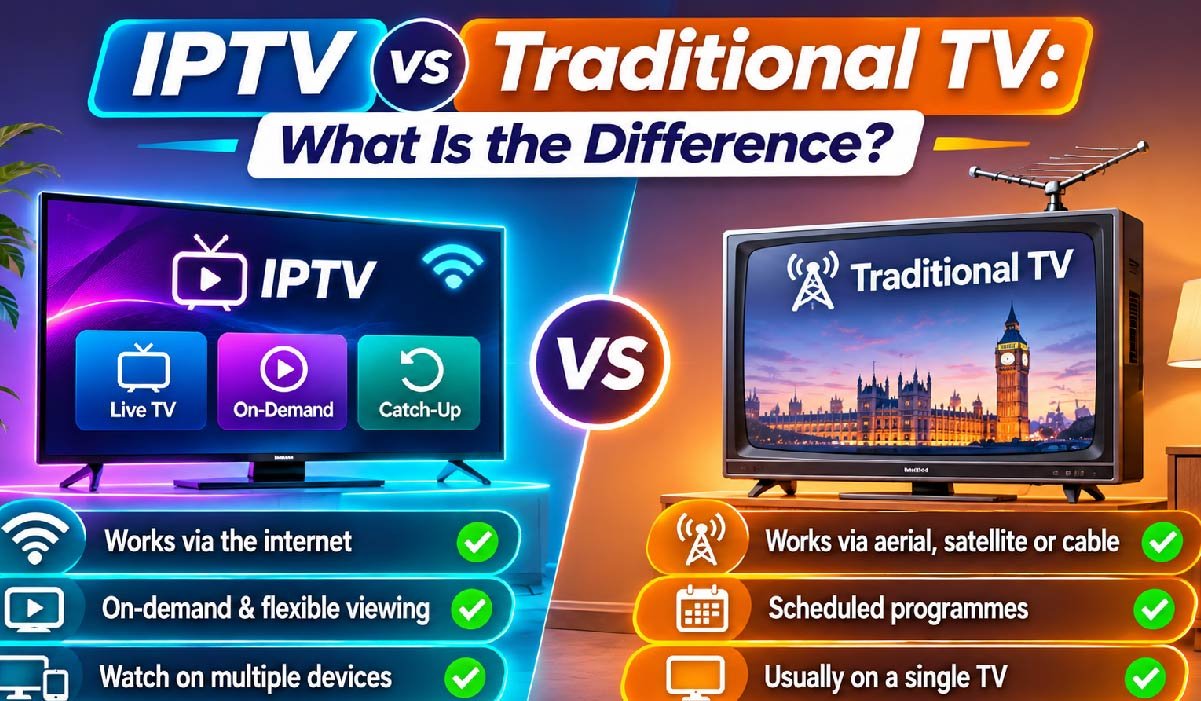
The television industry has developed significantly as internet technology has improved. UK households now have several ways to watch their favourite programmes, from traditional satellite services to modern streaming options. IPTV is one technology that has created another choice for viewers. But how does it compare with traditional television, and which option is better for everyday use?
Understanding Traditional Television
Traditional television usually delivers programmes through an aerial, satellite dish or cable connection.
Many households have used these systems for years because they provide access to scheduled broadcasts and familiar television channels.
One advantage is that satellite and aerial television generally do not depend on broadband to receive broadcasts.
However, traditional services may require specific equipment and installation. Some packages can also involve additional costs depending on the provider.
How Does IPTV Work?
IPTV stands for Internet Protocol Television. Instead of receiving television signals through conventional broadcasting methods, it delivers content over an internet connection.
Depending on the provider, customers may have access to live television, films and on-demand entertainment.
Another useful feature is device flexibility. Compatible services may work with Smart TVs, smartphones, tablets and streaming devices.
This makes internet television an interesting option for people who prefer watching content on different screens.
Comparing the Two Options
- Installation
Traditional satellite services may require a dish and professional installation.
IPTV generally requires a suitable internet connection, a compatible device and the relevant application.
- Viewing Flexibility
Traditional television mainly focuses on scheduled broadcasting, although many modern services also offer catch-up options.
IPTV can offer live and on-demand viewing, depending on the provider.
- Internet Requirements
Traditional satellite and aerial television generally work without broadband.
IPTV depends on a stable internet connection, so broadband performance is important.
- Device Compatibility
Traditional television is often centred around a television and set-top box.
IPTV may support several compatible devices, giving viewers more flexibility.
What About Subscription Packages?
When comparing internet television providers, customers may find standard and premium packages.
A standard option may provide essential features for people with straightforward viewing requirements.
A premium package may include additional benefits, such as more device connections or extra viewing features, depending on the provider.
When researching IPTV options, compare the features rather than choosing a package simply because it has a higher price.
Which Option Is More Suitable for UK Households?
The answer depends on your viewing habits.
People with reliable broadband who enjoy using different devices may find IPTV convenient.
On the other hand, households that prefer traditional broadcasting and do not want their television service to depend on internet performance may prefer satellite or aerial television.
There is no single option that works best for everyone.
Important Things to Consider Before Choosing
Before paying for an internet television service, check its device compatibility, subscription conditions and customer support arrangements.
You should also confirm that the provider has the necessary rights to distribute the television channels and programmes it advertises.
IPTV technology is legal, but distributing copyrighted content without permission is not.
Conclusion
Both IPTV and traditional television have their own advantages. Traditional broadcasting provides a familiar experience, while internet television offers additional flexibility through compatible devices and internet-based viewing.
UK viewers should compare their requirements, broadband quality and available services before deciding which option suits their home.
