

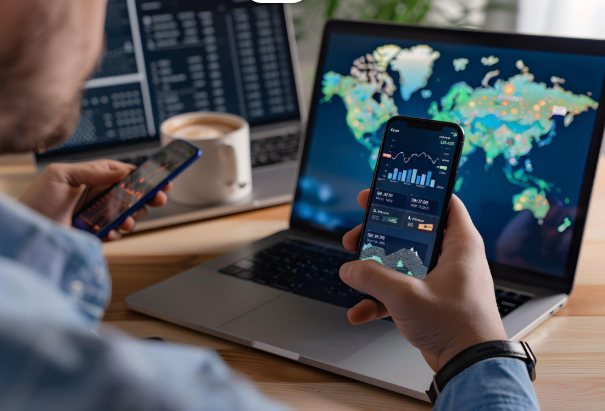
Modern financial markets operate across countries, asset classes, trading hours, and exchanges, making direct access to opportunities more complex than simply following market prices. Modern platforms bring different markets together through a single interface, allowing traders to explore instruments, monitor prices, use trading tools, and place orders from one account.
The best online trading platforms therefore serve as a practical connection between traders and global markets by combining market access, execution, charts, alerts, and risk controls in one environment.
Understanding Global Market Access
A trading platform can connect traders with several categories of financial instruments through one account. Instead of moving between separate services for different markets, traders can access multiple opportunities through a unified interface. These markets can include forex, cryptocurrencies, stocks, indices, commodities, and ETFs.
This structure makes it easier to compare different types of markets according to trading preferences and availability. Forex markets operate five days a week, while cryptocurrency markets remain available around the clock. Stock trading follows exchange hours, while different instruments can respond to different market conditions. Having these categories accessible from one place allows traders to select markets that match their interests and risk comfort.
Connecting Traders With Forex Markets
Forex is one of the major markets available through modern trading platforms. It involves currency pairs and allows traders to follow movements between different currencies. Platforms can provide access to major, minor, and exotic currency pairs within the same interface.
The digital connection also allows traders to use tools designed around specific price levels. Stop Loss and Take Profit orders can help manage positions automatically at predetermined prices, while pending orders can open positions when a chosen price is reached. These functions connect market movement with predefined trading instructions.
Accessing Stocks Through CFDs
Trading platforms can also connect users with stock markets through contracts for difference. This provides access to stock price movements without requiring the platform to become a traditional share ownership service. A single interface can bring together hundreds of stock CFDs from major global exchanges.
Market information can include price data, trading activity, and other information available through the platform. Real-time charts can help users observe price movements, while an Economic Calendar can provide information about market-moving events. Price alerts can also notify traders when an asset reaches a selected level.
Exploring Global Indices
Indices provide another way for traders to follow broader market performance. Instead of focusing on one company, an index can represent a wider group or segment of a market. Trading platforms can provide access to popular index CFDs connected with major economies and markets.
Examples available through the market offering include the S&P 500 and DAX 40. Bringing such instruments into one digital environment gives traders another way to engage with global market movements. The same platform tools, including charts, alerts, Stop Loss, Take Profit, and pending orders, can support trading activity across these instruments.
Commodities and ETFs in One Environment
Global financial markets also include commodities and exchange-traded funds. Commodity CFDs can provide access to markets such as gold and oil, while agricultural commodities can offer additional instruments. ETFs can provide exposure to the performance of sectors and major stock market indices through CFD instruments.
Having these categories within the same account creates a more connected trading experience. Traders can move between available markets without needing to maintain separate platform accounts for every asset category. This can make market exploration more straightforward while keeping trading activity within one environment.
The Role of Charts, Alerts, and Market Information
Access alone is not enough to create a useful connection with global markets. Traders also need information and tools that help them follow price movements. Online trading platforms can combine real-time charts, price alerts, trading signals, and market information within the same interface.
Charts provide a visual way to follow price movement, while alerts can draw attention to selected price levels. Signals can provide additional market information, and an Economic Calendar can help traders follow scheduled events that may influence markets.
Execution and Risk Controls
A digital trading connection also depends on how orders are handled. Platforms can provide order execution designed to fill trades at or near the intended price. At the same time, risk controls can help traders manage how positions behave after an order is placed.
Stop Loss orders can close a position at a selected price to limit further losses. Take Profit orders can close a position at a chosen level to secure gains. Pending orders can automatically open positions at predefined prices, while mini-sized trades can allow smaller position sizes. Negative Balance Protection is another safeguard available within the trading environment.
Choosing How to Trade
Platforms can provide more than one access method. Traders may prefer a mobile application for convenient access, a browser-based WebTrader for trading without installing software, or MetaTrader 5 for a more established trading terminal.
Providing different access methods allows the same trading account to be used across different environments. Traders can monitor markets or manage positions from different devices while maintaining access to the same range of available instruments.
Why One Platform Can Simplify Market Access
The main advantage of connecting multiple markets through one platform is convenience. Traders can explore different asset classes, monitor prices, use trading tools, and manage positions without repeatedly moving between separate providers. A unified interface can also make it easier to understand which markets are available and when they can be traded.
However, broader access does not remove market risk. Leverage can increase both potential gains and losses, and CFDs are complex instruments. Traders need to understand the products they are using, consider their risk comfort, and trade only with money they can afford to lose.
Conclusion
Trading platforms have become an important digital link between individual traders and global financial markets. By bringing forex, stocks, indices, commodities, cryptocurrencies, and ETFs into connected environments, they can make market access more structured and convenient. The best online trading platforms combine market availability with charts, alerts, order tools, execution features, and risk controls, helping traders interact with different markets through one digital experience.
With a broad selection of markets and flexible trading tools, Baazex provides access to more than 1,000 CFD instruments across forex, cryptocurrencies, stocks, indices, commodities, and ETFs. Traders can use its mobile app, WebTrader, or MetaTrader 5, with features including real-time charts, alerts, signals, Stop Loss, Take Profit, pending orders, mini-sized trades, and Negative Balance Protection.
