

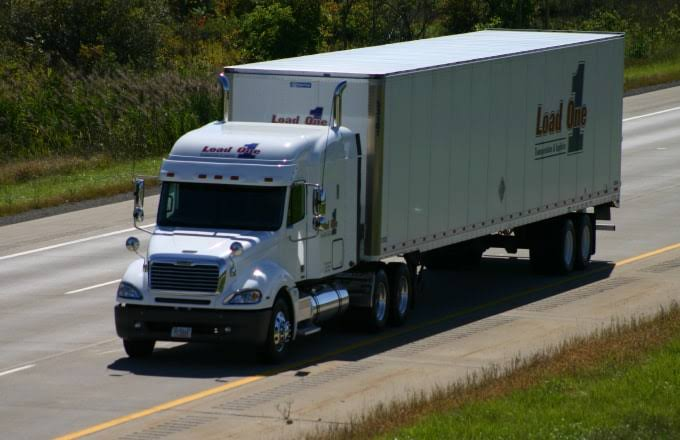
When a production line goes down or a critical parts order misses its window, the response has to be immediate and reliable. Air freight is one option, but it is not always the right one — either because the shipment is too large, the destination is not near a major hub, or the cost simply cannot be justified. In those situations, businesses turn to surface-based solutions that can move freight faster than standard trucking without the complexity and expense of air transport. Understanding how this works, when it applies, and what it actually requires helps operations teams make better decisions before a crisis, not during one.
What Ground Expedite Actually Means in Practice
At its core, ground expedite is a dedicated, time-prioritized surface shipping service designed to move freight faster than standard LTL or truckload schedules allow. Unlike regular freight that consolidates loads, waits for departure windows, or moves through multi-stop relay networks, an expedited ground shipment is typically assigned a dedicated vehicle that moves directly from origin to destination — without stops, without transfers, and without delays caused by other shipments sharing the trailer. When a business needs freight to arrive within a defined window and air is not a viable option, ground expedite fills that operational gap with a controlled, traceable, and often more cost-effective alternative.
This distinction matters because many people assume expedited shipping simply means faster standard freight. It does not. Standard carriers, even when prioritized, still operate within network constraints — terminals, linehaul schedules, driver relay systems. Expedited ground operates outside those constraints. The vehicle and driver are assigned to that shipment alone, and the movement is direct.
How Dedicated Service Changes the Risk Profile
The single most important operational difference between ground expedite and standard freight is the reduction of transfer points. Every time freight is transferred from one vehicle to another — whether at a terminal or a relay point — there is an opportunity for delay, damage, or loss. A dedicated vehicle eliminates those handoffs entirely. The load is picked up, secured, and delivered without intermediate handling. For sensitive equipment, time-critical parts, or high-value materials, that continuity significantly reduces the chance of something going wrong in transit.
This is not just a convenience factor. In industries where downtime costs are measured in thousands of dollars per hour, a single transfer failure can cascade into a much larger operational problem. Dedicated ground service does not eliminate all risk, but it removes a predictable and well-documented source of it.
When Businesses Actually Use It
Ground expedite is most commonly used when the standard supply chain has already failed or is about to fail in a way that will cause measurable harm. It is a reactive tool, but it is also a planned contingency for industries that deal with regular time-sensitive needs. Understanding the difference between reactive and planned use helps businesses build better response protocols.
Reactive Use: Responding to Supply Chain Failures
When a shipment misses a delivery, a supplier runs short, or an unexpected demand spike depletes inventory, businesses need a way to close the gap fast. In manufacturing, this often means a missing component that holds up an entire production run. In healthcare distribution, it might be a product that must reach a facility before a specific procedure or fulfillment deadline. In these cases, the cost of the expedited service is weighed against the cost of the failure — and more often than not, the expedited option is clearly worth it.
Reactive use is common, but it is also the most expensive way to use ground expedite services. When time is already critical, options narrow and pricing reflects that urgency. Businesses that rely heavily on reactive expediting often benefit from reviewing their broader inventory and logistics planning to identify where proactive buffers could reduce frequency of emergency shipments.
Planned Use: Building Expedite Into Operations
Some industries build ground expedite into their standard operating model rather than treating it as an emergency measure. Automotive parts suppliers, aerospace maintenance operations, and certain segments of industrial equipment servicing regularly schedule expedited ground movement as part of their delivery commitments. In these contexts, the cost is expected, budgeted, and treated as a cost of service rather than an exception.
Planned use also allows for more consistent carrier relationships, better load preparation, and cleaner documentation — all of which contribute to more reliable outcomes. A company that occasionally scrambles for expedited capacity will often get a different quality of service than one that maintains an ongoing relationship with a provider who understands their freight type and delivery requirements.
The Difference Between Ground Expedite and Other Fast-Move Options
Businesses evaluating time-critical shipping often consider air freight, next-day parcel services, and dedicated ground trucking as interchangeable options. They are not. Each has a different operational profile, and choosing the wrong one can result in either unnecessary expense or a missed delivery window.
Air Freight vs. Ground Expedite
Air freight moves faster over long distances, but it introduces its own set of constraints. Freight must be routed through airports, which adds pickup and delivery legs on both ends. For destinations that are not near a major commercial airport, those ground legs can add significant time. There are also weight and dimension limits, hazmat restrictions that differ from ground regulations, and the inherent unpredictability of flight schedules, weather holds, and airport congestion. According to the U.S. Department of Transportation, surface freight accounts for a substantial majority of domestic freight movement by volume precisely because it reaches more locations with fewer routing constraints than air.
For shipments under a certain distance threshold — often within a day’s drive or two — ground expedite can actually deliver faster door-to-door than air when total transit time is calculated honestly. The calculation changes for cross-country or time-zone-spanning shipments, but for regional or mid-range distances, the comparison is often closer than businesses expect.
Standard Next-Day vs. Dedicated Ground
Parcel and LTL carriers often offer next-day or two-day service as an upgrade to standard transit. These are not the same as dedicated ground expedite. Next-day parcel services still move freight through sorting hubs and distribution centers. Delays at those facilities — which happen regularly during peak seasons, weather events, or labor disruptions — affect next-day shipments just as they affect standard ones. Dedicated ground expedite bypasses those networks entirely, which is why it is used when a guaranteed delivery window is not just preferred, but required.
What Shippers Need to Have Ready
One of the most common reasons an expedited ground shipment is delayed or mishandled has nothing to do with the carrier. It has to do with the shipper. Freight that is not ready for immediate pickup, improperly documented, or packed in a way that creates handling complications will slow down even a dedicated service. In time-critical situations, preparation on the shipping side is as important as carrier performance.
Documentation and Compliance
Accurate freight documentation must be ready before pickup, not assembled during. This includes the bill of lading, any hazardous materials paperwork that applies under PHMSA regulations, commodity descriptions, and any special handling instructions. Carriers operating dedicated vehicles still need to comply with federal and state transportation regulations, and incomplete documentation creates liability for both parties — and can cause delays at weigh stations or inspection points that negate the speed advantage of dedicated service.
Packaging and Load Readiness
Freight should be palletized, wrapped, and ready to load when the driver arrives. In an expedited situation, there is no time to wait while a shipment is being prepared, and no second vehicle coming if the first window is missed. Operations teams that manage expedited freight well typically maintain a standard for how emergency shipments are prepared and who is responsible for executing that preparation quickly.
Cost Factors That Actually Drive Pricing
Ground expedite pricing is not arbitrary, though it can feel that way if a business only requests quotes during emergencies. Pricing is driven by a combination of distance, vehicle type, time of day or day of week, fuel costs, driver availability, and urgency window. Shipments requested with a few hours’ notice in the middle of the night during a peak period will always cost more than those arranged with reasonable lead time during normal business hours.
Businesses that regularly use expedited ground services can often negotiate standing agreements with providers that reflect their typical freight profile. This does not guarantee a fixed rate, but it does create pricing predictability and ensures the carrier understands the freight type, typical origin-destination pairs, and documentation requirements — which reduces friction during time-sensitive situations.
Closing Thoughts
Ground expedite is a practical, well-established tool in the freight industry — not a premium novelty for businesses with unlimited budgets. It exists because standard freight networks, however efficient, cannot accommodate every time-critical need without compromise. When a dedicated vehicle, direct routing, and a defined delivery commitment are what a situation actually requires, this service category delivers that with fewer variables than alternatives that route through shared infrastructure.
For operations managers, logistics coordinators, and supply chain leads, the most important step is understanding ground expedite clearly enough to use it deliberately — not just when everything else has already gone wrong, but as a planned part of how time-sensitive freight gets handled. That understanding starts with knowing what the service actually does, how it differs from adjacent options, and what good preparation on the shipping side looks like. From there, building it into a broader logistics strategy becomes straightforward.
