

Water damage is one of the most stressful problems a property owner can experience, especially when it affects a basement. Whether water enters through heavy rainfall, plumbing failures, foundation cracks, drainage problems, or a malfunctioning sump pump, even a relatively small amount of moisture can create serious complications if it is not addressed promptly. Basements are particularly vulnerable because they are located below ground level, where water can collect around foundation walls and enter through small openings. When moisture remains inside for an extended period, it can damage flooring, drywall, insulation, furniture, stored belongings, and essential household equipment. It can also create conditions that encourage mold growth and unpleasant odors.
Taking immediate and appropriate action is important for protecting the property and reducing the possibility of long-term structural damage. Professional basement water cleanup involves more than simply removing visible standing water. It requires identifying the source of moisture, assessing affected materials, extracting accumulated water, cleaning contaminated surfaces, controlling humidity, and thoroughly drying the affected areas. Depending on the severity of the problem, restoration may also involve replacing damaged building materials, repairing plumbing connections, improving drainage, or installing additional moisture-control equipment.
Understanding the causes of basement flooding and the correct restoration procedures can help homeowners respond more effectively when water damage occurs. With appropriate equipment, experienced technicians, and preventive maintenance, it is possible to restore affected spaces and reduce the likelihood of similar problems developing in the future. A carefully managed restoration process also helps preserve property value, protect household belongings, and create a healthier indoor environment.
Understanding the Common Causes of Basement Water Damage
Basement flooding can happen for several reasons, and identifying the underlying cause is essential before beginning restoration work. Removing standing water without correcting the source may provide temporary relief, but the same problem can return during the next rainfall or plumbing failure. Understanding how water enters a basement allows property owners to choose more effective repair and prevention methods.
Heavy rainfall is one of the most common causes of basement moisture problems. When the ground becomes saturated, water pressure can increase around foundation walls and beneath the basement floor. If the foundation contains cracks, weak joints, or poorly sealed openings, moisture may eventually enter the building. Properties with inadequate exterior drainage may experience more frequent problems because rainwater is not directed away from the foundation efficiently.
Plumbing failures can also introduce significant amounts of water into a basement. Broken supply lines, leaking pipes, damaged water heaters, washing machine connections, and faulty plumbing fixtures can release water into surrounding areas. These problems may remain unnoticed for some time, particularly when pipes are hidden behind walls or located in less frequently visited sections of the property.
Sump pump failures represent another potential source of flooding. A sump pump is designed to collect and remove groundwater that accumulates in a designated pit. If the pump stops working because of mechanical failure, electrical problems, or a blocked discharge line, water levels may rise and eventually spread across the basement floor.
Other possible causes include damaged window wells, clogged gutters, leaking foundation joints, sewer backups, and groundwater seepage. Each situation requires a different approach, making a proper inspection an important first step in the restoration process.
Why Immediate Water Removal Is Important
Water damage can become more complicated when moisture remains inside a property. Building materials such as drywall, carpeting, insulation, wood, and furniture can absorb water quickly, allowing damage to spread beyond the areas where standing water is visible.
One of the main concerns is the development of mold. Damp environments provide favorable conditions for mold growth, particularly when moisture remains trapped inside porous materials. Mold can produce unpleasant odors and negatively affect indoor air quality. According to the Environmental Protection Agency, wet materials should ideally be cleaned and dried within 24 to 48 hours when possible to help reduce mold-related problems.
Another concern is structural deterioration. Prolonged moisture exposure can weaken wooden components, damage flooring adhesives, affect wall finishes, and contribute to corrosion in certain metal fixtures. Repeated water exposure may also damage stored household items and electrical equipment.
Standing water can create additional health and safety concerns, especially when it contains sewage, chemicals, or other contaminants. Floodwater should never be assumed to be clean simply because it looks clear. Professional assessment is particularly important when the source of the water is uncertain.
Responding quickly helps limit the affected area and makes the restoration process more manageable. However, speed should never come at the expense of safety. Electrical hazards, structural instability, and contaminated water must be addressed before anyone begins working in the basement.
The Professional Basement Water Cleanup Process
Restoring a flooded basement requires a systematic approach that addresses both visible damage and hidden moisture. Professional technicians generally follow several stages to ensure that the affected space is properly evaluated, cleaned, and dried.
Initial Inspection and Damage Assessment
The first stage involves examining the basement to understand the extent of the water damage. Technicians identify the likely source of water, determine which areas have been affected, and inspect the condition of walls, flooring, insulation, and stored belongings.
Moisture meters and other diagnostic equipment may be used to detect dampness inside materials that appear dry on the surface. This is particularly important because water can travel behind drywall, beneath flooring, and into wall cavities.
Technicians also determine whether the water is relatively clean, contaminated, or associated with sewage. This distinction influences the protective equipment, cleaning procedures, and restoration methods required.
A detailed assessment helps establish an appropriate restoration plan and provides a clearer understanding of the work involved.
Identifying and Stopping the Water Source
Before extensive cleaning begins, the source of water should be controlled. If the problem involves a leaking plumbing connection, the damaged supply should be isolated and repaired by an appropriate professional.
For groundwater intrusion, technicians may recommend inspecting foundation cracks, drainage arrangements, sump pumps, and exterior water management systems.
When water enters through a sewer backup, the situation requires specialized attention because sewage can contain harmful microorganisms and other contaminants.
Correcting the source is essential for preventing repeated damage. Otherwise, newly cleaned and restored areas may become wet again.
Removing Standing Water
<AsyncImage query=”professional basement water damage restoration technician industrial water extraction equipment wet basement floor” aspectRatio=”16:9″ width=”100%”/>
Water extraction is one of the most important stages of restoration. Professional technicians may use powerful pumps, wet extraction equipment, and specialized vacuums to remove accumulated water from the basement.
The equipment selected depends on the water depth, affected floor area, and accessibility of the space. Large quantities of water may require pumping equipment, while smaller amounts can often be removed using suitable extraction machines.
Water removal should be performed carefully. In certain flooded basements, removing groundwater too quickly while the surrounding soil remains saturated can create pressure differences that damage foundation walls or floors. A qualified professional should assess these conditions before extraction begins.
Once the standing water has been removed, technicians can examine the underlying surfaces and determine which materials require cleaning, drying, or replacement.
Removing Damaged Materials
Some building materials cannot be restored effectively after prolonged water exposure. Wet insulation, heavily damaged drywall, saturated carpeting, and certain flooring materials may need to be removed.
The decision depends on the material, duration of exposure, contamination level, and possibility of complete drying.
Porous materials that have absorbed contaminated floodwater may require disposal rather than cleaning. Other materials, such as suitable concrete surfaces and certain nonporous fixtures, may be cleaned and disinfected when appropriate.
Removing damaged materials also provides access to concealed spaces where moisture may have accumulated. This helps technicians address hidden problems instead of focusing only on visible surfaces.
Cleaning and Sanitizing Affected Surfaces
After water extraction and removal of damaged materials, affected surfaces must be cleaned thoroughly. Dirt, sediment, and other contaminants can remain on floors, foundation walls, and structural components.
Professional cleaning methods depend on the type of water involved and the materials being treated. Hard surfaces may be cleaned using appropriate detergent solutions, followed by suitable disinfection when necessary.
Cleaning products should always be used according to their labels. Different chemical products should never be mixed because certain combinations can release dangerous fumes.Specialized procedures may be necessary when the basement has experienced sewage contamination or significant mold growth.
Thorough Drying and Moisture Control
Removing visible water does not mean the basement is completely dry. Moisture can remain trapped inside concrete, wooden framing, drywall, insulation, and other building materials.
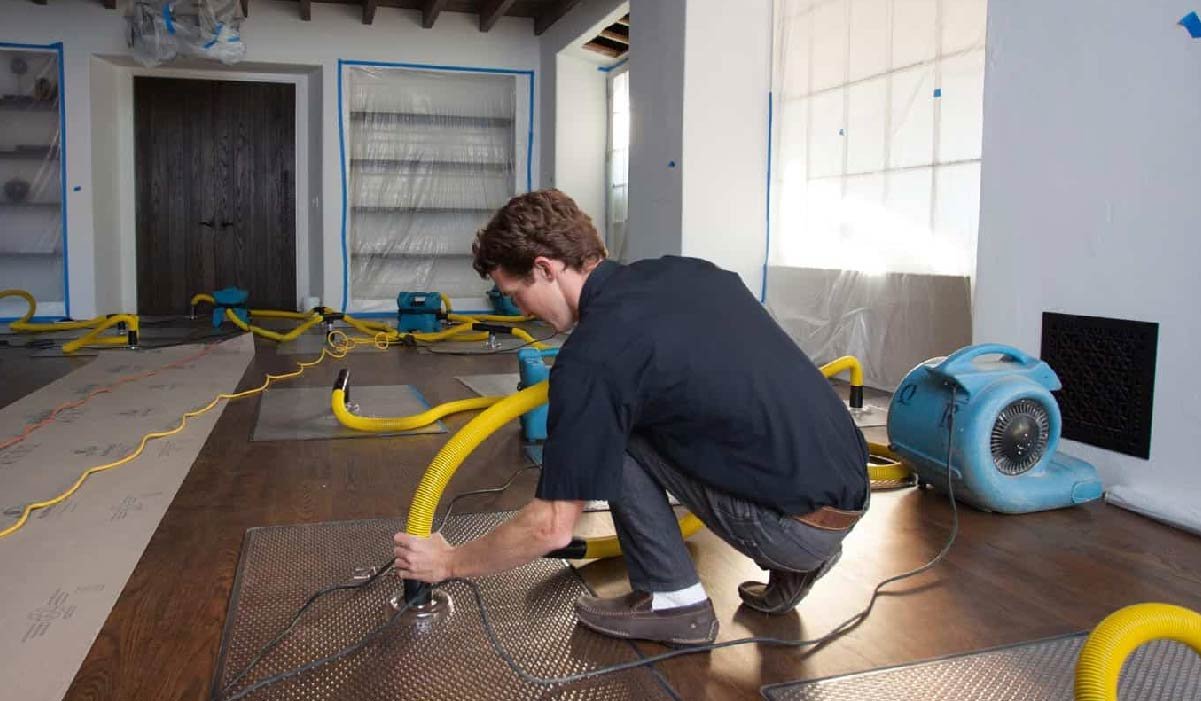
Professional drying equipment helps remove this remaining moisture. Industrial air movers improve air circulation, while commercial dehumidifiers extract water vapor from the surrounding air.Technicians may monitor moisture levels using specialized meters to determine whether affected materials have dried sufficiently. This process may take several days or longer, depending on the amount of water, construction materials, ventilation, and environmental conditions.
Proper drying is essential before installing replacement flooring, repainting walls, or closing previously opened wall cavities.
Common Signs of Hidden Moisture in a Basement
Not every water damage problem involves obvious flooding. Sometimes moisture enters gradually, creating warning signs that property owners may overlook.
Recognizing these indicators can help homeowners arrange an inspection before the problem becomes more serious.
- Musty odors: A persistent damp smell may indicate moisture trapped behind walls, beneath flooring, or inside stored materials.
- Wall discoloration: Yellowish stains, dark patches, and peeling paint can indicate repeated moisture exposure.
- Damp flooring: Warped boards, lifting tiles, soft carpeting, and damaged floor coverings may suggest water infiltration.
- Visible mold: Dark, greenish, or other unusual growth on walls and belongings may indicate prolonged dampness.
- Efflorescence: White, powdery deposits on masonry surfaces can appear when moisture moves through concrete or brick and leaves mineral deposits behind.
- Recurring puddles: Water that repeatedly collects in the same location may indicate groundwater intrusion, plumbing leaks, or inadequate drainage.
- Condensation: Excessive moisture on pipes, windows, and cool surfaces may indicate humidity problems that require further investigation.
These signs do not always reveal the exact source of water. A professional inspection can help distinguish between condensation, plumbing leaks, groundwater seepage, and other moisture-related conditions.
Preventing Mold Growth After Water Damage
Mold prevention is an important part of restoring a basement because mold can develop when damp materials are not dried adequately.
The first priority is to remove standing water and address the source of moisture. Cleaning alone will not solve a problem if water continues entering through foundation walls or leaking plumbing connections.
Affected surfaces should be cleaned using methods appropriate for their material and contamination level. Wet porous materials that cannot be thoroughly cleaned and dried may need to be removed.
Proper ventilation and dehumidification are also important. However, when visible mold is already present, fans should not be used before the affected mold has been appropriately cleaned because air movement can spread mold particles.
Homeowners should avoid disturbing large mold-affected areas without appropriate protective equipment and training. People with asthma, weakened immune systems, or other respiratory vulnerabilities should stay away from mold cleanup areas. Extensive contamination is best handled by qualified remediation professionals.The Environmental Protection Agency provides additional guidance on safe flood cleanup, protective equipment, cleaning methods, and moisture control.
Important Safety Precautions During Basement Water Removal
Water damage restoration can involve several hazards that should never be ignored. Electrical equipment, contaminated water, damaged building materials, and unstable structures can create dangerous working conditions.
Electrical safety is particularly important. If water has reached electrical outlets, appliances, wiring, or the electrical panel, homeowners should not enter the affected area or touch equipment. Power should only be disconnected from a safe, dry location when possible. A qualified electrician should inspect affected electrical systems before they are used again.
Floodwater may contain sewage, bacteria, chemicals, and other harmful contaminants. Protective gloves, appropriate footwear, eye protection, and suitable respiratory protection may be necessary during cleanup.
Structural conditions should also be evaluated before entering a severely flooded basement. Water pressure and prolonged saturation can affect foundation components and other building materials.Fuel-powered generators must never be operated indoors or inside enclosed spaces. They should be positioned outdoors at least 20 feet away from buildings to reduce the risk of carbon monoxide poisoning.
Property owners should also avoid mixing cleaning chemicals and should follow all product safety instructions.When flooding is extensive, contaminated, or associated with electrical or structural hazards, professional assistance is the safest option.
Benefits of Hiring Professional Restoration Services
Although small amounts of clean water may sometimes be managed with appropriate household equipment, extensive basement flooding often requires specialized tools and technical experience.
Professional restoration companies have access to commercial extraction machines, high-capacity dehumidifiers, moisture detection equipment, and suitable cleaning supplies.One major advantage of professional assistance is accurate moisture detection. Technicians can investigate concealed areas and identify damp materials that may otherwise remain unnoticed.
Another benefit is more efficient water extraction and drying. Professional equipment can handle larger quantities of water and provide controlled drying conditions for affected spaces.
Experienced technicians can also assess which materials are suitable for restoration and which should be removed. This helps prevent unnecessary replacement while reducing the risk of leaving damaged materials behind.
For homeowners dealing with extensive flooding, basement water cleanup services can provide a structured restoration approach that includes inspection, water extraction, cleaning, drying, and repair recommendations.Professional companies may also provide documentation of the damage, which can be useful when communicating with insurance providers.
How to Prevent Future Basement Flooding
Preventive maintenance is one of the most effective ways to reduce the likelihood of recurring basement water problems. Although no property is completely protected against every flooding event, several improvements can help manage moisture and direct water away from vulnerable areas.
Maintain Gutters and Downspouts
Gutters collect rainwater from the roof and direct it toward designated drainage areas. When gutters become clogged with leaves, dirt, and other debris, water may overflow and collect near the foundation.
Cleaning gutters regularly helps maintain proper drainage. Downspouts should also direct water away from the building rather than allowing it to discharge immediately beside foundation walls.
Improve Exterior Drainage
The ground surrounding a property should generally slope away from the foundation so that rainwater flows away from the building.
Low areas where water repeatedly collects may require grading improvements or additional drainage solutions.
In some situations, exterior drainage systems can help manage groundwater around the foundation. A qualified contractor can assess the property and recommend suitable improvements.
Inspect Foundation Walls and Floors
Foundation cracks and damaged joints can provide pathways for moisture to enter the basement.
Regular inspections help identify changes in existing cracks, damp patches, and other warning signs. Appropriate repairs should be selected according to the cause and severity of the problem.
Simply covering a damp area with paint or sealant may not solve an underlying water intrusion issue.
Maintain the Sump Pump
A sump pump helps remove accumulated groundwater and can be an important part of basement moisture management.
Homeowners should periodically check the pump, float switch, discharge line, and electrical connections. A backup power arrangement may also be worth considering where power interruptions are a concern.
Any unusual noises, inconsistent operation, or repeated activation should be investigated.
Control Indoor Humidity
Basement humidity can increase because of poor ventilation, condensation, groundwater seepage, and other moisture sources.
Using a suitable dehumidifier can help maintain more comfortable indoor conditions. Plumbing leaks and condensation problems should also be corrected rather than relying entirely on dehumidification.
Regular inspections and moisture monitoring can help homeowners identify developing issues before visible damage occurs.
Understanding the Cost of Basement Water Restoration
The cost of restoring a flooded basement varies according to the severity of the damage, the quantity of water, the size of the affected area, and the materials involved.
Minor water intrusion may require limited extraction, cleaning, and drying. More extensive flooding may involve several stages of restoration, including removing damaged flooring, replacing drywall, treating affected surfaces, and repairing plumbing or drainage systems.The source of water also influences the cost. Clean water from a supply-line leak may require different procedures from groundwater or sewage contamination.
Specialized drying equipment, moisture monitoring, mold remediation, and structural repairs can add to the overall expense.
Property owners should request a detailed written estimate that explains the inspection findings, proposed services, equipment requirements, and any additional repair recommendations.It is also important to understand that insurance coverage depends on the specific policy and the cause of the damage. Homeowners should document affected areas with photographs and contact their insurance provider promptly to understand the applicable requirements.Comparing estimates based on the actual scope of work rather than price alone can help property owners select a suitable restoration provider.
Choosing a Reliable Basement Restoration Company
Selecting an experienced restoration company is an important decision because the quality of the work can influence the long-term condition of the property.Homeowners should look for companies with relevant water damage restoration experience, appropriate equipment, trained technicians, and suitable insurance coverage.
A reliable provider should begin with a proper inspection and explain the source and extent of the water damage. The company should also describe the proposed extraction, cleaning, drying, and restoration procedures.It is helpful to ask whether moisture measurements will be taken during the drying process and whether the company provides documentation of its findings.
Customers should also discuss estimated completion times, service charges, material replacement, and any additional work that may become necessary.Reviews and recommendations from previous customers can provide useful information about communication, scheduling, and service quality.
For more extensive projects, homeowners may benefit from choosing providers with relevant industry training or recognized restoration qualifications.Clear communication and a detailed restoration plan help ensure that expectations are understood before work begins.
Residential and Commercial Basement Water Restoration
Both residential and commercial properties can experience basement flooding, but their restoration requirements may differ.Residential basements are commonly used for storage, laundry rooms, entertainment areas, home offices, and additional living space. Water damage can therefore affect furniture, personal belongings, appliances, flooring, and household infrastructure.
Homeowners may need restoration services that address both structural materials and valuable personal possessions.Commercial basements may contain storage facilities, electrical equipment, mechanical rooms, inventory, and building support systems. Flooding in these areas can interrupt business operations and affect essential services.
Commercial restoration projects may require more extensive moisture monitoring, specialized cleaning, and coordination with property managers, contractors, and insurance representatives.In both situations, early assessment and appropriate restoration procedures help reduce disruption and support the safe return of the affected space to normal use.
Long-Term Maintenance After Restoration
Completing the initial restoration work is only part of protecting a basement from future moisture problems. Long-term maintenance helps ensure that previous damage does not return and that newly restored materials remain in good condition.Homeowners should periodically inspect foundation walls, basement floors, plumbing connections, windows, and drainage areas. Any new signs of moisture should be investigated promptly.
The sump pump and discharge system should be maintained according to the manufacturer’s recommendations. Gutters and downspouts should also be cleaned regularly to prevent water from collecting near the foundation.
Indoor humidity should be monitored, particularly during warmer and more humid periods. A dehumidifier may help control excess moisture when used appropriately.It is also important to avoid storing valuable belongings directly on basement floors. Shelving or raised storage systems can provide additional protection if minor water intrusion occurs.
Keeping records of previous leaks, repairs, inspections, and restoration work can help technicians identify recurring patterns and recommend more effective preventive solutions.
Conclusion
Basement water damage can create serious problems for property owners, affecting building materials, household belongings, indoor air quality, and essential equipment. Whether the source is heavy rainfall, plumbing failure, groundwater seepage, or a malfunctioning sump pump, addressing the problem promptly is essential for limiting further damage.
A successful restoration process involves identifying the water source, safely removing standing water, cleaning affected surfaces, removing materials that cannot be restored, and thoroughly drying the entire area. Moisture monitoring and appropriate repairs are equally important because hidden dampness can lead to recurring problems and mold growth.
Professional assistance can make restoration more effective by providing specialized equipment, experienced technicians, and a structured approach to water removal and drying. Preventive improvements, including proper exterior drainage, regular foundation inspections, sump pump maintenance, and humidity control, can further reduce the likelihood of future flooding.
Investing in timely basement water cleanup and ongoing property maintenance helps protect structural components, preserve valuable belongings, and maintain a healthier indoor environment. With proper planning, professional support, and consistent preventive care, homeowners can restore damaged spaces and keep their basements cleaner, drier, and more dependable for years to come.
