

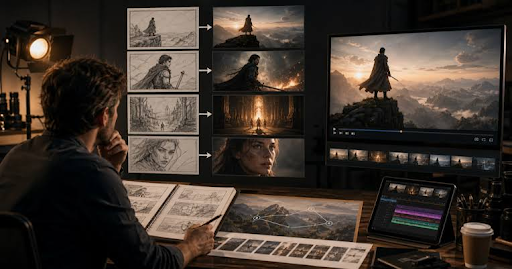
Learning a new language involves much more than memorizing vocabulary and grammar rules. Learners also need to understand how words are used in everyday situations, how conversations develop, and how meaning can change depending on context. A textbook can explain these details, but visual examples can make them easier to recognize and remember.Seedance 2.5 offers an opportunity to explore AI-assisted video creation for language education. Instead of presenting learners with isolated words and definitions, educators and content creators can develop short visual situations that demonstrate how language works in real life.
Teach Words Through Situations, Not Just Definitions
A learner might memorize the word “appointment” without fully understanding how it is used in conversation. A short scene showing someone arranging a meeting with a receptionist can provide useful context. The learner can observe the setting, the people involved, and the way the word fits naturally into the exchange.
This approach is useful for everyday vocabulary related to shopping, travel, work, education, and social interaction. For example, a lesson about ordering food could show a customer choosing a meal, asking about ingredients, and making a request. The visual situation gives the vocabulary a practical purpose. Rather than remembering a word as a disconnected item, learners can associate it with an activity they may experience themselves.
Show the Difference Between Similar Expressions
Some language mistakes happen because learners treat similar words or phrases as interchangeable. Visual examples can help explain why one expression fits a situation better than another. Consider the difference between making a request politely and giving a direct instruction. Both may communicate a similar need, but the tone and wording can change depending on the relationship between speakers and the setting.
A video lesson could present two versions of the same interaction. In one, a person speaks to a close friend. In the other, they address someone in a formal workplace setting. Learners can compare the expressions and notice how the conversation changes. Seedance 2.5 can be explored for creating these contrasting situations. The aim is to make the language distinction visible through context rather than relying entirely on lengthy explanations.
Give Learners a Reason to Listen
Listening skills improve when learners have a clear purpose for following a conversation. A video can introduce a small question or situation that encourages them to pay attention. For example, a scene at a train station might involve a passenger asking for directions. Before watching, learners could be asked to identify the platform number or understand when the train is expected to arrive.
This gives the listening activity a practical goal. Learners are not simply hearing unfamiliar words; they are trying to understand information that matters within the scene. The same method can work with conversations at restaurants, shops, airports, classrooms, and workplaces. Short scenes can also be replayed so learners have another opportunity to recognize expressions they missed.
Introduce Cultural Context Carefully
Language is connected to culture, social expectations, and everyday customs. A phrase that sounds friendly in one setting may feel too informal in another. Greetings, forms of address, gestures, and conversational habits can also differ between communities. Visual lessons can introduce these differences through carefully chosen situations. For example, a lesson might show how people greet one another in a formal introduction compared with a casual meeting between friends.
However, creators should avoid presenting one behavior as universal across an entire country or language community. Customs vary by region, age, social group, and individual preference. Dreamina can be part of a creative workflow when developing visual ideas for language-learning content, but cultural examples should be checked by knowledgeable speakers or educators. Generated scenes should support accurate explanations rather than reinforce stereotypes.
Make Grammar Easier to Recognize
Grammar lessons often become challenging when learners encounter rules without enough practical examples. A visual sequence can provide a simple context for understanding how a sentence is formed. For instance, a lesson about past-tense verbs could show a person describing yesterday’s activities. Another scene might contrast a routine that happens every morning with an event that happened once last weekend.
The visuals give learners a reference point for understanding the time being discussed. Short captions or narration can then reinforce the relevant sentence structure. This does not mean every grammar rule needs a separate video. Some topics are better taught through written explanations and exercises. An ai video generator is most useful when the visual situation adds something that a definition alone cannot easily communicate.
Design Lessons That Encourage Participation
Language learning becomes more meaningful when learners have opportunities to respond. A video does not have to provide every answer immediately. It can pause at a natural moment in the lesson and encourage viewers to predict what someone might say next. For example, a character entering a store might ask for assistance. Learners can consider which response would be appropriate before seeing how the conversation continues.
Other activities can ask viewers to identify an expression, summarize a short exchange, or choose the most suitable reply for a particular situation. These small tasks help turn passive viewing into active practice. Educators can also follow a video with a speaking exercise in which learners act out a similar conversation using their own words.
Keep Visual Lessons Focused and Accessible
A language lesson should not overwhelm learners with too many unfamiliar words, fast scene changes, or distracting visual details. The pace should match the difficulty of the material and the experience level of the intended audience. Captions can help learners connect spoken language with written words. Clear narration and readable text are particularly valuable for beginners, while more advanced learners may benefit from natural conversational speed and fewer on-screen explanations.
It is also important to review generated dialogue before publishing. Incorrect expressions, unnatural phrasing, or confusing visual details can teach the wrong lesson. A language educator or fluent speaker should check the material, especially when it explains grammar or cultural usage.
Final Thoughts
Visual storytelling can make language learning more connected to everyday communication. By presenting vocabulary in context, comparing expressions, and showing realistic conversational situations, educators can help learners understand how language is used beyond the classroom. Seedance 2.5 provides a way to explore AI-assisted videos for these educational purposes. With accurate dialogue, suitable pacing, and thoughtful lesson planning, creators can develop visual resources that support listening, speaking, vocabulary development, and cultural understanding.
Frequently Asked Questions
How can videos help beginners learn unfamiliar vocabulary?
Videos place words within recognizable situations. Seeing what people are doing while hearing the language can help beginners understand meaning and remember how expressions are used.
Can visual lessons help learners understand formal and informal language?
Yes. Comparing conversations in different settings can show how tone, word choice, and expressions change depending on the people involved and the situation.
Are AI-generated conversations suitable for language practice?
They can provide useful examples, but dialogue should be reviewed by a fluent speaker or qualified educator to check natural phrasing, grammar, and cultural context.
Should language-learning videos always include subtitles?
Subtitles are helpful for many learners, particularly beginners. Their use can depend on the lesson objective, since some listening activities may intentionally encourage learners to understand spoken language without reading along.
What is a good length for a language-learning video?
There is no single ideal length. A focused lesson covering one expression or conversational situation can be brief, while a more detailed topic may need additional time. The main priority is keeping the material clear and manageable.
