

Westlake Village sits in a Mediterranean microclimate with warm, dry summers, occasional heat waves, and cool, damp winter mornings. Daily temperature swings can be wide, and seasonal Santa Ana winds bring dust that challenges filters and duct seals. Those conditions shape how heating and cooling should be selected and tuned. The right answer is rarely just “more tons” or “higher BTUs.” It is about pairing equipment type with duct performance, filtration, and controls so rooms balance out, humidity stays manageable, and energy is not wasted. This guide explains when a heat pump excels, when a furnace-plus-AC pairing makes sense, and how ductwork, MERV filters, zoning, and commissioning tip the outcome.
-
What Westlake Village’s Climate Demands From Your System
With warm, dry summers and quick evening cool-downs, systems that can modulate output hold a comfort edge. A variable-speed compressor and ECM blower can stretch run times to improve air mixing and dehumidification without blasting cold air through supply registers. In winter, cool mornings followed by mild afternoons reward equipment that can trim heat output gracefully instead of cycling a high-BTU burner on and off. Ratings such as SEER2 and HSPF2 indicate seasonal efficiency, but the real-world result depends just as much on duct static pressure and return-air pathways as it does on the nameplate.
Local load profiles vary from shaded cul-de-sacs to sun-exposed lots, so a Manual J calculation and a check of duct leakage are more predictive than rules of thumb. A professional assessment of heating and cooling services in Westlake Village can also catch mismatches, such as a condenser paired to an undersized evaporator coil or a high-MERV filter crammed into a 1-inch slot, both of which can choke airflow and trigger short cycling.
-
How Heat Pumps Perform Here: Strengths and Limits
In a mild-winter climate, an air-source heat pump can carry most of the heating season by reversing refrigerant flow through the outdoor condenser and indoor coil. Inverter-driven models throttle capacity to maintain steady supply-air temperatures, so bedrooms do not swing from stuffy to chilly each hour. During shoulder seasons, the same system cools efficiently without the on-off jolts of a single-stage unit, and a smart thermostat can nudge blower speed to keep humidity in check even when setpoints change only a degree or two.
Limits surface during cold snaps and defrost cycles. When frost accumulates on the outdoor coil, the system must briefly reverse to melt it, which reduces heating output. Well-sized auxiliary heat strips or a dual-fuel setup can bridge those moments, but poor duct sealing or a cramped return grille will still undermine comfort. A realistic example is a one-story ranch near open space: a properly commissioned heat pump with a clean evaporator coil and wide, low-restriction return keeps living areas even, while leaky attic ducts would leave the same home with cool drafts and noisy supply registers.
-
When a Furnace and Separate AC Make More Sense
A high-AFUE furnace paired with a SEER2-rated AC can be a better fit for homes that want fast temperature recovery on cold mornings or have limited electrical capacity for auxiliary heat. A two-stage or modulating furnace avoids blast-furnace cycles while still delivering strong airflow through long duct runs. The AC side benefits from a matched indoor coil, a correctly sized line set, and a metering device such as a TXV that keeps refrigerant charge within target superheat and subcooling ranges after installation.
There are trade-offs. Running a furnace hard during mild shoulder-season days can overshoot setpoints and waste fuel, while an oversized condenser will short-cycle, leaving rooms clammy and raising wear on the contactor and compressor. A common pitfall is replacing only the outdoor unit and leaving an incompatible air handler or coil, which throttles capacity and raises static pressure. Picture a two-story home with a hot upstairs and cool downstairs: a well-matched furnace and AC with balanced dampers and a calibrated blower can even out floors; the same equipment, mismatched or blowing through restrictive 1-inch filters at every return, will not.
-
Ducts, Filtration, and Zoning Often Decide the Winner
Equipment can only deliver what the ducts allow. Manual D design, adequate return paths, and sealed joints with mastic (not cloth duct tape) cut leakage and noise. In older attics, crushed flex duct and uninsulated boots can undo the gains of any new condenser or air handler. Measuring total external static pressure helps verify the blower is not fighting a losing battle against tight turns and undersized trunks, and adding a dedicated return in a closed-off bedroom can fix pressure imbalances that move dust under doors.
Filtration is a balancing act. Higher MERV filters capture fine particulates during dusty wind events, but they also add resistance. If you want MERV 11 or higher without starving the ECM blower, consider a media cabinet with a 4-inch filter instead of a 1-inch slot. For room-by-room control, zoning with motorized dampers and remote sensors can help two-story homes, but it must be commissioned to avoid excessive static when zones close. Simply shutting supply registers to “force” air to warm rooms is a mistake that can raise duct pressure, increase noise, and chill the evaporator coil.
Upgrade and Maintain With Timing That Works Here
Replacing or converting systems before the first heat wave or cold snap reduces stress and allows proper commissioning. After installation, a technician should confirm airflow in CFM, verify refrigerant charge by measuring superheat and subcooling, check the temperature split across the evaporator coil, and calibrate the thermostat. If a new condenser uses a different refrigerant than the old one, the line set may need to be flushed or replaced, and the metering device must be matched to the coil to prevent frost or high head pressure.
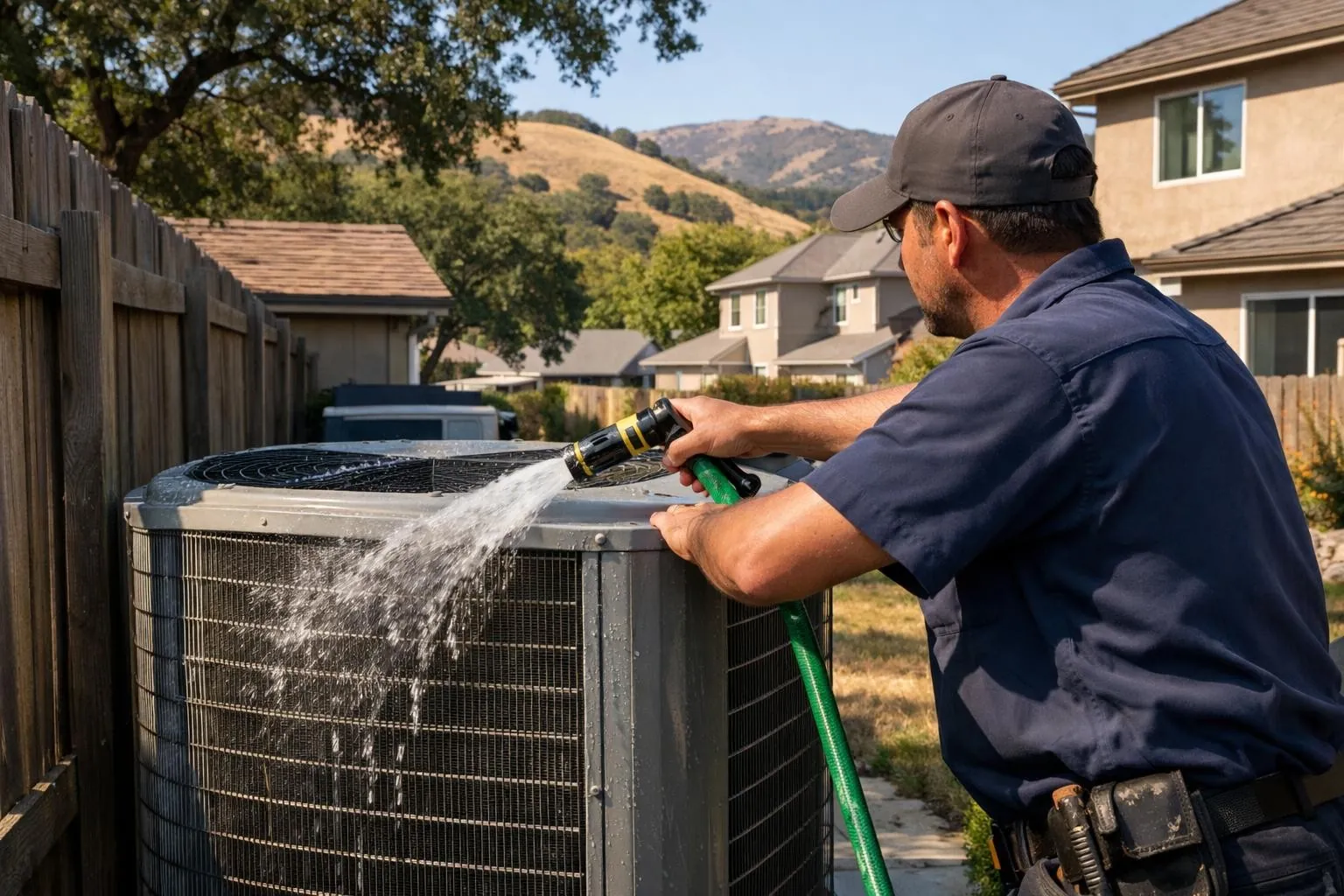
Maintenance priorities reflect local conditions. Change filters on a cadence that matches dust load from dry winds and nearby landscaping. Clear the condensate trap and drain each spring to prevent algae clogs, and keep the outdoor condenser free of leaf litter that can block the coil. If attic temperatures soar, confirm insulation coverage and seal duct penetrations to curb heat gain. A fall heat-pump or furnace tune-up that includes burner inspection, defrost cycle checks, and coil cleaning helps the system ride through the season without comfort surprises.
Choosing between a heat pump and a furnace-plus-AC pairing in Westlake Village is less about brand names and more about fit. Match equipment capacity to a Manual J load, keep static pressure in a healthy range, and use filtration and zoning that reflect how your household actually lives. When those pieces align, the microclimate’s swings become predictable rather than punishing. A thoughtful plan, careful commissioning, and seasonal maintenance will deliver the quiet, even comfort that makes long summer evenings and crisp winter mornings equally comfortable.
