

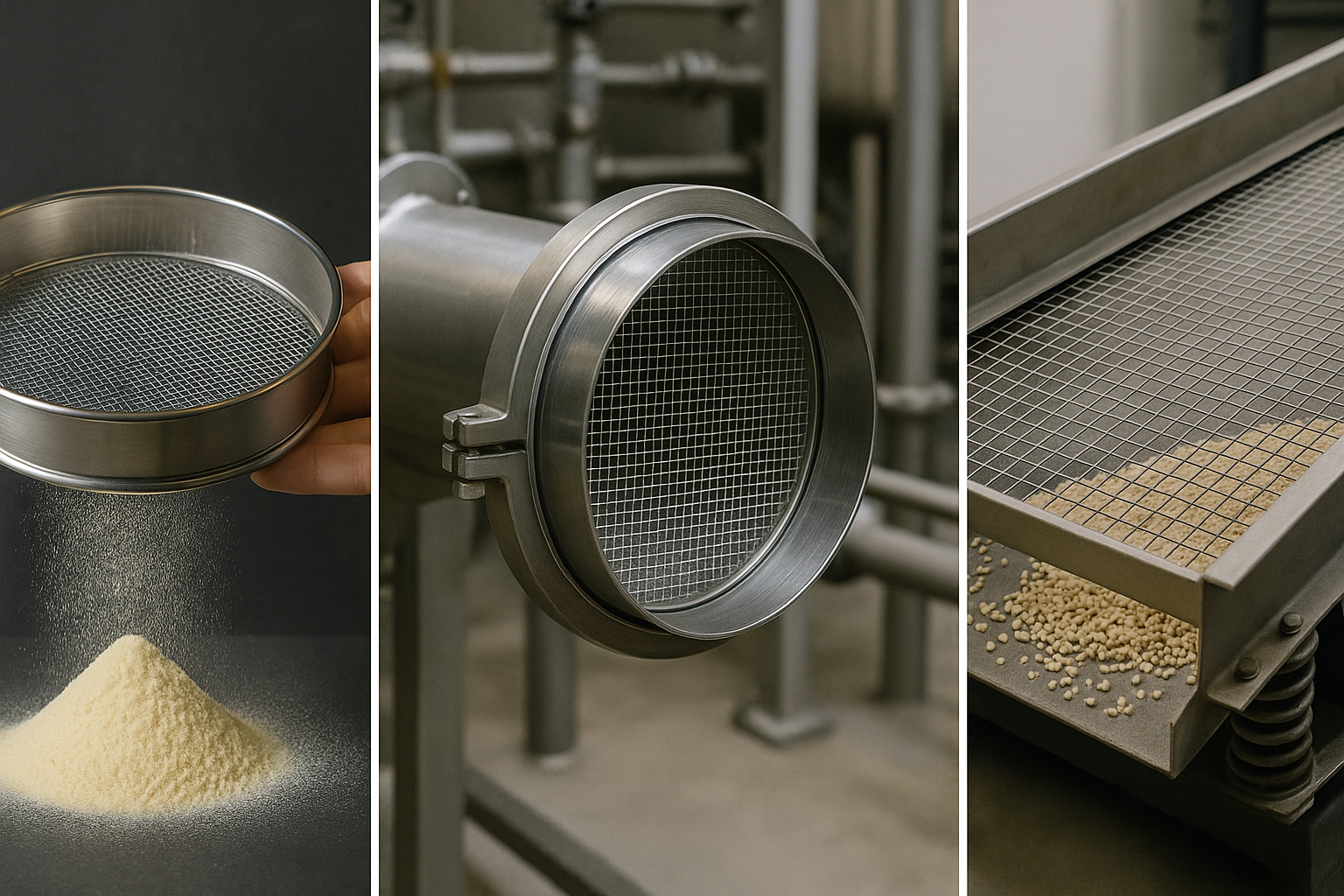
In manufacturing and process engineering, the materials that go unnoticed are often the ones carrying the most responsibility. They sit inside equipment, line fluid pathways, filter contaminants, or reinforce structures that would otherwise fail under repeated mechanical stress. wire mesh tube falls into this category. It is not a glamorous component, but across a wide range of industries, it performs work that more complex or expensive materials cannot replicate with the same combination of durability, permeability, and structural consistency.
What has changed in recent years is not the fundamental design of these components, but the environments in which engineers are deploying them. Higher operating temperatures, stricter filtration tolerances, more aggressive chemical exposure, and tighter production timelines have all pushed procurement and engineering teams to revisit which materials actually hold up under sustained pressure. Wire mesh tube has continued to prove itself in that context, and in 2025, its adoption across industrial sectors reflects a broader pattern of engineers returning to solutions that are reliable rather than novel.
This article examines seven industrial applications where this material is being used to solve real operational problems, and why engineers continue to specify it when consistency and performance matter most.
1. The Foundation: What Wire Mesh Tube Actually Is and Why It Matters Industrially
Before examining specific applications, it is worth understanding what this component actually offers that solid-walled tubing or perforated sheet alternatives do not. A wire mesh tube is a cylindrical structure formed from interwoven metal wires, typically stainless steel, creating a tubular form with uniform openings throughout its entire surface. The ratio of open area to total surface area gives it a distinct advantage in applications where fluid flow, gas passage, or filtration is the primary function.
The structural integrity of a well-made wire mesh tube comes from the weave itself. Unlike perforated tubing, where openings are punched into an existing wall and can weaken the surrounding material, the woven construction distributes mechanical load across the entire structure. Engineers working in high-vibration or high-pressure environments recognize this difference because it directly affects component lifespan and maintenance frequency.
This combination of open area and structural strength is why the material has found use in applications ranging from filtration and flow management to heat exchange and structural reinforcement. Each application leverages different aspects of the same underlying properties, which is part of what makes this a genuinely versatile industrial component.
2. Liquid and Gas Filtration Systems
Filtration is the most widely recognized application for wire mesh tube, and for good reason. In both liquid and gas filtration systems, the component serves as a filter element support structure, a primary filter medium, or both simultaneously. The uniform aperture size across the woven surface allows engineers to specify filtration precision in a way that is difficult to achieve with other media types.
Why Consistency in Filtration Openings Matters Operationally
In industrial filtration, inconsistency in opening size causes downstream problems that are disproportionate to the size of the flaw. A filter element with variable apertures allows particles of unpredictable sizes to pass through, which can damage pumps, clog heat exchangers, or contaminate process streams. Woven wire mesh produces openings with far tighter dimensional tolerances than most alternative filter media, which means the filtration performance remains stable over time and across different production batches.
This stability is particularly important in pharmaceutical manufacturing, food processing, and chemical production, where regulatory requirements demand that filtration performance be documented and consistent. Using a filter element that maintains its aperture geometry under pressure cycling gives quality engineers a much higher degree of confidence in process compliance.
3. Hydraulic and Pneumatic System Strainers
Inside hydraulic circuits and pneumatic systems, particulate contamination is one of the primary causes of valve failure and component wear. Wire mesh tube is routinely specified as the structural element of inline strainers placed before sensitive valves, actuators, and precision orifices. The tubular form fits naturally within cylindrical housings, and the open surface area allows fluid to pass with minimal pressure drop while capturing particles above the target size threshold.
Pressure Drop and System Efficiency
One of the practical engineering trade-offs in strainer design is balancing filtration efficiency against pressure drop across the element. A fine filter that restricts flow too aggressively forces the system to work harder, increasing energy consumption and accelerating wear on pumps and seals. Wire mesh tube, when properly specified for a given application, offers a high ratio of open area to total surface, which keeps pressure drop low even as the mesh captures particles effectively.
This matters in systems that run continuously or at high cycle rates, where even a small pressure penalty compounds over thousands of operating hours into measurable energy cost and component degradation. Engineers in mobile hydraulics, industrial automation, and process control specify strainer elements based on lifecycle pressure drop data, and wire mesh consistently performs well against that metric.
4. Heat Exchanger and Thermal Management Components
Thermal management is an area where the open structure of wire mesh tube becomes particularly valuable. In certain heat exchanger designs, wire mesh elements are used to increase surface area for heat transfer without adding significant mass or restricting airflow and fluid flow through the system. The woven structure creates turbulence in passing fluids, which improves the rate of heat transfer between the fluid and the surrounding environment or adjacent fluid streams.
Managing Fouling in High-Temperature Environments
One challenge in heat exchanger design is fouling — the buildup of scale, biological matter, or particulate deposits on heat transfer surfaces over time. Solid-walled tubing with a smooth interior surface can accumulate deposits that reduce heat transfer efficiency and eventually require chemical cleaning or mechanical removal. Wire mesh surfaces, by contrast, create a degree of local turbulence that reduces the tendency for deposits to accumulate on the surface, extending the intervals between maintenance interventions.
In high-temperature industrial furnaces, kilns, and process heaters, wire mesh tube is also used as a radiant heat shield or structural element that can withstand thermal cycling without cracking or deforming, provided the correct alloy is selected for the operating temperature range.
5. Protective Sheathing for Cables and Hoses
In environments where cables, hoses, or tubing runs are exposed to abrasion, chemical splash, heat, or mechanical impact, wire mesh tube provides an outer protective layer that is both flexible and durable. This application is common in heavy industry, including mining, steel production, oil and gas processing, and shipbuilding, where cable management infrastructure is subjected to conditions that standard plastic conduit cannot reliably withstand.
Flexibility Without Compromising Protection
The woven construction of wire mesh allows the tube to flex and bend around corners or through tight routing paths without kinking or losing its protective coverage. This is an important operational consideration in installations where cables or hoses need to move with equipment — such as on robotic arms, articulated conveyors, or mobile drilling equipment — while still being protected from environmental damage.
The alternative, rigid conduit, introduces stress points at bends and requires more complex installation planning. Wire mesh sheathing simplifies routing while maintaining the mechanical protection that equipment operators and safety managers require in high-risk environments.
6. Catalyst Support and Containment in Chemical Processing
In catalytic reactors, the physical support structure holding the catalyst bed in place must withstand chemical exposure, high temperatures, and significant mechanical loads from gas or liquid flow passing through the bed. Wire mesh tube is used in this context as a containment basket or support grid that holds catalyst material in position while allowing reactant gases or liquids to pass through with minimal restriction.
Chemical Compatibility and Longevity in Reactive Environments
According to the American Chemical Society, catalyst performance in industrial reactors is highly sensitive to physical condition — degradation or displacement of the catalyst bed directly reduces conversion efficiency and increases operating cost. The support structure must therefore maintain its geometry reliably over long service intervals without contributing contamination or reaction by-products to the process stream.
Stainless steel wire mesh is chemically inert to many process streams and can be alloyed to resist specific corrosive environments. This makes it a preferred structural material in petroleum refining, ammonia synthesis, and specialty chemical production, where the consequences of support structure failure extend well beyond the cost of the component itself.
7. Architectural and Structural Reinforcement in Industrial Settings
While this application sits at the edge of what most engineers associate with wire mesh tube, it is worth addressing because it reflects an expansion of how the product is being specified in 2025. In industrial construction and facility design, wire mesh tube has been adopted as a reinforcement element within concrete columns, protective barriers, and modular structural panels where conventional rebar is either too heavy, too rigid, or incompatible with the surrounding material system.
Why Mesh Reinforcement Is Gaining Ground in Prefabricated Systems
Prefabricated construction methods, which now account for a growing portion of industrial facility construction, benefit from components that can be standardized, cut to length, and integrated into modular assemblies without site-specific fabrication. Wire mesh tube fits naturally into this workflow because it can be produced in consistent diameters, cut without specialized tooling, and embedded in concrete or composite panels during factory fabrication rather than on-site.
The open structure also allows concrete or resin to penetrate the mesh and bond directly around it, creating a reinforcement element that works mechanically with the surrounding material rather than simply sitting inside it. This bonding behavior improves load distribution and reduces the risk of localized cracking under impact or dynamic load.
Closing Perspective: Why This Material Continues to Hold Its Ground
Industrial materials earn long-term adoption not by being innovative but by being dependable. Wire mesh tube has remained in active use across such a wide range of industries because it solves problems at the intersection of flow, filtration, protection, and structural support — and it does so with minimal maintenance overhead and predictable performance.
What the applications covered in this article share is a common engineering requirement: a component that performs its function consistently over time, in conditions that are not always controlled or predictable. Whether that means filtering hydraulic fluid in a mobile machine, supporting a catalyst bed in a chemical reactor, or protecting cable runs in a steel mill, the material meets these demands without requiring frequent intervention or replacement.
For engineers evaluating component specifications in 2025, the question is rarely whether wire mesh tube can do the job. In most of the applications described here, the evidence is decades old. The more relevant question is whether the product being sourced meets the dimensional and material quality standards the application actually requires — and that depends on selecting the right supplier and understanding the specific demands of the environment in which the component will operate.
