

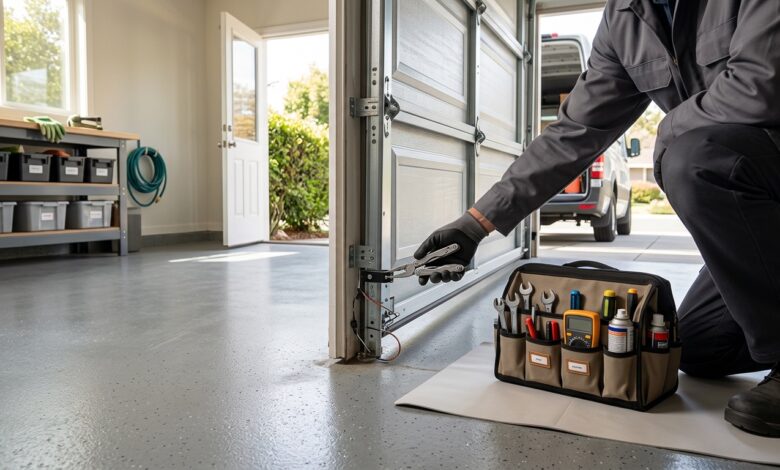
A garage door that stalls, reverses, or grinds to a halt halfway can upend a busy morning. Before assuming the opener has failed, remember the door system is a chain of parts that must work together: photo eye safety sensors, torsion or extension springs, lift cables, rollers, tracks, hinges, and the opener’s travel and force settings. Many mid-cycle stoppages trace back to misalignment, drag, or a safety trigger rather than a single catastrophic break. This guide walks through safe, targeted checks to help you spot patterns, rule out simple causes, and describe symptoms accurately if you decide professional repair is the next step.
-
Start With Safety: What You Should and Shouldn’t Touch
Unplug the opener, keep your hands clear of springs and cables, and don’t loosen set screws on torsion springs or drums. Those parts are under high torque and can cause injury. If the door is stuck open, use the red emergency release cord only when the door is fully supported, then lower it with two people to prevent a free fall. If any step feels unsafe or you find a cracked spring or frayed cable, stop and contact a qualified technician. Local directories and maps can help you find service providers, including Welborn Garage Door Repair of Keller; the checks below will help you explain what you observed.
With the opener disconnected, test door balance. Lift the door by hand to waist height and let go carefully. A balanced door stays near that position; a heavy door that drops suggests weak or broken springs. Identify your spring type before proceeding: torsion springs sit on a shaft above the door; extension springs run along the horizontal tracks. Do not attempt spring adjustment. This quick balance test simply tells you whether the opener was fighting added weight, which can cause mid-cycle stalls and chew up internal gears.
-
If the Door Reverses: Photo Eyes, Obstructions, and Force Settings
If a door starts down and pops right back up, check the photo eyes first. These small sensors sit near the bottom of the vertical tracks, usually 4 to 6 inches off the floor. Confirm both LEDs are solid, not blinking. Wipe dust or spiderwebs from the lenses, remove leaves or a broom handle resting across the path, and nudge the sensor brackets so the lenses face each other directly. If a tire or garbage can bumps the sender or receiver, even slight misalignment can break the beam and trigger an immediate reversal.
Next, check for anything hanging into the opening: a bike wheel, shifted storage tote, or sagging extension cord. If the path is clear and sensors are aligned, review the opener’s travel and force settings on the head unit. A door that reverses at the floor may need a small “down travel” adjustment so the opener stops before it hits the slab and rebounds. Avoid cranking up the “down force” to overpower resistance; that masks a deeper problem and defeats the safety system. Instead, fix friction or alignment issues and keep force settings at manufacturer-recommended levels.
-
If the Door Stalls or Strains: Springs, Balance, and Opener Gears
A door that hums, lifts a foot, and quits is often too heavy for the motor. Look for a visible gap in a torsion spring coil or a stretched extension spring. Scan lift cables for broken strands near the drums. A failing spring or cable shifts the load to the opener, which can strip the drive gear or cause it to overheat. On chain or belt drives, listen for rhythmic clicking that points to a worn sprocket. If you spot a broken spring or a cable off the drum, secure the door and call a professional; those repairs require specialized tools and procedures.
Consider weather effects, too. On cold mornings, thickened grease and stiff bottom weatherstripping can add drag. If the door starts but stalls halfway, wipe excess grime from the tracks with a dry cloth and apply a garage door safe lubricant to roller stems and hinges, not the track running surface. In many openers, a slight travel tweak helps after seasonal changes. Still, repeated stalls signal a more serious mechanical issue, such as worn rollers, bent hinges, or a binding center bearing plate that needs expert attention.
-
If the Door Binds or Screeches: Rollers, Tracks, and Hinge Wear
Binding often shows up as shuddering or loud screeches from a specific panel height. Inspect rollers for flat spots or cracked wheels, and spin them by hand to feel for gritty bearings. Nylon rollers run quieter than bare steel and can cut vibration, but ensure any replacement matches the door’s load rating and shaft diameter. Track dents, loose flag-bracket bolts, and out-of-plumb verticals pinch rollers and stop travel. Use a level to verify the verticals are straight; snug any loose lag screws into solid framing. Significant bends or a distorted radius section warrant track replacement, not just prying.
Clean the tracks rather than coating them. Oil on the running surface attracts dust and becomes grinding compound. Instead, keep the tracks dry and smooth, and use a silicone-based spray on the roller stems and hinge pivot points. Check hinges for hairline cracks at the knuckles and for slop in the pins, which can cause the door sections to rack and drag. A long metal strut across the top panel helps stiffen wide doors; if it is bent or loose, the panel can flex under load and jam in the horizontal tracks.
Finishing Checks That Prevent Recurrence: Lubrication, Weather, and Routine Tests
Small habits reduce mid-cycle interruptions. Wipe sensor lenses monthly, and keep their wiring neatly stapled above floor level to avoid snagging. Lubricate metal hinges and roller stems a few times per year with a product formulated for garage doors. Replace a torn bottom seal to prevent the rubber from freezing to the slab, and clear ice ridges after storms. Test auto reverse monthly: place a flat board on the floor under the door and confirm it reverses on contact, then break the photo eye beam and confirm it stops before closing. Record any recurring symptom and what changed; patterns help a technician solve the root cause faster.
When a garage door stops mid-cycle, the culprit is usually a relationship problem between parts: sensors that no longer agree on a clear path, springs that no longer balance the door’s weight, or rollers and tracks that no longer provide smooth guidance. A methodical, safety-first check reveals which relationship failed without exposing you to high-tension adjustments. Handle only the safe cleaning, observation, and minor alignment steps, and leave spring, cable, and structural track work to trained professionals. That measured approach protects people, preserves the opener, and shortens downtime the next time a hiccup occurs.
