

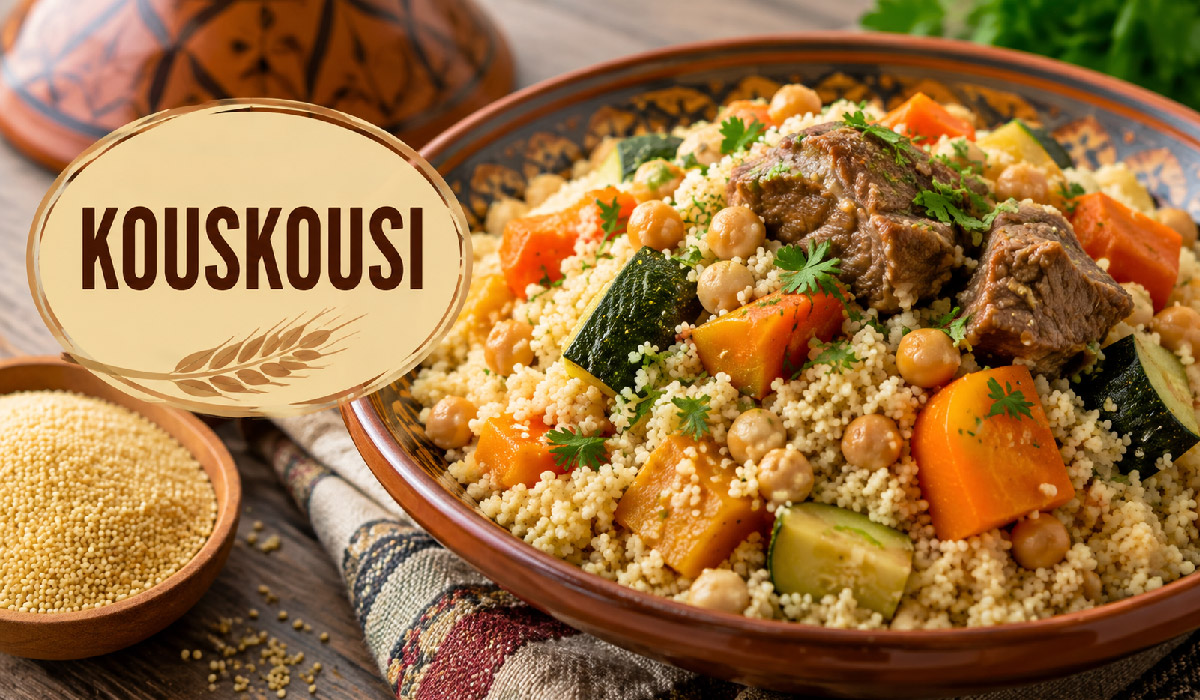
Kouskousi is a food term that can be confusing because it is used in more than one way. Online, the name is often connected with couscous, the famous North African food made from small pieces of semolina. However, a closely related Greek name, kouskousaki, describes a tiny round pasta. Because the words look and sound similar, people sometimes treat them as the same food even though their preparation can be different.
Traditional North African couscous is made by moistening and rolling semolina into small granules before steaming them. Greek kouskousaki is generally treated as pasta and is normally cooked by boiling. Both foods are usually made from wheat and have a mild taste, which allows them to work well with vegetables, meat, seafood, herbs, sauces, and soups. Understanding this difference is important before choosing a recipe or cooking method.
What Does the Word Kouskousi Mean?
The exact meaning of kouskousi depends on the source, country, and spelling being used. Many English-language websites use “kouskousi” as an alternative term associated with couscous, while Greek food culture has a similar word, kouskousaki, for small round pasta. This means it is safer not to assume that every product called kouskousi should be prepared in exactly the same way. If a package contains very fine, pre-steamed semolina granules, it may cook like ordinary couscous by absorbing hot water or broth. If it contains larger, firm pasta balls, it may need to be boiled until tender.
The ingredient label and cooking instructions are therefore more useful than the name alone. This difference also explains why people searching for kouskousi online may find recipes that appear very different from one another. The term connects several Mediterranean food traditions, but those traditions should still be described clearly rather than treated as identical foods.
Kouskousi and Traditional North African Couscous
Traditional couscous has an important place in North African cooking, especially across the Maghreb. It is closely associated with countries including Algeria, Morocco, Tunisia, and Mauritania, while couscous is also widely eaten in other neighboring areas. Traditional preparation starts with cereal that is ground into semolina. The semolina is then moistened, rolled into small particles, and steamed. It may be served with vegetables, chickpeas, meat, broth, spices, or other ingredients depending on the region and family tradition.
In 2020, UNESCO added the knowledge, skills, and practices connected with preparing and eating couscous to its Representative List of the Intangible Cultural Heritage of Humanity. The nomination was jointly submitted by Algeria, Mauritania, Morocco, and Tunisia. UNESCO also describes couscous as a food connected with sharing, hospitality, family life, and community. These cultural traditions make couscous much more than a simple source of carbohydrates.
The History and Cultural Roots of Kouskousi
The story connected with kouskousi becomes especially rich when looking at traditional North African couscous. Couscous has been passed from one generation to another through practical cooking knowledge. Families learned how to prepare semolina, control steam, separate the grains, season broths, and choose ingredients according to the season. Different communities developed their own recipes, so there is no single version that represents every North African home. Coastal areas may use different ingredients from inland or mountain communities, while family preferences also shape the dish.
Couscous can appear during ordinary meals as well as weddings, gatherings, celebrations, and other important occasions. UNESCO notes that the traditions surrounding couscous involve much more than cooking alone. They include social customs, tools, farming, milling, local craftsmanship, and knowledge shared within families and communities. This long cultural life helps explain why couscous remains meaningful even as packaged and instant versions have become common around the world.
Greek Kouskousaki and Why It Causes Confusion
Greek kouskousaki deserves separate attention because it is not simply another name for every type of North African couscous. Greece’s traditional pasta culture includes several small pasta shapes, and official Greek tourism material lists kouskousaki among traditional Greek pastas. Commercial Greek versions can be made as tiny, round balls of durum wheat. One major Greek pasta producer describes its kouskousaki as small round pieces from northern Greece and recommends it for side dishes, salads, soups, legumes, and meat-based meals.
Unlike instant couscous, which may only need hot liquid and resting time, Greek kouskousaki is pasta and is normally boiled. This difference matters in the kitchen. Using the instant couscous method on firm pasta may leave it hard, while boiling fine pre-steamed couscous for too long may make it soft and sticky. When buying something labeled kouskousi or kouskousaki, always check whether the package describes it as couscous granules or pasta before cooking.
What Is Kouskousi Made From?
Most foods connected with the names couscous, kouskousi, or kouskousaki are based on wheat, but their exact ingredients and production methods can differ. Traditional North African couscous is commonly prepared from semolina. Semolina is a coarse flour made from durum wheat, the hard wheat also widely used in pasta. Water is added gradually so the semolina can be shaped into small granules. These granules are then steamed until tender.
Greek kouskousaki is usually produced more like pasta, often using durum wheat semolina and water. Some traditional Greek pasta products may also contain ingredients such as milk or eggs, depending on the recipe and producer. Because recipes are not identical, people with food allergies should always read the package carefully. The shared use of durum wheat explains why these foods can have a similar golden color and mild wheat flavor, but the way they are shaped and cooked creates important differences in their final texture.
How Traditional Kouskousi Is Prepared
When kouskousi refers to North African-style couscous, traditional preparation takes more time than preparing the instant product sold in many supermarkets. Semolina is lightly moistened and worked so that tiny granules form. These pieces are traditionally steamed rather than simply boiled in a pot of water. A special two-level cooking vessel is often associated with the process. A stew, broth, vegetables, or meat can cook below while the couscous steams above it. Traditional cooks may remove the couscous between steaming stages, gently separate the particles, add a little moisture, and steam it again.
This repeated process helps produce a light texture with separate grains. The finished couscous can then be arranged on a large serving plate and paired with vegetables, chickpeas, meat, sauce, or broth. Modern instant couscous greatly shortens the preparation, but traditional steaming remains important because it reflects the skills and cooking practices passed through North African communities.
How to Cook Kouskousi at Home
The best way to cook kouskousi at home depends on the exact product you buy. Fine instant couscous is usually very easy to prepare. Hot water or broth is added according to the package directions, and the grains are covered and left to absorb the liquid. After several minutes, they can be gently separated with a fork. A little olive oil, lemon juice, herbs, or seasoning can then be mixed in. Greek-style kouskousaki needs a different method because it behaves like pasta.
It is normally placed in boiling water or broth and cooked until tender before being drained or served directly in soup. This is why package directions should always come before a general internet recipe. Texture is the best guide to a successful result. Couscous should feel light and soft without becoming wet and heavy, while kouskousaki pasta should be tender but still hold its round shape. Careful cooking keeps both versions enjoyable.
What Does Kouskousi Taste Like?
Kouskousi generally has a mild wheat flavor rather than a strong taste of its own. This is one of the main reasons it works in so many recipes. Fine couscous can absorb broth, spices, vegetable juices, and sauces, allowing the surrounding ingredients to provide most of the flavor. When served simply, it may have a soft, slightly nutty wheat taste. Greek kouskousaki has a more familiar pasta-like character and may feel firmer and chewier because the pieces are boiled rather than steamed.
Both types can become much more flavorful when cooked with good broth instead of plain water. Olive oil adds richness, while lemon can bring freshness. Herbs such as parsley and mint work well in lighter dishes. Warm spices can give North African-style meals greater depth. Garlic, tomato, roasted vegetables, meat juices, seafood, cheese, or legumes can also change the final taste, making kouskousi suitable for both simple meals and richer family dishes.
Popular Ways to Serve Kouskousi
One reason kouskousi remains useful in modern cooking is its ability to work with many different ingredients. North African-style couscous is commonly paired with stewed vegetables, chickpeas, meat, broth, and spices. The exact combination changes by region, season, household, and occasion. Some meals are rich and warming, while others use lighter vegetables and fresh herbs. Kouskousi can also be cooled and added to salads with cucumber, tomato, parsley, lemon, and olive oil. Greek kouskousaki works well in soups because its small shape can absorb surrounding flavors while remaining easy to eat with a spoon.
It can also be used beside meat, combined with lentils or chickpeas, or mixed into cold salads. Commercial Greek pasta makers even suggest using it with chicken, legumes, mushrooms, and cheese. Because the base flavor is mild, cooks can change herbs, vegetables, sauces, and proteins without needing a completely different cooking style every time.
Kouskousi Nutrition and Health Benefits
The nutrition of kouskousi depends on the product and ingredients used in the complete meal. Wheat-based couscous and small pasta mainly provide carbohydrates, which are an important source of energy. They also contain some protein and small amounts of other nutrients. Whole-wheat couscous can provide more fiber than heavily refined versions. Fiber supports normal digestion and can help a meal feel more filling.
Plain couscous is usually not extremely high in fat, although the amount of fat in the finished dish can rise when butter, oil, cheese, cream, or fatty meat is added. A balanced kouskousi meal can include plenty of vegetables, chickpeas, beans, lentils, fish, or lean meat. These foods add protein, fiber, vitamins, and minerals. Portion size also matters. Kouskousi should not automatically be described as a miracle health food, but it can fit comfortably into a balanced diet when combined with a varied range of nutritious ingredients.
Does Kouskousi Contain Gluten?
Traditional wheat-based kouskousi is not gluten-free. Durum wheat and semolina contain gluten, whether they are used to make North African couscous or Greek kouskousaki pasta. This is important for people with celiac disease, wheat allergy, or a medical reason for following a gluten-free diet. They should not assume that the small grain-like appearance means the product is naturally gluten-free. Some companies sell alternatives made from corn, rice, legumes, or other gluten-free ingredients, but these are different products and should be clearly labeled.
Ingredient lists are especially important because some Greek pasta recipes may contain additional ingredients such as egg or milk. Anyone avoiding these foods should check both the ingredient statement and allergy information printed on the package. For people who can eat wheat normally, kouskousi can be used much like other wheat foods, with portion size and the rest of the meal determining its overall nutritional balance.
Kouskousi Compared With Rice, Quinoa, and Pasta
Kouskousi may look like a grain, but its relationship with rice and quinoa is mostly based on how these foods are used on the plate. Rice is a cereal grain that is harvested and cooked in its natural grain form. Quinoa is a seed that is also cooked and eaten like a grain. Traditional couscous, by contrast, is made by processing semolina into tiny granules. Greek kouskousaki is even more clearly a type of pasta.
Their nutritional profiles can also differ. Quinoa is naturally gluten-free, while wheat couscous and kouskousaki contain gluten. Rice can also be naturally gluten-free. The best choice therefore depends on taste, diet, cooking time, and the rest of the meal. Fine instant couscous is useful when speed matters because it can cook very quickly. Rice often takes longer, while small pasta is usually boiled. None is automatically best for everyone, so variety is often the most practical approach.
Common Mistakes When Cooking Kouskousi
Many problems with kouskousi happen because people use the wrong cooking method for the product they have purchased. The first mistake is treating all small wheat pieces as instant couscous. Greek kouskousaki may need proper boiling, while fine pre-steamed couscous may only require hot liquid and resting. Another common problem is adding too much water to couscous. Extra liquid can leave the grains heavy and sticky instead of light. Stirring aggressively can also damage the texture, so gentle fluffing with a fork usually works better.
Poor seasoning is another issue because couscous itself has a mild flavor. Broth, herbs, spices, olive oil, vegetables, and lemon can make a major difference. With pasta-style kouskousaki, cooking for too long may produce a soft texture. The simplest way to avoid these problems is to identify the product first, follow its package instructions, taste as needed, and adjust seasoning only after the basic texture is correct.
How to Store and Reheat Kouskousi
Cooked kouskousi can be useful for meal preparation, but proper storage is important. After cooking, avoid leaving it at room temperature for a long period. Cool leftovers promptly and place them in a clean, covered container in the refrigerator. When reheating couscous, a small splash of water or broth can help replace moisture that was lost during storage.
Heat it thoroughly and separate the grains gently with a fork. Pasta-style kouskousaki can also be reheated with a little liquid, sauce, or broth so it does not become dry. If it has been stored inside soup, the pasta may absorb additional liquid and become softer over time. Cold couscous can also be used in salads when it has been safely stored. Freezing is possible for many cooked couscous dishes, although texture may change after thawing. For the best eating quality, prepare only the amount you expect to use within a reasonable period.
How to Choose Good Kouskousi at the Store
Choosing kouskousi becomes easier once you understand that the name may describe different products. Start by reading the front and back of the package instead of relying only on the product name. Look at the ingredients, grain size, cooking method, and country of origin. If the instructions tell you to add hot liquid and allow the product to rest, you are probably dealing with pre-cooked couscous. If the instructions require several minutes of boiling, the product is more likely to be pasta such as Greek kouskousaki.
Whole-wheat couscous can be useful for people who want more fiber, while fine traditional-style couscous works well with stews and vegetables. Larger pasta pieces are better suited to soups and dishes where a firmer bite is wanted. Also check allergy information, especially if the product contains wheat, milk, or eggs. Understanding the label prevents cooking mistakes and helps you choose the right kouskousi for your planned meal.
Why Kouskousi Remains Popular Today
Kouskousi continues to attract interest because it connects traditional cooking with the needs of modern kitchens. Traditional couscous carries strong cultural meaning across North Africa, where its preparation and sharing are connected with family, hospitality, celebrations, and community life. UNESCO‘s recognition of couscous traditions in 2020 reflects the importance of the knowledge surrounding the dish, not simply the food itself.
At the same time, modern packaged couscous offers convenience for people who want a quick base for lunch or dinner. Greek kouskousaki shows another side of Mediterranean food culture, where small pasta shapes appear in soups, salads, and home-style meals. Both traditions demonstrate how simple wheat ingredients can take many forms. Their mild taste also makes them easy to adapt. People can combine them with traditional recipes or modern vegetables, seafood, legumes, herbs, and sauces, allowing old food traditions to remain useful in today’s kitchens.
Final Thoughts
Kouskousi is an interesting term because it opens the door to more than one Mediterranean food tradition. In many online discussions, it is connected with North African couscous, the small semolina food traditionally rolled and steamed before being served with vegetables, broth, meat, or other ingredients. A closely related Greek name, kouskousaki, refers to small round pasta and requires a different cooking method. Knowing this difference makes recipes easier to understand and prevents common mistakes in the kitchen.
Whichever version you choose, the food has a useful mild flavor and can work with vegetables, legumes, meat, seafood, herbs, soups, salads, and sauces. Traditional couscous also carries a deep cultural story centered on skill, family, sharing, and hospitality. Rather than thinking of kouskousi as only a trendy internet word, it is better to understand the food traditions behind the name and choose the correct product for the meal you want to prepare.
Frequently Asked Questions
What is kouskousi?
Kouskousi is a term often connected with small wheat-based foods such as North African couscous. A similar Greek food called kouskousaki is a small round pasta. The exact meaning can therefore depend on the region and product.
Is kouskousi the same as couscous?
Not always. The term kouskousi is sometimes used online in connection with couscous, but similar Mediterranean names can describe different foods. Traditional couscous consists of small semolina granules, while Greek kouskousaki is a type of pasta.
Is kouskousi healthy?
Kouskousi can be part of a balanced diet. Wheat-based varieties provide carbohydrates for energy and some protein. The overall meal can be made more nutritious by adding vegetables, chickpeas, lentils, lean meat, seafood, or other healthy ingredients.
Does kouskousi contain gluten?
Yes, traditional kouskousi made from durum wheat or semolina contains gluten. People with celiac disease or those who must avoid gluten should choose a clearly labeled gluten-free alternative made from ingredients such as rice or corn.
How do you cook kouskousi?
The cooking method depends on the product. Instant couscous usually absorbs hot water or broth and rests for several minutes before being fluffed. Greek pasta-style kouskousaki generally needs to be boiled until tender, so always check the package instructions.
You May Also Read: Masgonzola: The Ultimate Guide to This Delicious Cheese
