

You can feel it before you even open it. That soft texture. That metallic shine. That gentle raised logo brushing against your fingers. That’s not just packaging — that’s design talking.
When brands create custom luxury rigid boxes, they’re not just building containers. They’re building emotion. The way it feels, reflects light, and sounds when opened — that’s what sets luxury apart from “just a box.”
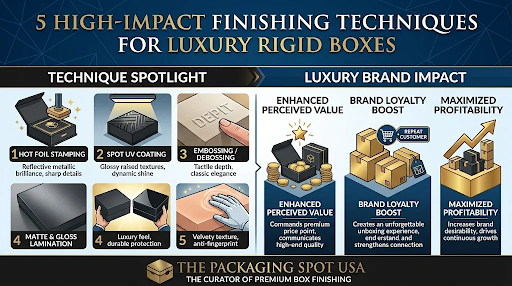
Let’s get real. Good packaging sells the first impression. Great packaging sells the second. Here are five finishing techniques that turn ordinary luxury rigid boxes into unforgettable experiences.
Foil Stamping — The Shine That Speaks Class
Open a high-end perfume or watch box. Notice the shimmer? That’s foil stamping doing its magic.
Gold. Silver. Rose gold. Even holographic tones that shift as you move.
Brands love it because it screams premium — without saying a word.
Why it matters:
- Visual impact. It draws the eye instantly.
- Texture play. You feel the difference under your fingers — a sleek metallic pop against matte paper.
- Luxury tone. Whether minimalist or bold, foil adds “value” that customers feel.
Combine foil stamping with a matte base or soft color palette, and you’ll have that quiet luxury look dominating packaging trends in 2025.
It’s timeless. Elegant. And the difference between “cool box” and “keep-this-forever box.”
Embossing — Texture That Tells a Story
Close your eyes. Run your fingers across a logo that’s slightly raised. That’s embossing.
Simple idea — pressing from underneath to lift the surface. But emotionally? It’s power.
It makes your logo touchable.
It makes your brand memorable.
You can emboss text, icons, or even textures — like leather grains or patterns.
When done right, embossing transforms luxury rigid packaging from flat visuals into sensory experiences.
Customers don’t just see your logo — they feel it.
Pair it with foil stamping, and the results are wild. Gold foil over embossed letters? That’s the golden handshake of luxury packaging.
Why it works:
- Tactile memory. People remember touch longer than sight.
- Subtle prestige. Raised elements feel expensive, even without bright colors.
- Depth. Literally. It creates shadows that make the design stand out naturally.
So, if you want your brand to whisper “premium,” emboss it.
Soft-Touch Lamination — Feel Before You See
Soft-touch lamination is smooth.
It’s a thin matte coating applied to the outer layer of the box — but the effect is huge.
You can’t help but run your fingers over it twice. Maybe three times.
When customers receive custom rigid boxes finished with soft-touch lamination, they instantly sense care, warmth, quality.
Why brands use it:
- Perceived value. It instantly feels more expensive.
- Durability. It helps keep fingerprints and scratches away..
- Subtlety. The matte finish gives a great background to metallic or foil logos.
Matte and Gloss Combo — The Dance of Light
Let’s talk balance. The most successful designs often combine opposites.
Matte absorbs. Gloss reflects. Together, they create rhythm.
On rigid packaging, alternating matte and gloss textures gives visual depth and sophistication.
Imagine a dark matte base with a glossy pattern dancing over it.
Or a full-gloss black surface contrasted with a soft matte logo — sleek, modern, powerful.
Designers love this finish because it plays with perception. The light changes the look every time you move it. Customers can’t stop turning it in their hands.
Why it’s a winner:
- Versatility. Works for both minimalist and high-impact brands.
- Movement. Adds life without extra color or clutter.
- Memorability. Creates a distinct feel that people instantly associate with premium design.
In 2025’s premium finishes trend wave, matte-gloss combos will dominate high-end retail packaging — bold, classy, and touchable.
Finishing Isn’t Decoration — It’s Emotion
The thing about finishes? They’re not decoration. They’re communication.
A brand that invests in premium finishes isn’t just trying to impress.
Foil stamping catches the eye.
Embossing draws the hand.
Soft-touch lamination makes people linger.
Every finish layers emotion over design.
Real Example: The Memory Effect
Here’s the truth. People forget what they read on the label. They forget marketing slogans.
But they remember how the box felt.
A soft, velvety lid that opens with a smooth hinge.
A metallic logo glimmering in light.
A faint raised texture brushing their fingertips.
That’s not packaging. It is memory design.
That’s why finishing techniques are not optional. They’re essential.
Final Words
Designing custom boxes is about making boxes that remain in the memory of their users.
The final finishes on your box tell about your attention to detail.
And when that story feels good in someone’s hands, they’ll open it again — and again.
