

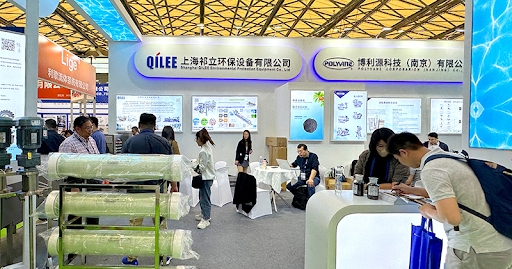
Water plays an essential role in industrial production, municipal services, and commercial operations. However, water quality requirements vary significantly depending on its source and intended use. Some facilities need purified water for manufacturing, while others must treat wastewater before discharge or reuse it in their operations.
Choosing the right treatment solution requires more than selecting individual filtration equipment. Businesses need to consider water composition, treatment capacity, operating conditions, available space, and future expansion requirements. Working with an experienced Water Treatment System Supplier can help organizations identify suitable technologies and develop systems that match their specific requirements.
Understanding Different Water Treatment Requirements
Before selecting a treatment system, businesses should evaluate the characteristics of their incoming water and define the required output quality.
For example, manufacturing facilities may need process water with controlled mineral content, while food and beverage operations can require additional purification. Municipal projects may focus on drinking water production, whereas industrial sites often need solutions for complex wastewater streams.
A professional water treatment system manufacturer can assess these requirements and recommend an appropriate combination of treatment processes. Depending on the application, the system may incorporate filtration, chemical dosing, membrane separation, reverse osmosis, biological treatment, or disinfection.
When standard configurations do not meet project requirements, a custom water treatment system can provide greater flexibility in process selection, equipment arrangement, and treatment capacity.
Why Custom Water Treatment Equipment Matters
Water sources differ from one location to another. Groundwater, surface water, industrial wastewater, and reclaimed water can contain different levels of suspended solids, dissolved minerals, organic matter, and other contaminants.
Using the same equipment configuration for every application may not deliver the required treatment performance. This is why customized equipment selection is important.
A reliable Water Treatment Equipment Manufacturer can help businesses identify suitable components based on water analysis and operational objectives. These may include membrane systems, filtration units, chemical dosing equipment, separation technologies, and monitoring instruments.
Working with an experienced water treatment equipment supplier also helps simplify equipment coordination and system integration. For projects with unusual water characteristics or limited installation space, custom water treatment equipment can be designed around the specific process requirements.
Containerized Water Treatment Systems for Flexible Deployment
Traditional water treatment plants can require extensive civil construction, dedicated buildings, and significant installation work. These requirements may create challenges for remote locations, temporary facilities, and projects with limited available space.
Containerized Water Treatment Systems offer an alternative by integrating treatment equipment into transportable container-based units. Depending on the design, these systems can combine pretreatment, filtration, membrane separation, and other processes within a compact structure.
For businesses evaluating a water treatment systems manufacturer, it is important to consider more than the initial equipment cost. The system’s treatment capacity, installation requirements, maintenance access, energy consumption, and potential for expansion should also be assessed.
A suitable water treatment systems supplier should be able to explain how the proposed configuration addresses the project’s water quality objectives and operating conditions.
Containerized solutions can be particularly useful for remote industrial facilities, mining operations, construction projects, and locations where conventional infrastructure is difficult to establish.
Reclaimed Water Systems and the Importance of Water Reuse
Water reuse is becoming an important consideration for industries seeking to manage freshwater consumption and improve resource efficiency. Instead of treating all wastewater as a disposal stream, facilities can evaluate whether a portion can be processed for suitable secondary applications.
A water reclaim system can treat wastewater to a quality appropriate for a defined reuse purpose. Depending on the source water and intended application, treatment may involve biological processes, membrane filtration, chemical treatment, or reverse osmosis.
Modern reclaimed water systems can support applications such as industrial process reuse, utility water, and other non-potable purposes when the treated water meets the relevant quality requirements.
However, reuse planning should begin with a detailed assessment of wastewater composition and the intended end use. Not every wastewater stream is suitable for every reuse application, and additional treatment or monitoring may be necessary.
Containerized Wastewater Treatment for Industrial Applications
Industrial wastewater can contain suspended solids, oils, organic pollutants, chemicals, and other substances that require specialized treatment. The appropriate process depends on the industry, wastewater characteristics, discharge requirements, and opportunities for reuse.
Containerized Wastewater Treatment provides a compact approach to integrating multiple treatment stages within a transportable unit. Depending on the project, systems may incorporate membrane bioreactors, dissolved air flotation, chemical dosing, sedimentation, and advanced filtration.
When comparing wastewater treatment system manufacturers, businesses should review their ability to address the specific wastewater challenges involved. Important considerations include treatment efficiency, hydraulic capacity, sludge management, process stability, and maintenance requirements.
A properly engineered treatment system can help facilities manage wastewater more effectively while supporting applicable environmental and discharge obligations.
Integrated Modular Systems for Scalable Projects
Some treatment projects require several processes to operate together. Installing separate equipment units without proper coordination can increase layout complexity and make operation more difficult.
Integrated Modular Systems combine selected treatment technologies into coordinated modules. These systems can be configured around project requirements and may include membrane filtration, chemical treatment, reverse osmosis, ultrafiltration, and sludge management equipment.
Modular construction can also make future expansion easier when additional capacity is required. Instead of redesigning an entire facility, businesses may be able to add or reconfigure modules, depending on the original engineering design.
When evaluating an integrated solution, project teams should review process compatibility, control systems, installation arrangements, maintenance access, and the possibility of future upgrades.
Key Factors to Consider Before Selecting a Supplier
Before investing in a water treatment project, businesses should evaluate several important factors:
- Water analysis: Understand the physical, chemical, and biological characteristics of the source water.
- Treatment objectives: Define the required output quality and whether the treated water will be discharged, reused, or used in production.
- Capacity requirements: Estimate daily water demand and expected variations in flow.
- Available space: Consider whether a conventional, skid-mounted, or containerized configuration is appropriate.
- Operating costs: Review energy use, chemical consumption, replacement parts, and maintenance requirements.
- Technical support: Check the supplier’s engineering capabilities, installation support, commissioning process, and maintenance services.
- Future expansion: Consider whether the system can accommodate changes in production or treatment demand.
Conclusion
Selecting the right water treatment solution requires a clear understanding of water quality, operational requirements, and long-term project objectives. From customized equipment and containerized treatment plants to reclaimed water solutions and integrated modular systems, each configuration serves different applications.
QILEE provides water treatment equipment and integrated system solutions for industrial and municipal requirements. Businesses planning a new installation or upgrading an existing facility can explore its water treatment solutions to understand the available equipment and system configurations.
