

Introduction
Maintaining a comfortable indoor environment throughout the year is important for every homeowner. Whether temperatures become extremely cold during winter or rise significantly during summer, having a reliable heating and cooling system makes everyday life more comfortable. Modern technology has introduced several energy-efficient solutions that help homeowners maintain pleasant indoor temperatures without unnecessary energy consumption. One of the most popular options is a heat pump, which provides both heating and cooling through a single integrated system. This technology has become an attractive choice for people looking to improve home comfort and manage their energy expenses. Professional heat pump installation is an important investment because the performance of the equipment depends on correct planning, proper sizing, and accurate installation. Unlike traditional heating systems that generate heat directly, heat pumps transfer thermal energy from one location to another. This process allows them to provide effective heating and cooling while using electricity efficiently. Understanding the different system types, installation requirements, maintenance needs, and long-term benefits can help homeowners make better decisions. With the right equipment and professional support, a heat pump can provide dependable indoor comfort for many years.
What Is a Heat Pump and How Does It Work?
A heat pump is an advanced heating and cooling system designed to transfer heat rather than generate it through conventional combustion. During colder weather, it collects available thermal energy from the outdoor air, ground, or water and transfers that energy inside the property. During warmer weather, the system reverses its operation and removes indoor heat, releasing it outside. This ability to provide both heating and cooling makes heat pumps a versatile solution for residential properties. They are designed to maintain comfortable indoor conditions throughout different seasons. The system operates through several important components, including a compressor, evaporator, condenser, expansion valve, and refrigerant. These components work together to move heat through a continuous refrigeration cycle. The refrigerant absorbs and releases thermal energy as it changes between liquid and gaseous states. The compressor helps circulate the refrigerant and maintain the pressure required for efficient operation. Every component must work correctly to ensure the equipment delivers consistent heating and cooling performance.
Different Types of Heat Pumps
Air-source heat pumps are among the most widely used options because they transfer heat between indoor and outdoor air. These systems are available in ducted and ductless configurations, making them suitable for different property layouts. Ducted systems distribute conditioned air through a network of ducts, while ductless systems use individual indoor units to control temperatures in separate rooms. Their flexibility and relatively straightforward installation make them a popular choice. Modern air-source models can also provide effective heating in colder conditions, depending on their design and operating specifications. Ground-source heat pumps use underground loops to exchange thermal energy with the ground. Since underground temperatures are generally more stable than outdoor air temperatures, these systems can provide consistent performance throughout the year. They are often valued for their efficiency and long-term operating potential. However, installing a ground-source system usually requires excavation, additional planning, and a higher initial investment. Property owners should evaluate the available land, installation requirements, and expected energy savings before selecting this option. Water-source heat pumps use water bodies or suitable water systems as their thermal energy source. These systems can provide efficient heating and cooling when an appropriate water source and suitable installation conditions are available. Their performance depends on water availability, water temperature, system design, and environmental requirements. Although they are not suitable for every property, they can be an effective option in specific circumstances. A qualified professional can assess whether this technology is practical for a particular building.
Benefits of Professional Heat Pump Installation
One of the biggest advantages of a modern heat pump is its energy efficiency. Since the equipment transfers existing thermal energy instead of producing all the heat directly, it can deliver more heating energy than the electricity it consumes under suitable conditions. This can help reduce energy consumption compared with certain conventional heating systems. Actual efficiency depends on the outdoor temperature, equipment specifications, building insulation, and installation quality. Selecting an appropriate system is therefore essential for achieving the expected performance. Another important benefit is the convenience of having heating and cooling in one system. Homeowners do not necessarily need separate equipment for different seasons because a heat pump can perform both functions. A properly designed system can distribute conditioned air throughout the property and maintain more consistent indoor temperatures. Modern models may also include variable-speed compressors and intelligent temperature controls. These features allow the equipment to adjust its operation according to changing comfort requirements. A professional heat pump installation can also support improved environmental performance. Heat pumps generally produce fewer direct emissions during operation than heating equipment that burns fossil fuels. Their overall environmental impact depends on the electricity source, refrigerant type, equipment efficiency, and maintenance practices. As electricity generation becomes cleaner, electric heating technologies can offer additional environmental advantages. For homeowners interested in reducing household energy waste, heat pumps are worth considering.
Choosing the Right Heat Pump for Your Property
Selecting the correct equipment is one of the most important parts of any heating and cooling project. Every property has different requirements depending on its size, insulation, window placement, ceiling height, and general construction. Choosing a unit based only on its advertised capacity or purchase price can result in poor performance. An undersized system may struggle to maintain comfortable temperatures, while an oversized system may cycle frequently and waste energy. A professional heating and cooling assessment helps determine the appropriate equipment capacity. Homeowners should also consider the layout of their property when selecting a system. Ducted equipment may be suitable for buildings with existing ductwork in good condition, while ductless mini-split systems can provide individual temperature control in different rooms. Some properties may benefit from a combination of heating and cooling solutions. The number of indoor units, location of the outdoor equipment, and available installation space should all be considered. Careful planning helps ensure that the selected equipment matches the property’s requirements. Efficiency ratings are another important factor when comparing different models. Cooling performance can be evaluated using SEER2 ratings, while HSPF2 ratings provide information about heating efficiency for applicable air-source systems. Higher ratings generally indicate better performance under standardized testing conditions. However, the actual results depend on climate conditions, installation quality, and regular maintenance. Comparing technical specifications can help homeowners select equipment that offers a suitable balance between performance and cost.
Preparing Your Property Before Installation
Proper preparation helps make the installation process smoother and reduces the possibility of unnecessary delays. Before work begins, homeowners should identify the areas that require heating and cooling and discuss any existing comfort problems with the installation team. Technicians need clear access to indoor and outdoor installation locations. Moving furniture, removing obstacles, and preparing the necessary working areas can make the process more convenient. Good communication between homeowners and installers also helps ensure that important requirements are understood. Insulation and air sealing should be evaluated before installing new equipment. Poor insulation allows conditioned air to escape, increasing the workload on heating and cooling systems. Gaps around doors, windows, walls, and ceilings can also contribute to unwanted heat transfer. Improving these areas may reduce the amount of heating and cooling required throughout the year. A properly insulated property allows the equipment to maintain comfortable temperatures more effectively. The outdoor unit requires an appropriate location with enough space for proper airflow and future servicing. It should be placed on a stable, level surface and protected from unnecessary physical damage. Installers must consider drainage, weather exposure, operating noise, and manufacturer-recommended clearances. Placing the unit in a restricted area can affect airflow and reduce efficiency. Proper positioning also makes routine inspections and maintenance easier.
Understanding the Heat Pump Installation Process
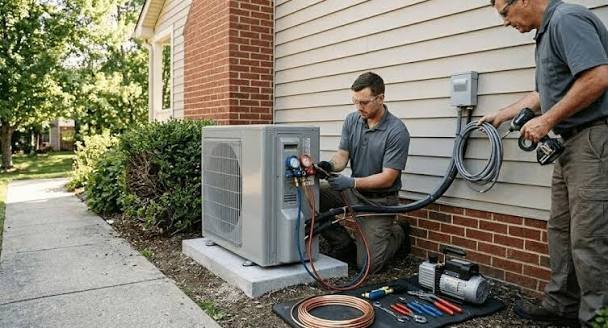
The installation process generally begins with a detailed inspection of the property. Technicians evaluate the building layout, existing electrical connections, insulation, ductwork, and heating and cooling requirements. This assessment helps determine the appropriate equipment type and installation method. Once the technical requirements are understood, the installer prepares a plan covering equipment placement, electrical work, refrigerant lines, and drainage arrangements. Careful planning helps avoid installation problems and unnecessary expenses. The next stage involves preparing the indoor and outdoor unit locations. Depending on the equipment type, this may include installing mounting brackets, preparing a suitable base, making openings for refrigerant pipes, and arranging ductwork where required. Indoor units should be positioned to provide effective airflow throughout the intended spaces. Outdoor equipment must also have enough clearance to operate correctly. Correct positioning is essential for maintaining reliable system performance. During heat pump installation, technicians connect refrigerant lines, electrical wiring, communication cables, and condensate drainage components according to the manufacturer’s instructions. These connections require specialist knowledge because incorrect work can affect efficiency, reliability, and safety. Refrigerant circuits must be installed and tested using appropriate professional procedures. Electrical connections should also meet applicable safety requirements and manufacturer specifications. Every connection needs to be checked before the system is started. After completing the physical work, technicians configure the thermostat and test the equipment in its operating modes. They may check airflow, temperature performance, drainage, electrical operation, and system controls. Commissioning is an important step because it helps identify issues before the equipment enters regular use. Installers should also explain the thermostat settings, filter requirements, and basic maintenance procedures. A proper handover allows homeowners to understand how to operate their new system.
Common Installation Mistakes to Avoid
One of the most common mistakes is choosing equipment without calculating the property’s actual heating and cooling requirements. Some homeowners assume that purchasing a larger unit will automatically provide better performance. However, oversized equipment may switch on and off too frequently, resulting in uneven temperatures and unnecessary energy use. Undersized equipment may run for extended periods without maintaining the desired indoor temperature. Professional load calculations help identify the appropriate capacity. Ignoring existing ductwork conditions can also create problems. Leaking, damaged, or poorly insulated ducts may prevent conditioned air from reaching different rooms effectively. Before connecting new equipment to an existing duct system, technicians should inspect the ducts for blockages, leakage, and airflow restrictions. Repairing these problems can improve comfort and support efficient operation. Homeowners should ensure that ductwork requirements are included in the installation assessment. Another mistake is selecting an installer based entirely on the lowest quotation. A low price does not always include essential services such as system commissioning, electrical improvements, or removal of old equipment. Homeowners should compare qualifications, experience, equipment knowledge, warranties, and customer support before making a decision. A reliable contractor should provide a clear explanation of the work involved. Choosing professional services can help prevent expensive problems later.
Energy Efficiency and Long-Term Savings
Energy efficiency is one of the main reasons homeowners consider upgrading to modern heating and cooling equipment. A properly selected heat pump can transfer thermal energy efficiently and reduce the electricity required for maintaining indoor comfort. However, the actual savings depend on the equipment, existing heating system, outdoor temperatures, insulation, and electricity costs. Homeowners should consider these factors before estimating their potential financial benefits. Proper system design is essential for achieving efficient performance. Smart thermostats can provide additional opportunities to manage energy consumption. These devices allow users to create temperature schedules according to their daily routines. Some models provide remote access, automatic adjustments, and energy monitoring features. Homeowners can avoid unnecessary heating or cooling when certain rooms are not being used. When combined with appropriate equipment settings, these controls can improve convenience and support responsible energy use. Regular maintenance also contributes to long-term efficiency. Dirty filters, blocked outdoor units, damaged insulation, and airflow problems can force equipment to work harder than necessary. Keeping the system clean and arranging professional inspections can help maintain normal operation. Small maintenance tasks can make a meaningful difference in overall performance. Looking after the equipment helps protect the original investment and supports dependable comfort.
Understanding Installation Costs
The total cost of a heating and cooling project depends on several factors, including equipment type, capacity, installation complexity, labor, and additional materials. A straightforward replacement may require less work than installing an entirely new system with ductwork or electrical modifications. Ground-source equipment may involve additional expenses because underground loops require excavation and specialized preparation. Homeowners should request a detailed quotation before approving any work. Understanding the full cost helps avoid unexpected expenses. When comparing quotations, it is important to review the services included rather than focusing only on the initial price. Some estimates may exclude electrical upgrades, thermostat configuration, removal of old equipment, or commissioning. Reliable installers should explain these details clearly and identify any additional work that may become necessary. Homeowners should also ask about manufacturer warranties, labor guarantees, and future servicing arrangements. These factors contribute to the overall value of the investment. Long-term operating expenses should also be considered when choosing equipment. A model with a higher initial price may offer better efficiency and lower energy consumption over its useful life. However, potential savings depend on actual usage, climate conditions, electricity prices, and system performance. Comparing the purchase price with expected operating costs can provide a clearer understanding of long-term value. A balanced decision should consider both affordability and reliability.
Essential Heat Pump Maintenance Tips
Routine maintenance is important for keeping heating and cooling equipment in good working condition. One of the simplest tasks is checking the air filters and cleaning or replacing them according to the manufacturer’s recommendations. Dirty filters restrict airflow and may reduce system efficiency. Properties with pets, dust, or frequent indoor activity may require more frequent filter attention. Clean filters help maintain comfortable airflow and reduce unnecessary strain on the equipment. Outdoor units should also be inspected regularly to ensure that leaves, dirt, and other debris do not obstruct airflow. Homeowners can remove loose materials around the equipment while avoiding electrical components and internal parts. Indoor vents and registers should remain clear of furniture and other objects. Good airflow allows conditioned air to circulate throughout the property. Keeping the surrounding area clean also makes professional maintenance easier. Professional servicing should be arranged according to manufacturer recommendations and system requirements. A qualified technician can inspect electrical connections, refrigerant performance, coils, drainage, and operating controls. Any unusual noises, inconsistent temperatures, weak airflow, or unexpected energy increases should be investigated promptly. Addressing minor problems early can help prevent more expensive repairs. Regular servicing also supports dependable performance during periods of heavy heating or cooling demand.
When Should You Replace Your Existing Heating System?
An older heating and cooling system may gradually lose efficiency as its components experience wear and tear. Frequent breakdowns, rising energy bills, inconsistent room temperatures, and unusual operating noises can indicate that the equipment requires professional attention. Although some issues can be resolved through repairs, repeated service costs may eventually make replacement a more practical option. A qualified technician can assess the condition of the equipment and recommend the most suitable solution. Homeowners should also consider how well their existing system meets their current comfort requirements. A property that has undergone renovations or insulation improvements may have different heating and cooling needs than before. Modern equipment can provide improved controls, better efficiency, and more flexible operating options. However, replacement decisions should be based on an assessment of the property rather than simply matching the capacity of the previous unit. A professional heat pump installation provides an opportunity to upgrade outdated equipment and address existing performance problems. The new system should be selected according to accurate load calculations, suitable efficiency ratings, and the property’s layout. Proper commissioning and regular maintenance are equally important for achieving reliable results. With careful planning, homeowners can improve indoor comfort and make better use of their energy resources.
Conclusion
Heat pumps provide a practical solution for maintaining comfortable indoor temperatures throughout the year. Their ability to offer both heating and cooling makes them a versatile alternative to many conventional systems. Modern equipment can also provide improved temperature control and efficient operation when properly selected for the property. However, achieving these benefits requires careful planning, suitable equipment sizing, professional workmanship, and regular maintenance. Investing in professional heat pump installation can help homeowners improve indoor comfort, reduce unnecessary energy consumption, and protect their heating and cooling equipment over the long term. Evaluating insulation, comparing equipment specifications, and selecting an experienced installer are important steps toward achieving dependable performance. Regular servicing and responsible system operation can further support efficiency and reliability. By making informed decisions, homeowners can enjoy the advantages of modern heat pump technology for many years.
