

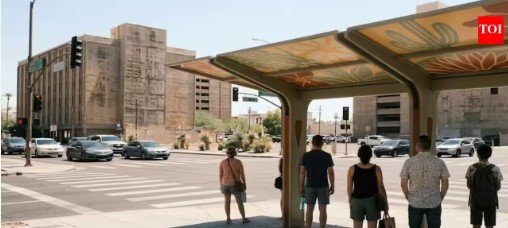
Phoenix winters draw more people outside. The temperatures drop to something manageable, the snowbirds arrive, and foot traffic picks up across the metro. At the same time, the sun sets earlier, commutes home now happen in the dark, and that combination creates a window of elevated risk that plays out on city streets every November through February.
When Darkness and Rush Hour Overlap
The timing problem is straightforward: Phoenix’s evening rush and the onset of darkness now land at the same hour. In summer, drivers heading home at 6 p.m. still have daylight. By November, that same commute happens under a dark sky. Pedestrians who were perfectly visible in October become much harder to spot weeks later, through no change in their own behavior.
The city’s March 2026 Pedestrian Risk Network report found that about 53% of crashes that killed or seriously injured a pedestrian occurred between 6 p.m. and midnight, with the single worst hour running from 7 to 8 p.m. That window lines up almost exactly with post-work foot traffic and the first full hours of winter darkness. The overlap is not coincidental.
The Darkness Problem Is Larger Than Most Realize
Visibility is not just a comfort issue. It is the defining factor in a significant share of fatal pedestrian crashes across Arizona.
Perhaps the most striking finding in Arizona crash data is that 76% of pedestrian fatalities in Arizona happen in dark conditions, a staggering share of all traffic deaths in the state. That figure holds across multiple years of data and reflects a consistent pattern: low-light conditions do not just increase risk, they concentrate it. Even well-lit streets do not eliminate the danger. Drivers often fail to see pedestrians until it is too late, especially when traveling at higher speeds.
The physics matters here. A vehicle moving at 40 mph needs considerably more distance to stop than one moving at 25 mph, and a driver’s effective detection range for a pedestrian in dark clothing at night is a fraction of what it is in daylight. Winter compounds this by putting more pedestrians on the road during the hours when detection is hardest. More people out, less light to find them.
Phoenix’s High Injury Network and Where Risk Concentrates
Not all Phoenix streets carry equal risk. The city has identified a specific set of corridors and intersections that produce a disproportionate share of serious crashes.
The High Injury Network
The city’s pedestrian high injury network, from the March 2026 report, holds 43 intersections and 48 segments, concentrated between Indian School Road and McDowell Road and between 35th Avenue and 19th Avenue. These are the corridors where the data has repeatedly shown the worst outcomes. The same report found that over half of pedestrian crashes that killed or seriously injured someone happened on 40 mph roads.
The Arterial Road Factor
Wide arterials designed for vehicle throughput create long crossing distances, infrequent signals, and limited refuge for pedestrians mid-crossing. High Injury Network roads like 35th Avenue and 19th Avenue see recurring pedestrian crashes, and many of these roads have marked crosswalks spaced a quarter-mile apart or further. In winter, when someone is crossing a wide arterial in the dark, that distance becomes considerably more dangerous.
The Hit-and-Run Dimension
Darkness also increases the likelihood that a driver who strikes a pedestrian will flee. In Maricopa County, 83.5% of pedestrian hit-and-run deaths happened after dark. For anyone caught up in a nighttime crash, that reality shapes everything about what follows.
What Pedestrians Can Actually Do
Visibility improvements do not require expensive gear. The most effective changes are practical ones that cost little or nothing.
- Wear light or reflective clothing. Dark jackets and jeans are nearly invisible to drivers at night. A single reflective strip on a bag or jacket makes a measurable difference in how far away a driver can detect you.
- Use a flashlight or phone light when crossing. Briefly illuminating yourself at a crossing is especially useful on unlit stretches of arterial roads.
- Cross at signalized intersections. Midblock crossings are where the data consistently shows the worst outcomes. Walking an extra block to reach a signal is worth the time.
- Make eye contact with drivers before crossing. Assume a driver has not seen you until they have stopped and shown it.
- Avoid crossing during the 7-to-8 p.m. window when possible. That single hour accounts for a disproportionate share of serious crashes citywide.
What Drivers Need to Adjust
Pedestrian visibility is a two-sided equation. Drivers entering winter months need to recalibrate their expectations about who is on the road and where.
Scanning Habits
In daylight, a pedestrian waiting at a curb is easy to spot from a distance. At night, the same person may not register until a driver is within 50 to 100 feet, depending on road lighting and what the pedestrian is wearing. On major avenues like McDowell or Camelback, treating every shadow near the curb as a potential pedestrian is a reasonable precaution. It sounds overly cautious. But it reflects the actual detection challenge in low-light conditions.
Speed and Stopping Distance
The relationship between speed and survivability in pedestrian crashes is stark. Slowing down on arterials at night is not just a courtesy; it is the single most effective adjustment a driver can make to reduce the severity of a crash if one occurs.
Pedestrian accident legal support in Phoenix
When a crash does happen, the circumstances matter more than people often realize. Road design, lighting conditions, signal placement, and driver behavior all factor into how liability gets assessed. Families navigating the aftermath of a serious pedestrian crash often benefit from working with attorneys who understand Phoenix’s specific road network and crash data. Pedestrian accident legal support in Phoenix through Elmm Law Group covers the full range of these cases, from hit-and-runs on unlit arterials to crosswalk crashes at signalized intersections where fault is genuinely disputed.
Arizona’s Broader Pedestrian Safety Context
Phoenix’s winter visibility problem does not exist in isolation. The Governors Highway Safety Association puts Arizona’s pedestrian fatality rate at 3.6 per 100,000 residents, nearly twice the national average. That rate reflects a combination of factors: road design built around vehicles, a climate that encourages year-round walking, and a population density that puts pedestrians on high-speed arterials with regularity.
Arizona recorded 263 pedestrian fatalities in 2024, with Maricopa County accounting for roughly 60% of them. That concentration in Maricopa, which includes Phoenix and its surrounding cities, means the problem is not spread evenly across the state. It is a metro-level crisis, and the winter months make it worse.
Where Phoenix Is Investing in Solutions
The city is not standing still on this. Phoenix has been installing HAWK signals since 2009, after approval by the Federal Highway Administration, and currently has 118 of them located throughout the city, a significant investment in midblock and uncontrolled crossing safety. The city continues adding locations based on crash history and community requests.
In January 2022, the Phoenix City Council approved folding Vision Zero goals into the Road Safety Action Plan, which includes a method for evaluating data and building a High Injury Network that identifies problem locations and prioritizes fixes. The March 2026 Pedestrian Risk Network report is the latest output of that framework, and it will shape where lighting upgrades, crossing improvements, and speed management measures go next.
Looking Ahead
Shorter winter days are a fixed feature of the season. The risks they create are not. Phoenix pedestrians and drivers who understand where danger concentrates, and when, are better positioned to avoid it. As the city continues building out High Injury Network improvements, the gap between the infrastructure people deserve and what currently exists remains real. Until those upgrades reach every dangerous corridor, the most effective safety tools are awareness, visibility, and deliberate choices about when and where to cross.
