

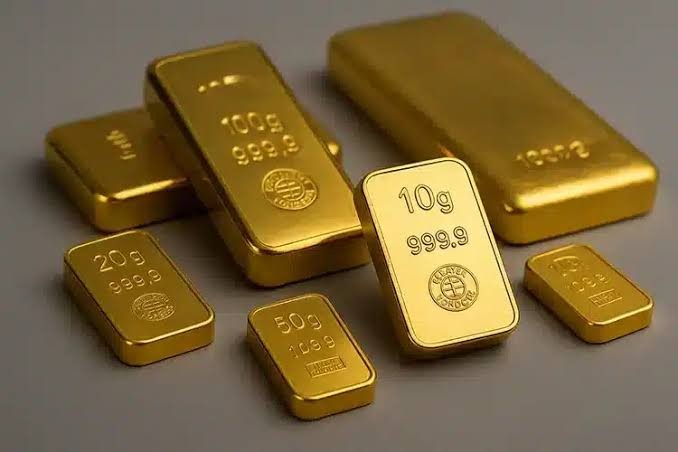
Here is a moment many first-time gold buyers remember. You buy a beautiful 10 gram 24k gold bar, feel the weight in your hand, and check the live gold price afterwards. The number on your screen looks a little lower than what you paid. Did you overpay? Did something go wrong? Usually, nothing has gone wrong at all.
Gold has two prices in every transaction: the one you pay to buy and the one you receive when you sell. The gap between them is normal, predictable, and, once understood, easy to plan around. Let’s unpack exactly what drives it, so you can buy with confidence and avoid unpleasant surprises later.
Start With the Spot Price
Every gold price begins with the spot price, the live global price for one unit of pure gold traded in the wholesale market. It moves constantly through the day, shaped by interest rates, currency movements, inflation expectations, and global events. Because the UAE dirham is pegged to the US dollar, the dirham price of gold tracks the dollar price closely. But spot is only the starting point. It is a benchmark for raw metal in huge quantities, not for a finished, certified bar in your hand.
The Premium: What You Pay for the Bar Itself
On top of spot, you pay a premium. This covers the real costs of turning wholesale gold into a product you can safely buy and hold:
- Refining and minting: Producing a bar to exact purity and weight takes skill, energy, and equipment.
- Assay and certification:Testing and documenting each bar ensures authenticity.
- Sealed, tamper-evident packaging protects the bar and its certificate.
- Logistics and security:Transport, insurance, and vaulting add cost.
- Dealer overheads:Staff, premises, technology, and service keep the business running.
These costs are built into the price you pay. They are why a bar costs more than its raw gold content, and they are not recovered when you sell, which is the first reason the exit price sits lower.
The Spread: Why Buying and Selling Prices Differ
Dealers quote two prices: a higher price at which they sell to you (the ask) and a lower price at which they buy from you (the bid). The difference is called the spread, and it is the core reason purchase and exit prices differ. The spread pays for the dealer’s risk and effort.
When a dealer buys gold back, they must verify it, hold it, and resell it, all while the market price keeps moving. A fair spread reflects those costs; a very wide spread may signal poor value. Transparency matters here, which is why reputable dealers display clear pricing and explain their buyback terms upfront.
Why Bar Size Matters
Smaller bars typically carry higher premiums per gram than larger ones. Producing, testing, and packaging a small bar costs almost as much as doing so for a larger one, but the costs are spread across fewer grams. That means a 10 gram 24k gold bar will usually have a higher premium per gram than a 100 gram or 1 kilogram bar.
The upside is accessibility and flexibility: small bars are easy to buy, gift, and sell in portions. The trade-off is a wider gap between purchase and exit price in percentage terms. Larger bars tend to offer tighter spreads, but they require a bigger upfront commitment.
Purity, Certification, and Packaging
Purity is the foundation of value. A 24k bar is 99.9 percent pure or higher, and its worth depends on proof of that purity. Bars from recognized refineries with sealed assay certificates are easier to resell at full value, because buyers can trust them without extra testing. Condition matters too. A bar still sealed in its original packaging, with the matching certificate, usually attracts a better exit price than one that is unpackaged, scratched, or missing paperwork, since the dealer may need to retest it.
Market Timing and Volatility
Gold prices move minute to minute. If the market rises after you buy, your exit price may rise above your purchase price. If it falls, the gap widens. In volatile periods, dealers may also widen spreads to protect themselves against rapid swings. This is why gold is best viewed as a medium- to long-term holding. Over short periods, premiums and spreads can outweigh price movement. Over longer periods, the movement in the gold price itself usually matters far more.
A Quick Illustration
To see how this works, imagine, using round and hypothetical numbers, that the spot value of a bar is AED 1,000.
- You buy it with a 5 percent premium: AED 1,050.
- Later, with spot unchanged, a dealer buys it back at a 1 percent premium over spot: AED 1,010.
The difference of AED 40, about 3.8 percent of the purchase price, is the cost of the premium and spread. For you to break even, gold must rise by roughly that amount. Real-world figures vary by product and dealer, but the logic remains the same.
How to Narrow the Gap
You cannot eliminate the spread, but you can manage it:
- Compare prices to spot: Check how far each quote sits above the live gold price.
- Ask about buyback terms before you buy:Know how the exit price is calculated and whether fees apply.
- Select recognized brands and refineries:They resell more easily and at better prices.
- Keep packaging and certificates intact.They protect value.
- Match bar size to your goals:Larger bars for long-term holding, smaller ones for flexibility.
- Think long term:A longer holding period gives price appreciation time to outweigh the spread.
- Buy from a transparent dealer:Clear, real-time pricing makes comparison simple.
Conclusion
The gap between purchase and exit prices comes from the premium, the dealer’s spread, bar size, certification, and market movement. None of it is hidden, and all of it can be managed with knowledge and patience. Compare quotes, check buyback terms, and hold for the long run. If you are buying a 24k gold bar in Dubai, a transparent dealer and a clear understanding of these factors will help you buy with confidence.
Spike Gold offers a premium bullion buying experience built around trust, availability, and service. They stock a strong range of gold and silver investment products, giving clients access to physical precious metals through a straightforward, professional process, whether for investment, gifting, or long-term wealth preservation.
