

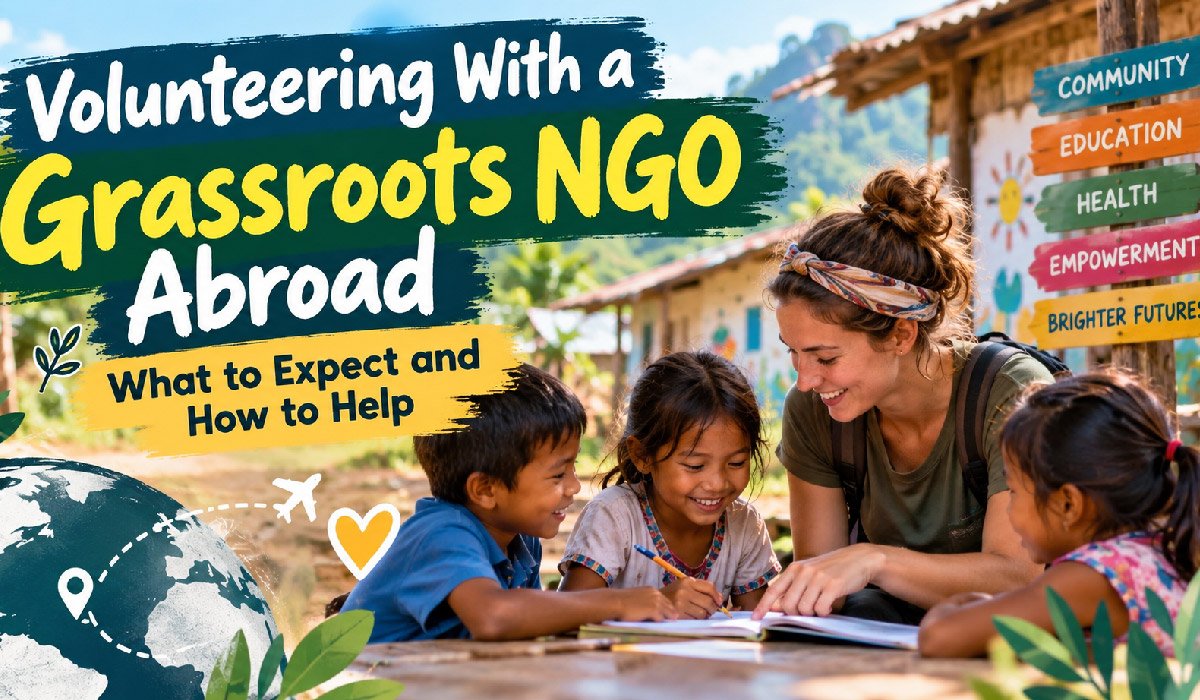
Volunteering with a small, community-based NGO is very different from joining a large international charity. Teams are small, resources are tight and plans can change overnight. For the right volunteer, that is exactly the appeal. You see how change happens from the ground up, work closely with local leaders and understand the challenges that statistics never show.
Here is what to expect when you volunteer with a grassroots NGO abroad, and how to make your time genuinely useful.
What Grassroots NGOs Look Like
Grassroots NGOs are usually founded and run by people from the community they serve. They might run a preschool in a rural village, a women’s sewing cooperative, a youth sports program or a small health outreach service. Many have only a handful of paid staff and rely on local volunteers, donations and partnerships to survive. Some volunteer providers have even set up their own nonprofit arm to work more closely with local partners, and publish their community impact so supporters can see results.
Because they are close to the community, these organizations often understand local needs better than anyone. That is why the best international volunteer programs partner with them rather than setting up projects from scratch.
Expect Flexibility, Not Perfect Plans
In a small NGO, the plan for Monday may change by Monday morning. A teacher may be sick, a delivery may be late or heavy rain may close the road. Volunteers who thrive are those who can adapt with a smile and find another way to help.
It also helps to understand that “slow” does not mean “inefficient.” Decisions often involve community discussion and respect for local leaders, which takes time but leads to better results.
How Volunteers Can Help Most
The most useful volunteers support the NGO’s existing work rather than introducing their own ideas on day one. Common roles include:
- Supporting teachers with English lessons, reading or games.
- Helping run sports, arts or after-school activities.
- Assisting with community health and hygiene education.
- Joining construction or renovation work led by local builders.
- Helping with simple admin, photos for reports or social media, with permission.
- Sharing professional skills such as accounting, design or IT when requested.
If you have a specific skill, mention it early. Many NGOs would love help with a grant report or a basic website but may not think to ask.
Respect Local Leadership
Your role is to support, not to lead. Listen first, ask questions and follow the guidance of local staff, even when you would do things differently at home. A good rule is to spend your first week mostly observing. You will understand far more about why things are done the way they are.
Choosing the Right Program
Not every program that claims to work with NGOs does so responsibly. When you compare NGO volunteer opportunities, look for:
- Long-term partnerships with named local organizations.
- Clear information about how much of your fee supports the project.
- Strong child protection and safeguarding policies.
- A local coordinator who supports volunteers and partners.
- Honest descriptions of daily tasks rather than vague promises.
If possible, read reviews from past volunteers who worked at the same NGO.
Prepare Before You Go
Learn about the country, its history and the issues the NGO addresses. Pick up basic phrases in the local language. Ask the program what supplies, if any, the NGO actually needs; sometimes a cash donation spent locally is far more useful than suitcases of donated items.
Leaving Well
How you leave matters as much as how you arrive. Hand over any work you started, share notes with staff and say proper goodbyes. If you want to keep helping, ask the NGO how. Regular small donations, fundraising at home or sharing their work on social media can be more valuable than a one-time gift.
Living Conditions
Housing near grassroots projects is usually simple. You may share a room, take bucket showers or deal with power cuts. Meals are often local dishes cooked by the host team. Most volunteers adapt within a few days and later say these simple routines brought them closer to the community. Pack a headlamp, a power bank and an open mind.
Handling Frustration
There will be moments when things feel slow or disorganized. When that happens, ask questions rather than judging. Often there is a good reason, such as a funding gap, a community event or a cultural norm, behind what you see. Talking it through with your coordinator usually helps you understand and adjust.
A Typical Day
Mornings often start with a team briefing, followed by project work until early afternoon. Afternoons may include lesson planning, community visits or language practice, and evenings are usually shared with other volunteers or your host family.
Final Thoughts
Volunteering with a grassroots NGO is not always comfortable, but it is often unforgettable. Arrive with humility, stay flexible, support local leaders and choose a program built on real partnership. You will leave with a deeper understanding of how communities create change, and the NGO will have gained a supporter for years to come.
Read More: The Hidden Cost Of Putting Mental Wellness On Hold
