

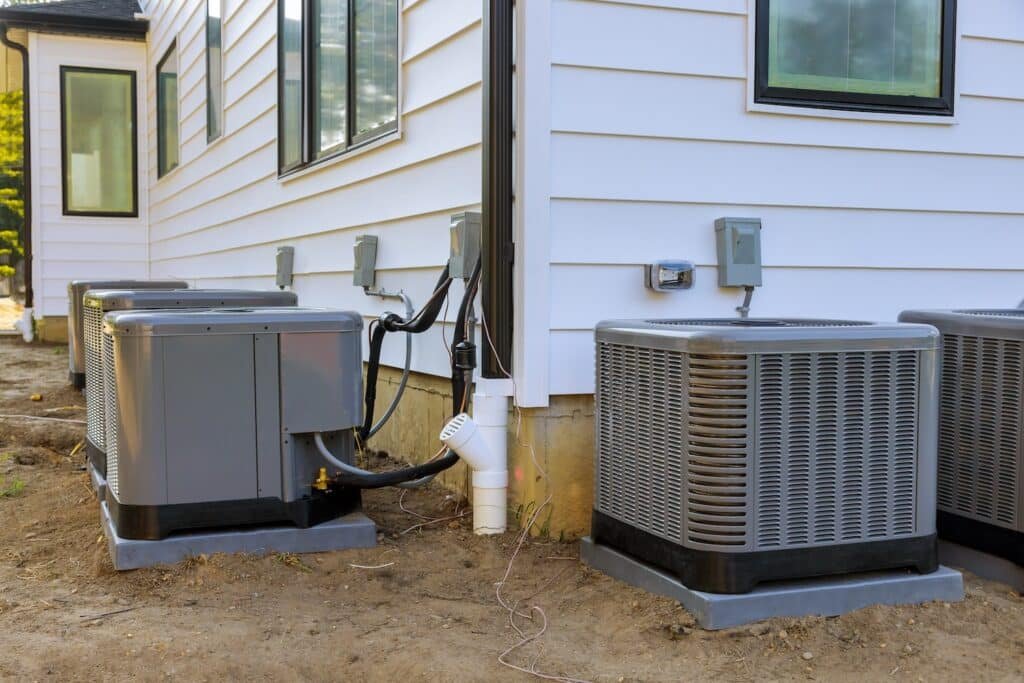
Line sets look simple from the outside: two copper tubes, some insulation, and a neat route between the outdoor unit and the indoor coil. Yet the diameters you choose for the suction and liquid lines can change how much cooling or heating you actually get, how hard the compressor works, and how reliably oil returns to the crankcase. This isn’t a “close enough” decision. Sizing depends on refrigerant velocity, allowable pressure drop, equivalent length, and equipment design. Get those wrong, and even a new system can behave like an undersized one, short-cycle, or fail early.
-
Why Suction Line Size Hinges on Velocity and Oil Return
The suction line must balance two priorities that pull in opposite directions: keep pressure drop low to preserve capacity, and keep refrigerant velocity high enough to carry oil back to the compressor. Tables and calculators can help, and general primers on HVAC line set sizes can set expectations. Still, the right call always comes back to your unit’s refrigerant, tonnage, and run layout. Undersize the suction line and you increase friction losses, drop suction pressure, and slash capacity. Oversize it and velocity drops, oil hangs in the tubing, and the compressor runs starved of lubrication.
Consider a common misstep: defaulting to a larger suction diameter “for safety.” That extra eighth of an inch sounds harmless until oil begins pooling in a horizontal run after a mild slope change. Over time, the compressor may start to sound noisy or show high superheat as oil return lags. Proper suction sizing aims for a velocity window that keeps oil moving without creating a large pressure penalty. Manufacturer tables often include both a maximum equivalent length and a vertical riser note for this reason.
-
How Length, Fittings, and Riser Height Change the Effective Size
A straight 40-foot run is not the same as a 40-foot run with six long-radius elbows and a 20-foot riser. Every elbow, tee, and service valve adds equivalent length, increasing pressure drop and potentially requiring a change in line size or layout. Vertical risers add another variable: you need enough upward velocity in the suction line to lift oil, and long risers usually require oil traps at the base and at set intervals to prevent drainback during the off cycle.
Picture a two-story home where the air handler sits in an upstairs closet. The route from a ground-level heat pump climbs 25 feet, snakes through framing with several 90s, then crosses an attic. If you size the suction line as if it were a simple, short, horizontal run, expect symptoms: the system may struggle to reach target capacity on hot afternoons, and oil can settle in the attic horizontal when the unit shuts off. Correcting that means calculating equivalent length, placing P traps on tall risers, and selecting a diameter that preserves both velocity and acceptable pressure drop.
-
Refrigerant and Equipment Type Shift the Sizing Target
R-410A systems, emerging A2L refrigerants, and legacy R-22 retrofits do not share the same viscosity, density, or recommended velocities. Inverter-driven compressors add another wrinkle because low-load operation can reduce mass flow and velocity, changing oil-return behavior in oversized lines. Coil design matters too. Microchannel condensers and matched indoor coils may require tighter liquid-line ranges to maintain proper subcooling and protect the expansion device, whether it is a TXV or an electronic valve.
Take a retrofit example: a contractor reuses an existing 3/8-inch liquid and 3/4-inch suction pair from an older R-22 system for a new variable-speed R-410A heat pump. On paper, the sizes look close, but the longer run length and part-load operation keep suction velocity marginal. Adding a couple of extra fittings to clear a beam reduces oil return. The better approach is to confirm the new equipment’s line approvals, check velocity and pressure drop against the actual equivalent length, and upsize or downsize as the manufacturer allows.
-
Liquid Line Size, Subcooling, and Flashing at the TXV
Liquid lines are often an afterthought, but sizing them protects against flashing before the metering device. If too small, pressure drop through the liquid line can boil refrigerant, starving the TXV or EEV and causing erratic superheat. If they’re too large, velocity drops, which can complicate proper feeding during cold-ambient starts and increase the system’s refrigerant charge. Design targets typically ensure enough subcooling leaves the condenser to absorb line losses so only liquid reaches the expansion valve.
One practical trade-off appears on long, warm attic runs: you can keep the liquid line smaller by increasing condenser subcooling within manufacturer limits, or you can increase line diameter to cut friction. The first option can raise head pressure and energy use; the second option increases cost, adds refrigerant volume, and may require larger filter driers and supports. The right answer depends on the unit’s head pressure controls, available subcooling, and how much equivalent length fittings add to the route.
Installation Details That Quietly Shrink a Correctly Sized Line
Even a perfect diameter on paper can be wrong in practice if workmanship changes the tube’s effective size. Kinking soft-drawn copper while bending, ovalizing the tube with a tight radius, or stacking elbows back to back all increase pressure drop. Skipping a nitrogen purge during brazing can leave carbon scale inside the tubing that can clog an EEV or TXV screen, effectively reducing the internal diameter. Installing an undersized filter drier on a larger liquid line does the same thing.
Insulation detail matters as well. Suction lines should use closed-cell insulation with intact vapor barriers; gaps or crushed sections invite condensation and thermal gain, which raise superheat and reduce system capacity. On heat pumps, liquid-line heat pickup across a roof can erase available subcooling before the TXV, especially if the insulation is sparse or missing on sun-exposed sections. In multi-split and mini-split work, mixing metric and imperial flare sizes or using improper flare nuts can create restrictions that mimic an undersized line. All of these are avoidable with proper tools, bend formers, purge gas, and component matching.
When you rank the variables that drive correct line sizing, three rise to the top: the equipment’s published tables, the true equivalent length and riser details, and the refrigerant’s behavior at the loads your system will see. Start with the book values, then model the real route, fittings and all, and finally check the results against velocity and pressure drop targets. During commissioning, verify subcooling and superheat at design conditions to confirm the paper choice performs as expected in the field. A few hours spent here prevents the slow, expensive problems that come from guessing on copper sizes.
