

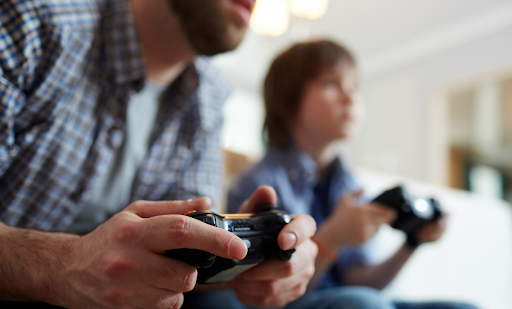
Within the ever-evolving landscape of gaming, the game controller has remained a fundamental component, continuously adapting to new advancements in technology and player preferences. As gaming systems have progressed from simple setups to complex, high-performance machines, peripherals like the Razer game controller have become pivotal in enhancing user experience, offering precision, comfort, and functionality. The history of the game controller is not just a tale of technological improvement but also a narrative about the changing ways in which users interact with virtual environments.
A Brief History of Game Controllers
Game controllers have undergone significant transformations since their inception. The first game controller, developed for the Magnavox Odyssey in the early 1970s, was a rudimentary device with simple knobs. However, as games became more sophisticated, there was a clear need for controllers that could offer more nuanced inputs.
The late 20th century saw the emergence of controllers that featured a more comprehensive layout, with the introduction of the D-pad by Nintendo for the NES, setting a new standard for directional input. Over the years, buttons proliferated and analogue sticks began replacing the D-pad for greater accuracy, reflective of the gaming community’s demands for more complex and engaging experiences.
The Anatomy of a Modern Game Controller
A contemporary game controller is a marvel of ergonomic and technological design. Typically, it combines several different input methods—such as buttons, triggers, joysticks, and D-pads—to facilitate a wide array of gameplay actions. This evolution has been driven by innovations in gaming software, requiring controllers to offer an ever-expanding range of functionalities. Modern controllers often come equipped with motion sensors, touchpads, and even adaptive triggers that can simulate different levels of force feedback, enriching the tactile experience of gaming.
The Role of Ergonomics in Controller Design
The design of game controllers is increasingly centred around ergonomics, reflecting a shift in focus towards user comfort and health. As gaming sessions can extend over several hours, the risk of repetitive strain injuries has necessitated designs that align with natural hand movements and positions. Controller manufacturers now prioritise contouring, weight distribution, and button placement to mitigate fatigue and maximise comfort.
In recent years, controllers have also become more inclusive, with customisable options that allow users with disabilities to tailor the device to their requirements, thereby broadening accessibility in the gaming community.
Advancements in Connectivity
Originally, game controllers relied on wired connections, limiting player movement and convenience. However, the transition to wireless technology marked a major step forward. Modern controllers use Bluetooth or proprietary wireless technologies to allow players more freedom and flexibility. The benefits are twofold: not only does this enable ease of use across different devices and platforms, but it also removes the clutter of cables, streamlining the gaming setup.
By offering seamless connectivity with minimal input lag, these controllers enhance performance, which is critical in competitive gaming scenarios where milliseconds can make the difference between victory and defeat.
The Impact of Haptic Feedback
A standout advancement in game controller technology is the use of haptic feedback. By providing tactile feedback to the user’s hands, haptics can simulate the sensation of actions taking place in-game, offering an added layer of immersion. Whether it’s vibrating when a character is in danger or providing resistance when using an in-game tool, haptic feedback has transformed the way players engage with virtual worlds.
As these systems continue to evolve, developers are constantly exploring new ways to integrate haptic responses within gameplay, striving to create more authentic and responsive interactions.
Customisation and Personalisation
Today’s gaming market sees customisation as a key feature for game controllers, offering players the ability to tailor devices to their individual playstyles. Many manufacturers provide customisable components, such as interchangeable thumbsticks, D-pads, and rear paddles, allowing enhancements in both aesthetics and gameplay efficiency.
This trend is largely a response to the competitive sector, where eSports professionals and enthusiasts demand equipment that they can finely tune to their specifications. Such personalisation not only impacts performance but also provides a medium for players to express personal identity within the gaming world.
Cross-Platform Compatibility
As gaming shifts towards cross-platform experiences, controllers are becoming increasingly adaptable. A notable shift is the effort by manufacturers to produce devices that are compatible across different gaming systems, including consoles, PCs, and even mobile devices. This universal approach reflects the contemporary gaming landscape, where players often transition seamlessly between various platforms.
By embracing cross-platform compatibility, manufacturers are acknowledging the diversified nature of modern gaming and meeting the diverse needs of the global gaming community.
Future Directions: The Intersection of Virtual Reality and Game Controllers
Looking ahead, the integration of virtual reality (VR) and augmented reality (AR) presents exciting possibilities for game controller technology. As VR and AR continue to gain popularity, there is a growing focus on developing controllers that can accurately capture motion in a 3D space, allowing for more intuitive and immersive experiences.
Innovations like these, while still in their nascent stages, promise to revolutionise how players interact with virtual environments, moving beyond traditional input methods and offering a deeper sense of presence in the gaming world.
Conclusion
The evolution of the game controller is a testament to both the rapid pace of technological advancement and the shifting needs and desires of players. It reflects an ongoing dialogue between hardware capability and software creativity, ensuring that controllers remain integral to the gaming experience. As technology continues to advance, the promise of virtual and augmented reality, haptic integration, and universal compatibility will guide the future trajectory of these indispensable devices.
