

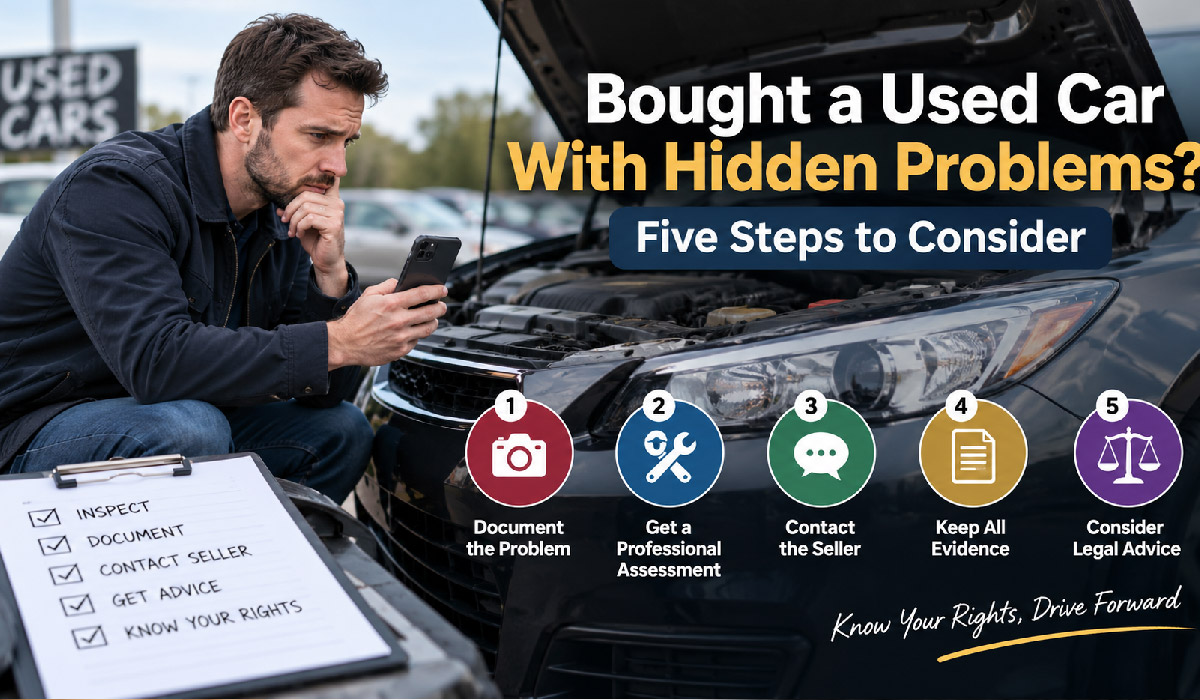
Buying a used car always involves some degree of uncertainty. A vehicle may have normal signs of use, but discovering a significant problem shortly after the purchase can raise very different questions.
If the problem was not expected at the time of purchase, the buyer may need to establish what happened, document the condition of the vehicle and communicate with the seller. The following five steps can help you organise the situation and protect your position.
1. Stop and Document the Problem
Start by documenting the problem as soon as you become aware of it.
Depending on the circumstances, this may include:
- Warning lights on the dashboard
- Unusual sounds or behaviour
- Visible damage or defects
- Photographs or videos showing the problem
- When the problem first appeared
- Any circumstances in which the problem occurs
Avoid relying only on memory. A clear record of what happened and when it happened can become important if the disagreement develops into a dispute.
2. Obtain a Professional Assessment
A technical assessment can help establish what is actually wrong with the vehicle.
A workshop may be able to identify the technical problem and provide information about the required repairs or their estimated cost.
Keep any workshop reports, diagnostic information, photographs and other technical documentation. This evidence can be useful when explaining the problem to the seller and assessing the situation further.
3. Contact the Seller and Reklamera Bilköp
If you believe there is a problem with the vehicle, communicate with the seller clearly and keep evidence of that communication.
A buyer considering reklamera bilköp should explain what problem has been discovered and provide relevant supporting information where appropriate.
Written communication can make it easier to establish what was reported, when it was reported and how the seller responded.
Keep copies of emails, messages and other correspondence relating to the complaint.
4. Preserve All Relevant Evidence
Do not discard documents or information connected with the purchase.
Useful material may include:
- The vehicle advertisement
- Purchase agreement and other purchase documents
- Messages and emails with the seller
- Photographs and videos
- Workshop reports
- Diagnostic information
- Repair estimates
- The seller’s response to the complaint
The advertisement can also be relevant because information provided before the purchase may form part of the circumstances surrounding the transaction.
Keeping the evidence together can make it easier to understand the dispute and determine what happened.
5. Consider Legal Advice Before Taking Major Steps
If the seller rejects responsibility or the parties cannot agree on how the problem should be handled, legal advice may be useful.
A jurist bilköp can review the available documentation and help assess the legal issues arising from the purchase and the dispute.
Before making major decisions, it can be useful to understand the possible consequences of the available options and the evidence supporting your position.
Could You Häva Bilköp?
In more serious cases, the buyer may also want to investigate whether it is possible to häva bilköp. Whether cancellation of the purchase is an available option depends on the circumstances of the individual case. The seriousness of the problem, the available evidence and the circumstances surrounding the purchase may all be relevant.
For this reason, it is important not to assume that every defect automatically gives the buyer the right to cancel the purchase.
What If the Seller Rejects the Complaint?
A seller may disagree with the buyer’s assessment of the problem or reject responsibility.
If this happens, keep the seller’s response together with the other evidence. The dispute may then require a closer assessment of the purchase documentation, the technical evidence and the parties’ communication.
If the disagreement cannot be resolved directly, legal advice can help clarify the possible next steps.
Keep the Focus on Evidence
When a used-car purchase develops into a dispute, the question is not simply whether the buyer is dissatisfied with the vehicle.
It is important to establish what was purchased, what was represented or agreed, what problem was discovered and what can be demonstrated through the available evidence.
A structured approach can make it easier to assess the situation and communicate effectively with the seller.
Legal Advice for Used-Car Purchase Disputes
Problems discovered after buying a used car can become complicated when the buyer and seller disagree about responsibility or the appropriate solution.
Documenting the problem, obtaining technical evidence, communicating with the seller and preserving the relevant documents can help establish the circumstances of the dispute.
If the disagreement becomes more serious, a lawyer can assess the available material and explain the legal options based on the individual circumstances.
You May Also Read: Can Autoimmune Conditions Affect Dental Implant Success?
