

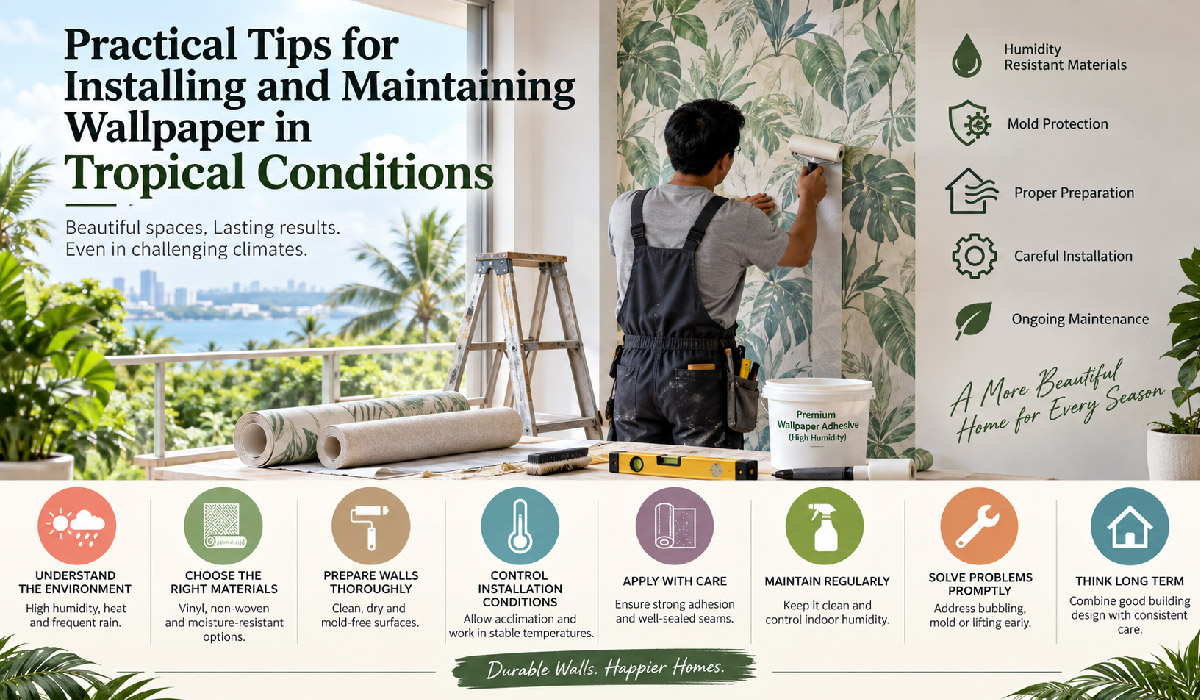
Tropical climates present distinct challenges for interior finishes, particularly wallpaper. High humidity, elevated temperatures, and frequent rainfall create conditions that can compromise adhesion, encourage mold growth, and accelerate material degradation. Successful installation and long-term performance therefore require careful material selection, thorough surface preparation, precise application techniques, and consistent upkeep. The following guidance outlines practical measures that address these environmental pressures while supporting durable results.
Understanding the Environmental Pressures
Humidity levels in tropical regions often remain elevated throughout the year, sometimes exceeding 70 or 80 percent for extended periods. Moisture in the air penetrates porous surfaces and can weaken the bond between wallpaper and wall. Heat compounds the problem by causing expansion and contraction of both the wall substrate and the wallpaper itself, which may lead to seams lifting or edges curling. Condensation forms readily on cooler interior surfaces when outdoor temperatures drop slightly at night, further increasing the risk of water accumulation behind the covering.
These factors also favor microbial growth. Mold and mildew thrive in warm, damp environments and can stain or damage wallpaper if moisture becomes trapped. Insect activity, though less common, occasionally contributes to surface deterioration in certain locations. Any approach to wallpapering in such settings must therefore prioritize moisture resistance, stable adhesion, and adequate ventilation.
Selecting Suitable Materials
Not every wallpaper performs equally well under tropical conditions. Vinyl and vinyl-coated papers generally offer superior resistance to moisture compared with traditional paper-based products. Many modern vinyl options include antimicrobial treatments that inhibit mold formation. Non-woven wallpapers with synthetic fibers also provide dimensional stability and easier handling in humid air. In practice, selections informed by wallpaper Singapore expertise frequently emphasize these moisture-resistant characteristics for lasting performance in similar climates.
Adhesives merit equal attention. Standard pastes may soften or lose strength when exposed to persistent dampness. Formulations specifically rated for high-humidity environments, often containing antifungal additives, maintain their grip more reliably. Some manufacturers produce ready-mixed adhesives designed for tropical or coastal applications; these should be preferred over generic alternatives.
Pattern and color choices influence practical performance as well. Darker or denser designs can better conceal minor imperfections that develop over time, while lighter tones may highlight any discoloration caused by residual moisture. Textured surfaces can help mask small irregularities that arise from substrate movement.
Preparing Walls Thoroughly
Surface preparation determines much of the eventual outcome. Walls must be clean, dry, and stable before any covering is applied. Residual dust, grease, or previous coatings interfere with adhesion and create weak points where moisture can later penetrate. Thorough cleaning with a mild detergent solution, followed by complete drying, forms the necessary starting point.
Any existing mold or mildew requires treatment with appropriate fungicidal solutions before further work proceeds. Cracks, holes, or uneven areas should be filled and sanded smooth. In older buildings common to many tropical zones, plaster or concrete substrates may need sealing with a moisture-resistant primer. Primers formulated for damp conditions create a barrier that limits vapor transmission and improves the bond of subsequent adhesive layers.
Moisture content within the wall itself deserves measurement when possible. Readings above recommended thresholds indicate the need for additional drying time or improved ventilation before installation begins. Ignoring elevated moisture levels almost invariably leads to premature failure.
Acclimating Materials and Controlling Conditions During Installation
Wallpaper and adhesives benefit from acclimation to the room environment. Leaving rolls unopened in the installation space for at least 24 hours allows them to adjust to local temperature and humidity, reducing the likelihood of later expansion or shrinkage. Work should ideally take place during periods of relatively lower humidity, such as mid-morning after overnight moisture has dissipated, and when air conditioning or fans can stabilize indoor conditions.
Temperature extremes should be avoided. Direct sunlight heating a wall surface can cause adhesive to set too rapidly or unevenly. Shading windows and maintaining steady indoor temperatures support more predictable results. Adequate airflow without strong drafts helps adhesive dry at a controlled rate while preventing condensation.
Application Techniques Adapted to Humidity
Careful hanging technique minimizes common tropical failures. Pasting methods vary by product, yet thorough and even coverage remains essential. Excess paste must be wiped promptly from seams and surfaces, as residual adhesive can attract moisture and dirt. Seams require firm but careful rolling to ensure complete contact without squeezing out too much adhesive.
Butt joints generally perform better than overlapping edges in humid climates, provided the wallpaper has low expansion characteristics. Vertical alignment should be checked frequently, because slight shifts can become noticeable once materials settle. Around windows, doors, and corners, precise trimming prevents edges from lifting under the influence of moisture or temperature change.
In particularly challenging spaces such as bathrooms or kitchens within tropical homes, additional sealing of edges with a clear, moisture-resistant varnish or specialized edge sealer can provide extra protection. These measures are especially useful where steam or splash exposure is frequent.
Ongoing Maintenance Practices
Once installed, wallpaper requires regular attention to remain serviceable. Surface cleaning with a soft, slightly damp cloth removes dust and airborne contaminants that accumulate more rapidly in humid air. Harsh chemicals or excessive water should be avoided, as they can damage the surface or force moisture behind the covering.
Humidity control inside the building contributes substantially to longevity. Dehumidifiers, air conditioning systems, or improved cross-ventilation help keep indoor moisture within acceptable ranges. Monitoring for early signs of trouble, such as soft spots, discoloration, or lifting edges, allows prompt intervention before larger areas are affected.
Inspection of seams and edges every few months proves worthwhile. Minor lifting can often be corrected by reapplying a small amount of suitable adhesive and pressing the material firmly back into place. Larger areas of detachment usually signal underlying moisture issues that need resolution before reapplication.
Addressing Common Problems
Bubbling or blistering frequently results from trapped air or residual wall moisture. Small bubbles may be carefully pierced and pressed flat after adhesive is introduced behind them. Extensive bubbling often indicates the need for removal and reinstallation after the substrate has been properly dried and primed.
Mold appearance demands immediate action. Affected sections should be cleaned with an appropriate fungicidal agent, and the source of moisture identified and corrected. In severe cases, replacement of the damaged wallpaper becomes necessary, accompanied by thorough treatment of the wall.
Seam failure remains one of the most frequent complaints in tropical installations. Prevention through correct adhesive selection and careful application yields better outcomes than later repair. When seams do open, cleaning the area, applying fresh humidity-resistant adhesive, and allowing adequate curing time under controlled conditions usually restore integrity.
Long-Term Considerations for Durability
Buildings in tropical regions benefit from integrated approaches that combine material choices with architectural features. Good roof overhangs, effective drainage, and wall designs that limit direct rain exposure reduce the moisture load reaching interior surfaces. Interior finishes then face less extreme conditions and perform more reliably.
Periodic professional assessment can identify developing issues that homeowners might overlook. In commercial or high-use residential settings, scheduled maintenance programs help preserve appearance and structural integrity of the covering over many years.
Wallpaper remains a practical and attractive option in tropical environments when these environmental realities are respected. Attention to material suitability, rigorous preparation, controlled installation, and consistent care produces installations that withstand heat and humidity while retaining their intended appearance. The effort invested at each stage pays dividends through reduced repair frequency and extended service life.
You May Also Read: Toopermagazine
