

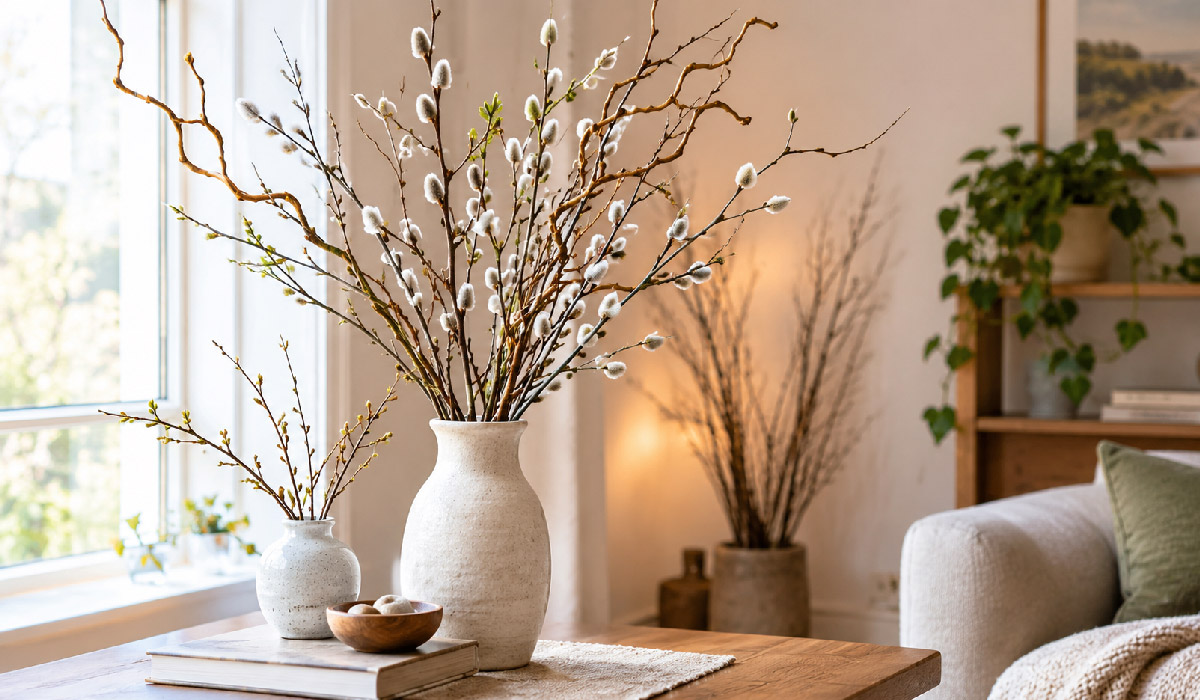
Pyntekvister is a simple decorating idea built around one of the most ordinary things found in nature: branches and twigs. Instead of filling a room with artificial decorations, pyntekvister uses the natural shape, texture, and movement of branches to add character. They may be fresh, dried, bare, budding, painted, or preserved, depending on the season and desired look.
The idea works particularly well in homes where natural materials and uncluttered spaces are important. A few carefully chosen branches can add height to an empty corner, create interest on a table, or soften a room filled with straight furniture lines. No complicated arrangement is necessary.
This guide explains what pyntekvister means, its Scandinavian connection, suitable branch varieties, preparation, arrangement, seasonal styling, care, safety, sustainability, and common mistakes. It provides practical information for anyone interested in using decorative branches at home.
What Is Pyntekvister?
Pyntekvister generally refers to decorative twigs or branches arranged indoors for their visual appearance. Instead of being valued for fruit or a large flower display, the branches themselves become the decoration. Their curves, forks, bark, buds, leaves, and natural imperfections give an arrangement its character. They are commonly placed in glass, ceramic, metal, or other stable containers.
Pyntekvister can take many forms. Some people prefer thin, delicate twigs, while others choose one large sculptural branch. Fresh branches can bring greenery or developing buds indoors. Dried branches provide a more permanent display and require very little ongoing care.
The main idea is simplicity. A branch does not need to be perfectly straight or symmetrical to look attractive. In fact, unusual bends and irregular shapes often make the most interesting arrangements. This makes pyntekvister an accessible form of natural home decoration.
Pyntekvister Meaning and Word Origin
The meaning of pyntekvister becomes easier to understand by looking at Scandinavian vocabulary. In Norwegian and Danish, words related to pynte refer to decorating or making something look attractive, while kvist refers to a twig or branch. In practical English, pyntekvister can therefore be understood as decorative twigs or ornamental branches.
The term describes the object and its purpose rather than one strict decorating method. There is no requirement for pyntekvister to use a particular tree, vase, color, or arrangement. A bare branch displayed for its form can fit the idea just as well as several budding stems arranged for spring.
It is also useful to separate the word’s practical meaning from claims sometimes attached to it online. Pyntekvister should not automatically be described as an ancient tradition with fixed symbolism unless reliable historical evidence supports those claims. Its clearest meaning remains decorative branches or twigs.
The Scandinavian Connection Behind Pyntekvister
Pyntekvister fits naturally with many familiar qualities of Scandinavian interior design. Nordic-inspired spaces often use natural materials, practical objects, restrained decoration, comfortable surroundings, and enough open space for individual objects to be noticed. Branches suit this approach because they can create visual interest without filling a room with numerous accessories.
Nature is particularly useful as a design influence because it is never completely uniform. The grain of wood, the irregular line of a twig, and the changing appearance of buds provide contrast with manufactured furniture. A simple branch can therefore soften a room dominated by walls, tables, cabinets, and other straight lines.
Seasonal changes can also influence branch arrangements. Bare winter stems, spring buds, leafy summer cuttings, and dried autumn material create different moods without requiring a complete redesign. Pyntekvister provides an easy way to bring some of those outdoor changes into an indoor environment.
Why Decorative Branches Work Well in Home Decor
One of the main advantages of decorative branches is their ability to add height without making a space feel heavy. A tall branch arrangement can fill an unused corner while allowing light and space to remain visible between the stems. This is particularly useful in smaller rooms where large furniture or dense decorations could make the area feel crowded.
Branches also introduce organic lines. Most rooms contain many straight horizontal and vertical edges, including doors, shelves, tables, windows, and cabinets. The uneven curve of a branch breaks up these repeated lines. Natural bark also adds texture without requiring strong colors or complicated patterns.
Light creates another interesting effect. Thin branches can cast changing shadows throughout the day, giving an otherwise plain wall subtle movement. Because dried branches can remain attractive for a long time, they also offer an alternative to fresh flower arrangements that require more frequent replacement.
Best Types of Branches for Pyntekvister
Many tree and shrub branches can work for pyntekvister, but their visual effects are different. Birch is often chosen for its recognizable bark and fine branching pattern. Willow offers softer lines, while curly or corkscrew willow has dramatic twists that can make even one stem look sculptural. Pussy willow is especially attractive when its soft catkins appear.
Hazel is another interesting option because its irregular forms can create a rustic appearance. Dogwood can provide colorful stems, depending on the variety and season. Cherry and apple branches may also be attractive when collected at an appropriate stage because developing buds can sometimes open after the branches are brought indoors and placed in suitable conditions.
Species is not the only consideration. The overall shape is often more important. Look for balanced forks, interesting curves, healthy bark, and a size that suits the intended location. A beautiful branch should complement the room rather than overwhelm the vase or surrounding furniture.
Fresh, Dried, Preserved, and Painted Pyntekvister
Fresh branches are useful when you want natural color, leaves, buds, or flowers. Depending on the species and cutting stage, some stems placed in water may continue developing after coming indoors. Fresh branches change over time, so the arrangement may look different from one week to the next. They also require more attention than completely dried material.
Dried pyntekvister offers a different experience. Once properly dried, branches can remain decorative for a long period and usually need little more than occasional cleaning. Their bare forms work especially well in minimalist, rustic, and winter-inspired interiors. Preserved botanical material may provide another option when a longer-lasting natural appearance is desired.
Painting changes the branches into a more decorative craft element. White can create a restrained appearance, while metallic or darker finishes can make branches more noticeable. Any coating used indoors should be suitable for the material and applied according to its safety instructions.
How to Choose the Right Pyntekvister
Choosing good pyntekvister begins with shape rather than perfection. Look at how the branch moves from its main stem into smaller sections. Curves, forks, unusual angles, and differences in thickness can create a stronger arrangement than completely straight pieces. Consider where the branch will be displayed before deciding whether a delicate or substantial form is more suitable.
Scale is equally important. Small twigs can work well on shelves, desks, and dining tables, while taller branches are better suited to floor vases and open corners. The container needs enough weight and width to support the selected branches safely. Very large stems in a lightweight vase can easily become unstable.
Any natural material should also be inspected before entering the home. Look for insects, excessive moisture, damaged wood, rot, and visible mold. Avoid branches that appear unhealthy or badly decayed, especially when they will remain indoors for an extended period.
How to Prepare Branches for Indoor Decoration
Branches collected outdoors should be prepared before becoming indoor decorations. Begin by removing loose dirt, dead leaves, and unwanted material carefully. Examine the bark, joints, and small holes for signs of insects or deterioration. Wet branches should be handled according to whether you plan to keep them fresh or dry them for longer-term decorative use.
For fresh arrangements, make a clean cut near the bottom of each suitable stem before placing it in water. Remove material that would otherwise sit below the waterline and decay. If branches are intended for a dry display, allow them to dry properly in suitable conditions before placing them into storage or permanent arrangements.
Responsible collection is also important. Garden pruning leftovers and fallen branches can be useful sources. Do not cut branches from trees on private land without permission, and check applicable rules before removing natural material from parks, forests, reserves, or other managed public areas.
How to Arrange Pyntekvister in a Vase
A good pyntekvister arrangement usually begins with a suitable container. Tall branches need a vase with enough weight and a stable base to prevent tipping. The opening should also suit the number and thickness of the stems. Ceramic containers can provide visual weight, while clear glass can create a lighter appearance and reveal the lower parts of the branches.
Start with the branch that has the strongest or most interesting shape. Turn it slowly until its best side faces the room. Additional stems can then be positioned around it to create balance. Avoid forcing every branch into the same direction. Natural differences in height and angle often make the arrangement more convincing.
Space is an important part of the design. Packing too many branches together hides their individual forms. Leave enough distance between them for light to pass through and for each major curve or fork to remain visible.
Pyntekvister Styling Ideas for Different Interiors
Pyntekvister can suit more than Scandinavian interiors because the final appearance depends on the branches and container. In a minimalist room, one sculptural branch in a plain vase may be enough. Neutral ceramic vessels and fine birch-like branches can support a softer Scandinavian-inspired setting without introducing too many additional colors or decorative objects.
Rustic interiors can use branches with visible bark, knots, and irregular shapes. A textured pottery jug or other stable container can strengthen the natural character. Modern rooms may benefit from cleaner arrangements with dramatic curly willow or a carefully selected architectural branch that works almost like a piece of sculpture.
Placement changes the result as much as branch selection. Tall arrangements can fill empty corners or entry areas, while smaller pieces work on tables, shelves, and consoles. Always consider surrounding furniture, walking space, windows, and sightlines so branches do not become an obstruction.
Seasonal Pyntekvister Ideas Throughout the Year
One useful feature of pyntekvister is that the arrangement can change with the seasons. Spring is well suited to budding stems, pussy willow, and appropriate flowering branches. Watching buds gradually open indoors can become part of the display rather than requiring a finished arrangement from the first day. Keep expectations realistic because flowering success depends on species and conditions.
During summer, leafy branches can bring stronger greenery indoors. Autumn arrangements can shift toward bare stems, dried botanical material, seedheads, and natural textures. Instead of relying only on typical seasonal colors, focus on forms and materials that reflect what is naturally available at that time of year.
Winter works particularly well with bare branches because their structure becomes clearly visible after leaves disappear. Simple branches can be displayed alone or combined carefully with restrained seasonal ornaments, provided the arrangement remains stable and safely positioned.
Creative Ways to Decorate Pyntekvister
Branches do not always need to remain completely natural. Dried pyntekvister can become a base for simple creative projects using paint, lightweight ornaments, paper decorations, ribbons, dried flowers, or other small objects. The amount of decoration should depend on the branch strength and the room style rather than covering every available twig.
Another approach is to use a strong branch horizontally as part of a decorative display. When securely installed, lightweight items such as small paper pieces or dried botanical elements can hang from it. Secure mounting is essential because an unsupported branch can fall and cause damage or injury.
Safety becomes more important when extra decorations are added. Dry wood should be kept away from open flames, candles, fireplaces, hot lamps, and other heat sources. Electrical lights should be suitable for their intended use. Heavy ornaments should never be attached to thin or brittle twigs.
How to Care for Pyntekvister
Care depends mainly on whether the branches are fresh or dry. Fresh stems kept in water need a clean container and regular observation. Replace dirty water and remove material that begins to rot. Some species may develop leaves, buds, flowers, or even roots, while others will simply decline over time. Temperature and light can also affect how quickly they change.
Dried pyntekvister requires much less attention. Dust can gradually collect on bark and small twigs, so gentle cleaning helps maintain their appearance. Handle fine branches carefully because they may become brittle. Excessive moisture should be avoided because damp storage or display conditions can encourage deterioration or mold.
Painted branches should also remain dry unless the coating is specifically designed for other conditions. If arrangements are stored between seasons, keep them somewhere clean and dry where they will not be crushed by heavier objects.
How Long Does Pyntekvister Last?
There is no single lifespan for pyntekvister because fresh and dried branches behave differently. A fresh branch is still plant material undergoing biological changes. Its useful decorative period depends on the species, cutting time, indoor temperature, water conditions, and whether it produces buds, leaves, flowers, or roots after being placed inside.
Dried branches can last considerably longer because they do not depend on water to maintain their decorative form. When fully dry and protected from moisture, pests, rough handling, and excessive dust, they may remain usable for months or even years. Some people reuse the same branches for different seasonal arrangements by changing the container or surrounding decorations.
Appearance should guide replacement. Discard branches if they develop mold, severe decay, unwanted pests, unpleasant odors, or structural damage that makes them unsafe or unattractive for indoor display.
Sustainable and Responsible Pyntekvister Collection
Pyntekvister can be an inexpensive form of decoration, particularly when useful material already comes from garden maintenance. Instead of immediately throwing away every attractive pruning offcut, suitable branches can be inspected and reused indoors. Naturally fallen material may also be useful where collection is permitted and the wood remains in good condition.
Responsible collection does not mean removing whatever looks attractive from any outdoor space. Trees on private property belong to the landowner, while parks, forests, nature reserves, and other public areas may have specific rules about removing branches or other natural materials. Those rules should always be respected.
When pruning your own plants, use appropriate techniques for the particular species rather than cutting branches only for decoration. Reusing dried branches for multiple displays can also reduce waste. A single arrangement can be refreshed seasonally without replacing every component each time.
Common Pyntekvister Mistakes to Avoid
One common mistake is choosing branches before considering the vase. A large, top-heavy branch in a narrow lightweight container can fall easily. Another problem is overcrowding. Pyntekvister depends heavily on visible branch shapes and open space, so adding more stems does not automatically produce a more attractive arrangement.
Outdoor branches should never be brought directly inside without inspection. Dirt, insects, moisture, damaged bark, mold, or decaying material can create unnecessary problems. Similarly, branches intended for long-term dry arrangements should not be stored while damp. Correct preparation makes natural decoration easier to maintain.
Placement can also cause difficulties. Avoid putting sharp branches where people regularly walk or where children can pull them down. Dry twigs should stay away from flames and strong heat. If pets can reach an arrangement, check the specific plant species for possible toxicity rather than assuming every decorative branch is harmless.
Is Pyntekvister Suitable for Every Home?
Pyntekvister is flexible enough for many homes because arrangements can be adjusted to available space. A small apartment may need only one interesting twig in a narrow container, while a large living room can accommodate taller branches in a floor vase. Bedrooms, home offices, entrances, studios, dining areas, and living spaces can all use branches when placement is practical.
The main limitations involve safety and maintenance. Tall arrangements should not block doorways, narrow passages, or frequently used surfaces. Families with small children may need heavier containers or locations that cannot easily be reached. Pet owners should research the exact tree or shrub species before bringing cuttings indoors because plant safety varies considerably.
The best arrangement is therefore not necessarily the largest or most elaborate. Pyntekvister works when its size, material, location, and stability fit naturally with the people and animals using the room.
Final Thoughts
Pyntekvister shows how an ordinary natural object can become useful home decoration when attention is given to shape, scale, texture, and placement. Decorative branches can add height and organic movement without requiring a room to be filled with accessories. Fresh, dried, budding, bare, or carefully painted stems can all create very different results from the same basic idea.
The most effective arrangements are often simple. A stable vase, one or several interesting branches, and enough empty space around them may be all that is needed. Seasonal changes can provide new materials and ideas throughout the year without requiring expensive decorations or complicated projects.
At the same time, natural materials should be collected responsibly, prepared carefully, and positioned safely. With those basic considerations, pyntekvister can offer a practical and adaptable way to bring natural forms indoors while keeping a space calm, personal, and visually balanced.
Frequently Asked Questions
What does Pyntekvister mean?
Pyntekvister refers to decorative twigs or branches used to add natural texture and character to indoor spaces. The term is connected with Scandinavian words relating to decoration and branches.
What branches are best for Pyntekvister?
Birch, willow, curly willow, pussy willow, hazel, dogwood, cherry, and apple can all work well. The best choice depends on the branch’s shape, condition, size, texture, and intended display.
Does Pyntekvister need water?
Fresh branches usually benefit from water when you want to maintain freshness or encourage buds to develop. Completely dried branches do not need water and should instead be kept in dry conditions.
How long can Pyntekvister last indoors?
Fresh branches may remain attractive for a limited period depending on the species and conditions. Properly dried branches can potentially remain usable for months or years when protected from moisture, pests, and damage.
Can I make Pyntekvister from branches in my garden?
Yes. Suitable branches left after responsible pruning can make attractive decorations. Inspect them for insects, mold, rot, and damage before bringing them indoors, and prepare them properly for fresh or dried use.
You May Also Read: Letflix Review: Powerful Guide to Safe Streaming
