

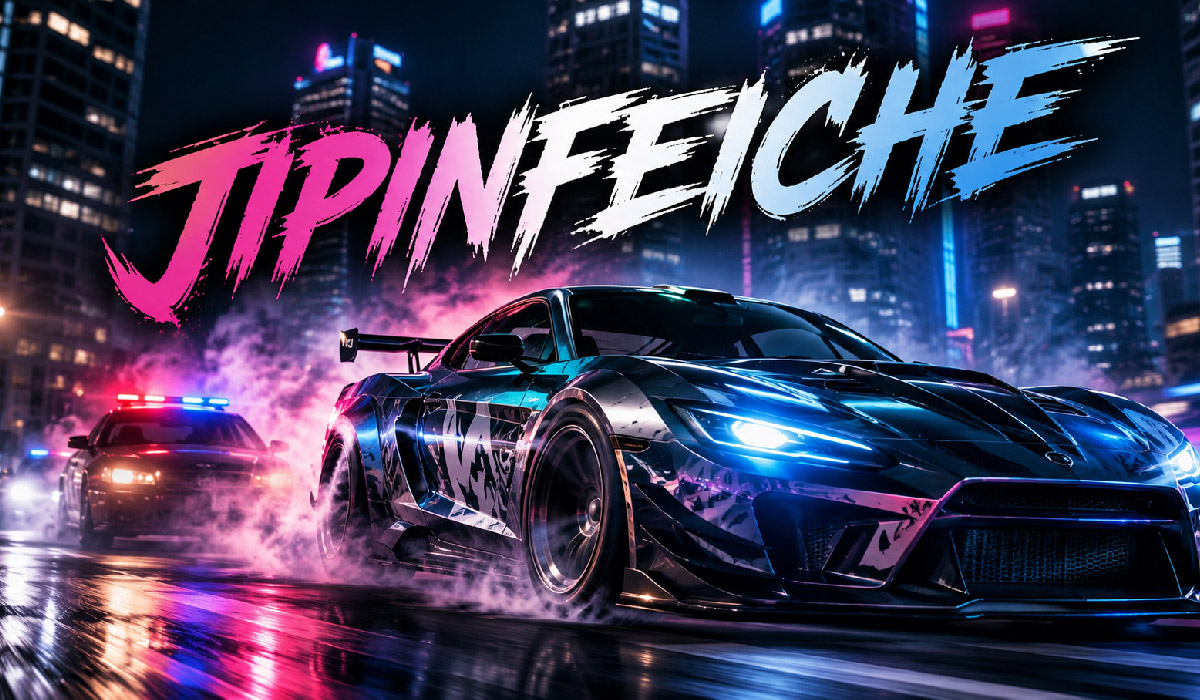
Jipinfeiche is a term that many people find while searching for racing games, cars, or the Need for Speed series. The Chinese characters are written as 极品飞车, and the term is closely connected with Electronic Arts’ famous Need for Speed racing franchise.
In mainland China, 极品飞车 is the name commonly used for the Need for Speed game series. EA itself uses the Chinese title on its Chinese-language Need for Speed pages, where games such as Need for Speed Heat, Hot Pursuit Remastered, Payback, Rivals, and Unbound appear as part of the same franchise.
This is important because some English-language websites give Jipinfeiche much broader meanings. They may describe it as a philosophy, lifestyle, or general word for luxury objects. Those explanations can create confusion. In gaming use, the clearest meaning of Jipinfeiche is its connection to Need for Speed.
What Does Jipinfeiche Mean?
Jipinfeiche is the romanized form of the Chinese name 极品飞车. Understanding the individual characters can help explain why the title works well for a racing series, although Chinese titles should not always be translated character by character.
The first part, 极品 (jípǐn), can suggest something excellent, top-grade, or of very high quality. The second part, 飞车 (fēichē), relates to a fast-moving vehicle or speeding car. Together, the expression creates a strong feeling of high-speed driving and exciting cars.
For this reason, translations such as “top-quality racing car,” “ultimate speed car,” or similar phrases may sometimes appear online. They should be treated as rough explanations rather than one fixed official English translation. The important point is that 极品飞车 is used as the Chinese title associated with Need for Speed, while Need for Speed remains the franchise’s English name.
Is Jipinfeiche the Chinese Name for Need for Speed?
Yes. Jipinfeiche, written as 极品飞车, is widely used for Need for Speed in mainland Chinese gaming material. It does not refer to an unrelated racing franchise hiding behind a different English name.
Electronic Arts’ Simplified Chinese Need for Speed website uses 极品飞车 directly when presenting the franchise and its games. Chinese-language references also identify the 极品飞车 series with the English name Need for Speed and list the games under the same franchise.
The confusion usually happens when someone sees the romanized spelling “Jipinfeiche” without seeing the Chinese characters. To an English-speaking reader, it can look like the title of a separate Asian game. In reality, someone searching “Jipinfeiche game” is often searching for Need for Speed information, downloads, gameplay videos, car lists, tuning guides, or discussions published for Chinese-speaking players.
Where Did the Name Jipinfeiche Come From?
Video games released internationally often receive translated or localized titles. A direct word-for-word translation may sound unnatural, so publishers commonly choose names that fit the language and communicate the feeling of the original product.
That helps explain the role of 极品飞车. Instead of simply copying the English words “Need for Speed,” the Chinese name creates an image connected with impressive cars and fast driving. It fits the identity that the racing series developed over many years. Today, the title is strongly recognizable among mainland Chinese players.
Regional naming can also be different within the Chinese-speaking world. Titles used in mainland China are not always identical to those used in Taiwan or Hong Kong. This is another reason readers should avoid assuming that one literal translation explains every use of Jipinfeiche. For search purposes, the most useful understanding is Jipinfeiche = 极品飞车 = Need for Speed in mainland Chinese usage.
The History of Jipinfeiche and Need for Speed
Need for Speed has a long history that reaches back to the 1990s. The first game, The Need for Speed, originally appeared in 1994. It was developed by EA Canada and published by Electronic Arts, with later versions reaching additional platforms.
The early series placed strong attention on fast and desirable cars. Over time, however, Need for Speed changed many times. Some games focused on exotic vehicles and scenic roads, while others moved toward street racing, car tuning, police pursuits, open cities, multiplayer competition, and cinematic stories.
Different studios have also worked on the franchise during its history. This has allowed individual releases to have noticeably different styles. Some became known for customization, while others focused heavily on police action or open-world racing. Despite these changes, speed, cars, competition, and accessible driving have remained central parts of the experience, helping the Jipinfeiche name stay familiar across generations.
How Jipinfeiche Gameplay Works
There is no single gameplay system shared by every Jipinfeiche title because Need for Speed has changed considerably over the years. In general, however, the franchise is best known for exciting racing that is easier to enter than a highly technical motorsport simulator.
Players usually choose a vehicle and compete in different racing events. Successful driving requires more than holding the accelerator. Braking at the correct moment, taking clean corners, avoiding crashes, controlling the car at high speed, and finding good opportunities to pass opponents can make a major difference.
Different Need for Speed games may also introduce drifting, nitrous boosts, police pursuits, off-road driving, special abilities, or other systems. The exact mechanics depend on the title. This variety is one reason the franchise has attracted such a broad audience. Beginners can often understand the basic controls quickly, while experienced players can spend much longer improving routes, tuning cars, and mastering individual events.
Cars and Vehicle Variety in Jipinfeiche
Cars are at the center of the Jipinfeiche experience. Throughout the history of Need for Speed, players have been able to drive many types of vehicles, although the exact selection changes from one game to another.
Depending on the title, the vehicle list may include compact performance cars, Japanese tuners, European sports cars, American muscle cars, luxury models, exotic cars, and powerful supercars. This allows players to choose vehicles based on both performance and personal taste rather than always selecting the most expensive car.
Vehicles can also behave differently. One model may offer strong acceleration, another may feel easier through tight corners, while a powerful car may be more useful when a race contains long, fast roads. Because every Need for Speed game uses its own handling and progression systems, there is no single “best Jipinfeiche car.” The better choice usually depends on the specific game, event, upgrades, and the player’s preferred driving style.
Vehicle Customization and Performance Upgrades
Customization became one of the most recognizable parts of many Need for Speed games. Instead of giving players only a collection of standard vehicles, several releases allow them to build cars with a much more personal appearance.
Depending on the game, visual changes can include paint, wraps, decals, wheels, spoilers, body parts, ride height, and other modifications. Modern titles can offer detailed customization, while older entries have their own systems and limitations. EA continues to highlight customizable cars as part of current Need for Speed content.
Performance upgrades are equally important. Players may be able to improve acceleration, top speed, brakes, grip, suspension, tires, or other mechanical areas. A useful setup is not always the one with the highest possible power. A fast vehicle that is difficult to control can lose time in corners. Good tuning is therefore often about creating a balanced car that works well for the event and the person driving it.
Racing Modes and Challenges
Jipinfeiche games have offered many kinds of racing events during the franchise’s long history. This variety prevents every competition from feeling exactly the same and encourages players to develop different driving skills.
Circuit races normally involve completing laps around a route, while sprint-style events may send players from one point to another. Other Need for Speed titles have included drift competitions, drag racing, time-based challenges, elimination events, speed-focused activities, and special races. Not every mode appears in every game, so players should check the specific title they are playing.
Different events can also change which vehicle works best. A car with huge top speed may perform well on a long highway but feel less useful on a route filled with sharp corners. Drift events demand a different approach from traditional races. This variation encourages players to build several vehicles, learn different roads, and adapt their driving instead of relying on one strategy throughout the entire game.
Police Chases in Jipinfeiche Games
Police pursuits are one of the features most strongly linked with several Need for Speed titles. Rather than racing only against other drivers, players may have to escape police vehicles while maintaining speed and avoiding traffic or obstacles.
The importance of police changes between individual games. Some titles make pursuits a major part of progression, while others use them less heavily. Certain entries even let players take the role of police. EA describes Hot Pursuit Remastered, for example, around the excitement of pursuing or escaping while driving powerful performance cars.
Police chases add another layer to normal racing because reaching high speed is not always enough. Players may need to select routes carefully, avoid being trapped, recover after collisions, and decide when taking a risky shortcut is worthwhile. This combination of racing and pursuit action helped give Need for Speed an identity different from racing games focused mainly on organized motorsport.
Open-World Driving, Maps, and Environments
Many modern Jipinfeiche games use large environments where players can drive between events instead of choosing every race from a simple menu. This approach gives players time to explore, test cars, find activities, and become familiar with the roads.
The environments differ greatly across Need for Speed titles. Players may encounter crowded city streets, wide highways, industrial districts, coastal roads, mountain areas, tunnels, bridges, countryside routes, and other locations. The layout of these roads affects how a vehicle performs and how a player approaches a race.
Open-world design can also make the environment useful beyond formal events. Simply driving around allows players to practice braking, test a new upgrade, learn shortcuts, or understand how a car behaves at different speeds. However, not every game in the series uses the same open-world structure. Need for Speed has repeatedly changed its design, so the maps and freedom available depend strongly on which Jipinfeiche title a person chooses.
Online Racing and the Jipinfeiche Community
Multiplayer racing has become an important part of many Need for Speed releases. Racing against human opponents can feel very different from competing with computer-controlled drivers because real players make unexpected choices and use different strategies.
Online features vary by title and platform. They may allow players to race together, compare performance, join events, show customized vehicles, or participate in other shared activities. Older games may also have different levels of online support today, which is important for anyone returning to a classic release.
The wider Jipinfeiche community extends far beyond the games themselves. Fans discuss cars, tuning setups, racing techniques, favorite releases, soundtracks, modifications, and memorable moments through videos, forums, social platforms, and other gaming communities. Chinese-speaking fans also commonly use the name 极品飞车 when discussing the franchise. This continuing conversation helps older titles remain visible even when newer Need for Speed games have already been released.
Why Has Jipinfeiche Remained Popular?
One major reason for Jipinfeiche’s long life is that the series has never depended on only one feature. Fast driving may be its foundation, but cars, customization, police chases, progression, open environments, and multiplayer have all contributed to the overall experience.
Another reason is accessibility. Need for Speed generally aims to make driving exciting without demanding that every player understand complicated real-world racing systems. Someone can begin with basic controls and gradually improve. At the same time, experienced players can learn braking points, vehicle behavior, shortcuts, tuning choices, and better racing lines.
Nostalgia also matters. Players who discovered Need for Speed through earlier releases often remember particular cars, maps, music, races, and police pursuits. Newer releases attract another generation while older games continue to be discussed. Because the franchise has repeatedly changed its presentation while keeping cars and speed at its center, the Jipinfeiche name has remained recognizable for decades.
Jipinfeiche vs. Racing Simulators
Jipinfeiche is normally better understood as an entertainment-focused racing experience than as a strict professional driving simulator. That distinction helps new players understand what they should expect when choosing a Need for Speed title.
A serious racing simulator may place heavy attention on realistic tire behavior, track conditions, vehicle setup, fuel, braking physics, and other details inspired by real motorsport. Need for Speed usually takes a more accessible approach. Driving still requires skill, but entertainment, speed, dramatic action, customization, and visual excitement often receive greater attention.
This does not mean every Need for Speed game feels identical or completely unrealistic. In fact, the original 1994 game had a stronger interest in realistic vehicle behavior and was created with input connected to Road & Track. The franchise later explored many different styles. For most modern players, however, Jipinfeiche is best approached as an accessible racing series rather than a dedicated motorsport simulation platform.
Common Misunderstandings About Jipinfeiche
One common mistake is believing Jipinfeiche is a separate Chinese racing game. That is not correct in the usual gaming context. 极品飞车 is directly used for Electronic Arts’ Need for Speed franchise in mainland Chinese materials.
Another misleading claim is that Jipinfeiche is an established ancient philosophy based on speed, ambition, luxury, or personal success. Websites may use the racing name metaphorically, but that should not be confused with documented historical meaning. There is no good reason to present such descriptions as the main definition of the term.
It is also inaccurate to say that Jipinfeiche simply means any expensive or rare car. The individual characters can inspire loose translations involving quality and fast vehicles, but context matters. When people search for 极品飞车 in gaming discussions, the term normally points to Need for Speed. Recognizing that context prevents a literal translation from becoming an incorrect explanation.
Is Jipinfeiche Worth Playing Today?
Jipinfeiche can still be an interesting choice for anyone who enjoys fast racing, attractive cars, customization, street-racing themes, or police pursuits. However, choosing the right Need for Speed title matters because different releases offer noticeably different experiences.
Some players prefer older games because they enjoy their atmosphere, progression, maps, or memories associated with them. Others prefer newer releases for modern graphics, larger environments, newer cars, online functions, and more detailed customization. EA’s current Chinese franchise page continues to feature titles including Need for Speed Unbound, Heat, Payback, Rivals, and Hot Pursuit Remastered.
The best starting point therefore depends on what the player wants. Someone interested in police action may prefer a different entry from a person mainly interested in car customization. Instead of asking whether every Jipinfeiche game is worth playing, it is more useful to identify which Need for Speed experience best matches the player’s interests.
Tips for New Jipinfeiche Players
New Jipinfeiche players should begin by learning control rather than immediately chasing maximum speed. Braking before a difficult corner, steering smoothly, and accelerating cleanly when leaving a turn can save more time than simply installing a stronger engine.
It is also useful to test several vehicles. A car that looks impressive may not match a particular player’s driving style. Some people prefer stable handling, while others enjoy cars that require more careful control. Upgrades should also be selected with balance in mind. Improving braking, grip, and handling can sometimes be just as valuable as adding power.
Practice is the most reliable way to improve. Learning a route helps a player remember difficult corners, useful shortcuts, braking areas, and places where overtaking is safer. Crashes often destroy more time than slightly slower driving. As experience grows, players can become more aggressive while still keeping the vehicle under control and choosing upgrades suited to individual events.
Final Thoughts
Jipinfeiche is much easier to understand once its gaming context is clear. Written as 极品飞车, the name is closely associated with the Need for Speed franchise in mainland Chinese usage. It is not necessary to invent a hidden philosophy or separate game to explain the term.
Need for Speed itself has existed since 1994 and has changed considerably across its long history. Different games have explored high-performance cars, street racing, customization, police pursuits, open-world environments, multiplayer competition, and several styles of driving.
That variety explains why people continue searching for Jipinfeiche today. Some want to understand the Chinese name, while others are looking for games, cars, tuning advice, old releases, or modern Need for Speed experiences. In its clearest and most useful sense, Jipinfeiche represents the Chinese identity of one of gaming’s best-known racing franchises.
Frequently Asked Questions
What is Jipinfeiche?
Jipinfeiche (极品飞车) is the Chinese name commonly used for the Need for Speed video game series. It refers to the popular racing franchise known for fast cars, exciting races, customization, and police pursuits.
What does Jipinfeiche mean in English?
Jipinfeiche can roughly suggest the idea of a top-quality or high-speed car. However, its most important meaning in gaming is its use as the Chinese title for the Need for Speed franchise.
Is Jipinfeiche the same as Need for Speed?
Yes. Jipinfeiche is closely associated with Need for Speed in mainland Chinese gaming material. It is not a completely separate racing game or franchise.
Why is Jipinfeiche popular among racing fans?
Jipinfeiche is popular because Need for Speed combines fast racing, famous cars, customization, different racing events, and memorable police chases. Many games also offer open-world driving and multiplayer features.
Is Jipinfeiche a Chinese philosophy?
There is no reliable evidence that Jipinfeiche is an established ancient Chinese philosophy. Some online articles use the term metaphorically, but its clear and documented gaming meaning is connected with Need for Speed.
You May Also Read: Blazertje: The Ultimate Guide to Easy, Stylish Dressing
